Til Googles nye Pixel 2 telefon kan man få et snedigt headset som bl.a. er i stand til at oversætte for dig on the fly. På et tidspunkt når vi alle har dem ude i fremtiden vil vi have et nyt besynderligt lingua franca - som er ejet af Google, og ikke er et kulturelt produkt.
Universel oversættelse er en af de allerældste drømme vi har. Meget længe var græsk et universelt skriftsprog rundt om middelhavet. Der var boglærde overalt fra Ægypten til Italien, der kunne sproget.
Siden overtog latin - først som magtens sprog fra Rom, og siden gennem kirken, som bærer af boglærdom - latin overlevede helt indtil 1800-tallet som universalsprog. Så sent som i 1820 kommunikerede H.C. Ørsted opdagelsen af elektromagnetismen i en artikel på latin som gik rundt til de videnskabelige centre i Europa og skabte sensation.
I vores egen tid er engelsk naturligvis sproget alle mener at kunne, men vi ved også at det er en sandhed med to alvorlige modifikationer
- Der tales i virkeligheden en gigantisk sky af forskellige engelsk pidgins - ikke bare ét engelsk. For nylig er BBC endda begyndt at lave nyheder på pidgin i erkendelse af at der er langt fra det engelsk der tales i Nigeria og omegn til The Queens English. BBCs pidgin tjeneste er en virkelig øjenåbner. Man er ikke i tvivl om at det er engelsk, der skrives på - men man er heller ikke rigtig i tvivl om at det er det så ikke alligevel.
- Hvis man har rejst nogen steder hen - eller forsøgt at arbejde sammen med folk fra andre sprogkulturer end den engelske - ved man også hvor meget der går tabt i oversættelsen. Hvis man vil sælge noget til tyskere må man hellere sørge for at kunne tysk, f.eks.
For ikke alt for længe siden annoncerede Google at de nu var nået til det punkt at de kunne lave oversættelse mellem sprog de ikke havde oversættelseseksempler for. Tidligere var teknologien mere banal: Giv maskinen en masse eksempler på oversættelse fra sprog A til sprog B og lad den lære mappingen. Men der er mange sprog - tusindvis - og hvis de alle skal kombineres med hinanden står man pludselig med millioner af oversættelsesproblemer.
Den nyeste udvikling var at man i stedet så at sige kunne lære de enkelte sprog og så bare plugge to af dem sammen for at bygge en oversætter. Nede i Googles maskinoversættelser ligger der derfor i dag et mærkeligt 'ikke rigtigt et sprog, men så alligevel' som ikke på nogen måde er kodet på en måde, så vi kan lære det. Det er alene en kodning af betydninger, der muliggør at man kan tage ord fra ét sprog på den ene side - konvertere det til betydninger - og så siden på den anden side af betydningen generere lyden af et andet sprog, som en oversættelse
Det er det næste engelsk - men det er ikke et sprog vi taler, det gør de neurale net i Googles computerfarm.
Der er en lang filosofisk tradition for at mene noget om hvorvidt neurale net, der bare regner 'mest sandsynlige fortolkning' af et udsagn ud, egentlig forstår det sprog de kan oversætte - og for ikke at sætte skøre rygter i gang vil jeg skynde mig at melde mig på samme side som Googles PR-afdeling nok gør, og som John Searle gjorde med sit berømte 'kinesiske rum' tankeeksperiment - vi har ikke bygget intelligente computere, der kan forstå os. Maskinen danner ikke nogen meninger om det sagte. Den ved ikke det den er blevet fortalt efter oversættelsen er lavet. Den har ikke behov for at glemme det igen - for den har intet husket.
Men den sidder der jo alligevel - mellem person A og person B, der taler hver deres sprog. Nu får vi for måske første gang - måske - en medieret sprogvirkelighed også for det talte sprog. Pludselig skal du til at overveje hvordan du skal formulere dig, for at få maskinoversætteren i øret til at sige det rigtige. Ligesom ordbøgerne gjorde det med skriftligt dansk, engelsk, tysk og fransk, og ligesom BBC er ved at gøre det med pidgin, skaber maskinoversættelsen sit helt eget sprog. Det er beslægtet med det sprog man talte i forvejen - men det er ikke det samme. Der er sætninger maskinoversætteren ikke lykkes med - dem holder man sig så fra, for hvorfor sige noget, der ikke kan oversættes. Og så er der selvfølgelig alle de ting der simpelthen ikke kan siges.
For første gang nogensinde skal vi til at overveje censur i en helt almindelig samtale mellem to mennesker. Laget af teknologi mellem den der taler og den der lytter muliggør en hel serie af mareridtsscenarier. Ikke bare det at nogen lytter med og evt gemmer samtalen, sådan at fortroligheden går fløjten, men også simpelthen forvanskninger. Man kunne forestille sig at generiske ord for ting, f.eks. produkter, erstattes med varemærker - som en slags lydlige affiliatelinks. Vi kan forestille os forbudte ord. Pludselig får Kinas berømte store firewall mulighed for også at nå ned mellem to der taler - måske kan man simpelthen ikke sige 'Tiananmen-massakren' med Google's Pixel på kinesisk på et eller andet tidspunkt ude i fremtiden.
Vi har hele tiden fået vores sprog kodet - sproget er en kodning - det er sådan noget man kan læse en hel masse om hos George Lakoff. Der hvor der muligvis sker noget nyt er, at vi ikke selv bestemmer kodningen - og at den ikke er umiddelbart synlig for os.
Når man overvejer konsekvenser af det, så kan man med fordel kigge bare på søgemaskinen Google som den fungerer i dag. Her i Trump-æraen kæmpes kampen om betydninger fra hus til hus - det er blevet decideret vanskeligt at bruge internettet som nyhedskilde uden at blive eksponeret for fuldstændig crazy konspirationer eller falske nyheder. I timerne efter skudmassakren i Las Vegas lykkedes det for absurde konspirationsudlægninger af hændelsen at flyde til toppen af søgeresultaterne. Det er ikke meget bedre hvis man kigger på autocomplete.
Det er her hvor Searles kinesiske rum pludselig skifter fra at være en akademisk tankeeksperiment til at være vigtigt for os - for hvad nu hvis søgerobotten forstod hvad konspirationerne sagde og kunne lave en virkelighedstest, i stedet for bare at rapportere til os en populær udlægning af en begivenhed under udvikling? Det gør den tydeligvis ikke - den forstår kun at "mange synes at" - og på samme måde forstår oversætteren bare gængse fortolkninger.
Det er ikke svært - baseret på nogen af de "ups, det virkede ikke" historier med bots vi har set de senere år, at forestille os Googles lingua franca udvikle sig i en politisk betændt retning - eller simpelthen blive gamet af subkulturer med et mål, et kommercielt, eller racistisk, eller hadefuldt, eller bare i det hele taget et eller andet mål vi andre ville opfatte som sekterisk i den ene eller anden retning.
Ville vi overhovedet opdage det hvis sproget algoritmisk begyndte at se meget værre ud for særlige befolkningsgrupper? Ville vi overhovedet vide hvordan sådan en påvirkning ser ud?
Aaron Bateman asks, on Twitter
"Does anyone feel especially emotional about a particular piece of software"
... I did a quick think. Certainly 'Slangemand', the Snake-clone I wrote and played for ages back in the 80s; Great times were had at home with that - my brother would put on a David Bowie record, we'd pop the tape in the Amstrad 464, load up the game, and play for hours.
I rewrote it for the browser some years ago - still play it. It still works on me.
In the 90s Word 6.0 felt like pure text processing perfection. I was particularly fond of the outliner - just a great great tool to plan a text, reorganize a text, get the structure right. To this day I miss that outliner - I've never met an outliner that was as good at getting out of the way and letting you think and write. Everything else I ever tried felt clunky and administration-heavy.
Even modern day Word isn't as good - keyboard shortcuts are missing, and you can't even set them up (on a Mac, at least)
But then I sat back and thought about how much more there is, really - of course the Rocky Horrow Show-game I got for Christmas and we then played, collectively as a family, for 48 of the next 72 hours inbetween all the meals.
There are so many tools that suddenly give you superpowers - and it's very easy to have fond memories of those. Figuring out regular expressions for text processing in MicroEMACS way back when. Running tons of fun simulations in Matlab. The fantastic way Mathematica's functional programming model just feels so reasonable to a mathematician wanting to code.
All that information AWK pulled out of text files for me.
The way Latex can make your shoddy mathematical thinking look as crisp as all the brilliant ideas.
It's different when you write your own, probably. I still miss the toolset we built while I was at Ascio. Sure it had a lot of quirks - but man, was it capable. I miss the fun of putting together a text messaging game system for the company christmas party in an hour, beer in hand, after hours, before going to the party.
I'm always looking for that in tools I use, that "you can actually do that in an hour"-feeling.
I miss the 'today' search in Finder every single day - the searches you can build on your own are not a perfect copy - somethings amuck with default ordering quickly going out the window - and basically 'Spotlight' and the 'today' search were the only things I genuinely love on my Mac. They gave me that quick little move I could make, 1-2 task done, and I can't anymore.
Some of the big IDEs have a lot of those power moves, and it's awesome - and I'm not embarrased to admit I miss Delphi for that - but then I also miss writing cellular automata in Turbo Pascal.
Android Lollipop feels like one of the recent things that'll make this list. The new notification system - with easy access to no buzzing, vibration and social media plings during night, make it possible to use notifications without being killed by your wife, because your twitter friends decide to favorite you at 3 in the morning (not even a goddamned retweet!), waking her up.
It's the little things that just work, that do it. I'm really happy with the code hinting in Atom - even if the editor itself is damned full of flaws and frequently vomits all over you. I fuck up less now I have it - I like not fucking up.
I've too many unhappy "why the hell doesn't that work" experiences with my daily tools to feel as good about them - damned happy about the power of perl and CPAN when I was using that; and pretty happy with Ruby a lot of the time, but so many stupid gotchas every day.
I would love to put a lot of creative tools on here - and it really saddens me I can't. I'd love to love 'that video editor' or 'that music thing' - but none of them give me that 'what you can do in an hour'-feeling. Which is just because I'm not, you know, good at it. But I'd like to be happy about that, not miserable. I'd rather be happily mediocre - but done in an hour - than still mediocre and hours from deadline.
I'm more of a Skitch guy, than a Photoshop guy - and pretty bummed they decided to fuck up Skitch.
I was hoping Macaw would do it for writing websites. I was hoping Imitone would be an instrument I could use - but none of them deliver that happy moment where, hey I actually did this! And it's done now! And I did it!.
I Herman Hesses vidunderlige fremtidsroman Glasperlespillet, hvor man i år sådan ca 2500 i provinsen Castalien har skabt det ultimative intellektuelle samfund, underordnet romantitlens glasperlespil, en perfekt syntese af al kunst og vidensbak, støder romanens hovedperson gennem sit liv ind i naboprovinsernes konkurrerende systemer - bl.a.møder han, og præges af, benediktinermunken Fader Jakobus. Konflikten mellem Castaliernes ultimative symbolanalysesamfund, den perfekte djøfisering om man vil, og kirkens oldgamle hierarkiske tradition er indlysende, men jeg har altid syntes det var godt set af Hesse at forestille sig at kirken der overlever så længe er lige præcis den katolske. Den katolske kirke har kommandoveje, og fungerer som en magtinstititution med penge og mandskab og ambitioner - vores egen protestantiske kirke nærer en dyb antipati mod netop det, men det betyder selvfølgelig også at den konstant er nødt til at læne sig op af, at dens nye medlemmer af sig selv finder hen til den; Der er grænster for hvor tungt man kan missionere, når nu det man vil frem til er, at forholdet mellem den troende og Gud kun er et forhold mellem dem, hvor kirken sådan set bare er et mødested for ligesindede.
Siden reformationen har den protestantiske kirke kæmpet med den balance - slagkraft kræver organisation, men ligeså snart det er organisationen der handler om, og den disciplinerer menighederne, så er man gået igang med at svigte tankegodset i reformationen; men protestanter hælder hele tiden på af kirkerøgelse, som egentlig er radikal protestantisk fritænkning imod; det sælger bare varen bedre, når der er lidt mere gøgl og røgelse.
Jeg blev mindet om den 500-års idé fra Hesse da jeg sad og tænkte nyheden om PRISM, og de stadig mere omfavnende datasiloer igennem. PRISM - engrosovervågning af borgernes digitale fodspor - er kun en mulighed fordi vi flokkes hos siloerne. Var vi stærkt optagede af vores uafhængighed, groede vi selv vores sociale netværk i social software vi hostede selv på vore egne servere, så var der ingen Facebook, ingen Google, ingen Microsoft at bede om alle vore sociale aktiviteter. Teknologisk er der intet til hinder for at det kunne være faldet sådan ind, men industrielt/økonomisk er det bare et usandsynligt udfald - der er ingen til at slås for brugernes gunst, hvis ingen vil have brugere. Hvem slås for at folk skal gøre det hele selv? Facebook og Google og de andre derimod har økonomisk rækkevidde og kommerciel organisation til at gå ud og erhverve sig alle brugerne - helt svarende til den dårlige konkurrencesituation for fritænkning ift en stærk og omfavnende katolsk kirke.
Hvor skal datareformationen komme fra? Hvem bliver de sociale netværks Martin Luther?
Foranlediget af Nettos kursskifte i spørgsmålet om tørklæder i butikkerne, har debatten kørt igen om frihed og tvang og tørklæder og politik og religion og fanden og hans pumpestok. De der ryster på hovedet kalder tørklæderne undertrykkende tvang, men hvis man kan blive stående på det standpunkt særligt længe, så kommer man efter min mening for lidt ud.
Jeg har såmænd heller ikke de vilde erfaringer i ghettostudier at trække på; min egen ghetto - Vesterbro - er gennemsyret af Folk Som Mig - men i det sidste års tid har jeg arbejdet i København NV, og bare en daglig bustur gennem N og NV er utroligt oplysende hvis man vil vide noget om grænsedragningen mellem danskhed og religiøsitet. For det første: Ingen kan færdes i N og NV uden at opdage at spørgsmålet om tørklæde eller ej på ingen måde er så sort/hvidt som det males op. Tørklædepiger følges med deres tørklædefrie veninder - det er mere noget i stil med "hvad spiser I juleaften hjemme hos jer?" eller "skal du konfirmeres?" end det er et ideologisk program. Ingen af dem kigger skævt til de andre. Jeg sad i dag i bussen på vej gennem Nørrebro og kunne følge med i 3 veninders glæde da de fandt ud af at den der fest de skulle til ville blive sådan en hvor de fik lov til *ikke* at have tørklæde på, så man kunne have det lidt sjovt.
Forhandlinger om danskheden pågår konstant. Der er pigernes hår og fester. Der er tilknappede indvandrermødre, der kun taler indbyrdes, og kun på deres modersmål, og virker som om de slet ikke har taget bestik af hvor de er - men deres små præskolebørn sidder og hygger sig på klingende dansk, og taler kun deres modersmål med deres mor. Og så har du noget, der overraskede mig med deres mangfoldighed: De danskfødte tørklædepiger. Altså sådan nogen, der er døbt og hedder Lis, og Hanne, og Tine og Birgitte. Der er noget interessant ved at deres små muslimske babyer kommer til at vokse op med en muslimsk mor, der kan fortælle dem alt om at få julegaver og danse om juletræ.
Der er også skyderier og knivstikkerier, de er lige uden for døren, men den banale historie om tørklæder som undertrykkelse eller politik holder simpelthen ikke til et møde med den nørrebroske virkelighed.
Caféteatret vil lave Anders Breiviks manifest som monolog. Min gamle kollegiefælle Lasse, som bestyrer Baggårdteatret i Svendborg fortæller om at få tilsendt manuskripter med titlen Utøya med forslag om at sætte det op. "Det er både for tidligt og for sent" skriver Lasse begavet, og selv kan jeg ikke blive fri for tanken - at det meget mere ligner en higen efter skarp sovs til teaterscenen end det ligner teatret til undsætning til os allesammen med klangbund for hvad vi nu tænker om Breiviks usle massemord.
Gennem de sidste par år har jeg oplevet en stigende irritation når jeg har set kulturlivet trække f.eks. på holocaust for at signalere den endegyldige relevans og smerte. Det er for fattigt hvis litteratur, film og teater har givet så meget op at der skal døde jøder på bordet før man er autentisk og vigtig. Jeg har det lidt på samme måde med massemordsteater. Det er vist mest for teatrets skyld det bliver til; så man kan påstå at man er derude med noget stærkt om nutiden.
Var på Louisiana til Litteraturfestivalen et par timer efter arbejde idag. Det var lidt en blandet rodebunke, men underholdende undervejs, mest i en time med Gary Shteyngart, der var det rene stand-up act - "I turned to writing, making fun of the Torah, which became 'Gonorah'." var bare et enkelt af hans mange quips. Men han havde også en udemærket observation på lager, som forfatter til en morsom undergangshistorie, med en kærlighedshistorie i. Om de to store dystopier fra det 20ende århundrede - Huxleys fagre nye verden og Orwells 1984 - siger han at han egentlig synes Huxleys er den bedste dystopi, som en forudsigelse, men det er 1984 han husker pga Julia og Winston. Det er kærlighedshistorien man kan huske. Hvad handlingen i Brawe New World egentlig er fortaber sig.
Og det er jo rigtigt - og samtidig forfærdeligt, qua f.eks. Rushkoffs antihistorieargument . Historier er fulde af løgn.
Rene Jean Jensen læste godt, og Junot Diaz blev stillet utrolig kedelige spørgsmål af Synne Rifbjerg. Klimakrisen var sådan et sted mellem lala og rigtig sjovt.
The Law of Requisite Variety tells us that, the more complex your control of an environment, the more limited the space of outcomes. This is usually framed in a positive manner - you can pin down the response by adding controls - but in a pull media environment, like most social media, that's not a plus. Add complexity to what you say, and you diminish your likely audience.
Google+ has resurfaced the discussion on the purpose of the 140 character limit. Experience tells us that Twitter is a horrible medium for debate, but a fantastic medium for sparking debate.
Keeping messages below 140 characters keeps conversation starters short and open, and that is very fruitful as conversation seed material. It does however also mean that you can only seed conversations. There is limited scope for definite statements that lock a debate down, once a consensus begins to emerge. For that you need to go off Twitter. G+ is designed differently. The entire conversation can stay in one medium. I'm guessing conversations will lock down much better because of it.
Maybe the lack of limits won't matter for G+, because we're used to the short stuff by now, and stick to it for transmittability. But that advantage of course will only last if G+ is a failure, otherwise the new medium will shape the perception of what's possible and appropriate.
Så er der blevet lavet klimanalyse af arbejdsmiljøet på den kongelige ballet. Og som sædvanlig falder det dårligt ud. Som sædvanlig siger jeg, fordi der er en historie om en kreativ arbejdsplads, hvor normalforventninger om hvad det vil sige at gå på arbejde skuffes voldsomt, og den historie har vi fået med skiftende arbejdspladser flere gange. For 4-5 år siden mistede Radiosymfoniorkestret den bedste chef det nogensinde har haft, da Per Erik Vengs autokratiske ledelse ikke passede ind i normalforventningerne. For et par år siden kom filmen om livet i køkkenet på Noma, hvor normalforventningerne hellere ikke holder.
Der er sikkert masser af kreative mennesker, der ikke er dårlige ledere, men man kan ikke helt blive fri for mistanken, at det lige så meget er et spørgsmål om at normalforventningerne ikke egner sig til at producere det usædvanlige. Jeg tvivler på bjergbestigere kan overholde køre-/hviletids-bestemmelserne. Og hvad mere er, jeg tvivler også lidt på at de kreative arbejdende ville fungere særlig godt under normalforventningerne.
Idag fylder Bob Dylan 70, og det er jo en fantastisk anledning til at snakke lidt om Jesus. Da Dylan brød igennem i starten af 60erne blev han hyldet som den skinbarlige frelser. Dylan selv har en stor og dyb fornemmelse for mytologi - det fremgår af alle hans tekster, det foregår i en slags forhøjet realisme fyldt med mysterier og bibelfigurer. Den forståelse er den eneste rimelige forklaring på at det holdt de år det gjorde med Dylan som Frelser. I '65 var det slut - Dylan gik elektrisk, Pete Seeger forsøgte, siger myten, at slukke for strømmen til hans elguitar med en økse, og senere - i London - kom den berømte optagelse hvor publikum simpelthen råber "Judas!" af Dylan fordi han nu spiller rockmusik.
Der er nogle fine sekvenser i Chronicles, Dylans første bog med selvbiografisk materiale, om flugten fra messiasrollen, The Prince of Protest, som de kaldte ham. Dylan ville ikke være Jesus, han ville bare være sig selv, og det er tiden siden gået med at prøve på. Hver eneste gang Dylan har haft fornemmelsen af at være blevet en historie, en stereotype, istedet for bare sig selv, har han kastet musikken af sig og er skiftet retning. Og det er så her Dylan virkelig fucker op, i forsøget på at komme væk fra sin egen myte, for er der noget der peger lige på myten, så er det den evindelige forsvinden og kamp for bare at være et menneske. Det er simpelthen mere menneskeligt end de fleste mennesker kan bære at være.
Der er mange måder at tage miraklerne ud af bibelen på, min private er at hæfte mig ved den historiske Jesus og lige præcis ved det budskab her: Tro har vi allesammen, vi kan ikke lade være - det kan du heller ikke selv om du tror du gør det* - men den er et privat forhold, og skal ikke gøres til genstand for en kult. Og det skylder vi altid hinanden, at lade være med at kultivere. Der er ingen af os der har fortjent at blive forklaret - hvad kunne være værre, end bare at være en forklaring for andre, istedet for at få lov til at være sig selv. Den skarpsindige mirakelfrie grund til at Jesusfiguren ikke bare er et menneske, men nødvendigvis en mirakuløs figur er lige præcis den: Man dør af at stå til rådighed for de andres historier, at være en moralsk konstruktion. Jesus er mere menneskelig end noget menneske kan tåle at være. Alle vi andre er bare syndere for vorherre, som talemåden går.
Bob Dylan skulle ihvertfald ikke have noget af at være med til sådan en helgenkåring, men ligesom alle hans tekster er dybt mytologi- og trosbevidste, så ender han jo også med at være det i sit levned, for hvad kunne være mere helgenagtigt end at fravælge helgenrollen, fordi man bare vil være et menneske. Det er ikke et mirakel at vi har den slags eksempler at støtte os ved, det er bare et usandsynligt held. Og det fejrer vi idag, at Bob dukkede op, og skrev alt det her ned i den mest utrolige sangskat, vi nogensinde har fået af nogen. Tillykke med fødselsdagen.
*fangede du pointen?
A few days ago my brother asked me if I know of a good way to record what was going on on the screen of his Windows laptop. The following conversation then occured
Arthur C. Clarke has this famous quote that "any sufficiently advanced technology is indistinguishable from magic", and here it is, realized almost to a T: How do you operate Google? Through magical incantation. You can find anything - if you know the magic spell. In this case, channeling Harry Potter, findus screencastius!
Me: There are a number of good options. The good word to search for is 'screencast'
Brother: Alright, I'll search then.
Me: I think it's easier that way.
Brother: Agree. But the search word is important.
Me: Yup.
Situationen omkring det jordskælvsramte, og muligvis katastroetruede, japanske atomkraftværk er illustrativ for et problem vi har med flowmedierne - og de omfatter desværre også netaviserne, sådan som de bliver fremstillet. Flowmedierne er simpelthen elendige til at fortælle os om tingenes tilstand, når tingene ændrer sig hurtigt. Nogle af dem er rigtig gode til at aktivere vores interesse i lynfart, men når tingene begynder at ske, falder billedet af hvad tilstanden er hurtigt sammen.
Doc Searls skrev en god blogpost, hvor han samlede op på hvordan vi fik nyhederne fra Japan, og han har den rigtige observation, at det ender med at Wikipedia er det bedste sted at holde status - simpelthen fordi Wikipedianisterne rydder op i de gamle historier efterhånden som nye data kommer ind, hvor aviser og flowmedier bare rapporterer det næste flow.
Lige nu er netaviserne for eksempel et rodet miskmask af snak om nedsmeltning på reaktoren - baseret på pressekonferencer fra i går - nye rapporter om øget radioaktivitet, og endnu nyere om en (mindre) eksplosion på værket.
Jeg anbefaler i den sammenhæng en blogpost fra februar om forskellen på stock og flow.
I've always been a specialist first, but I've managed a few people anyway and the hardest trick - and the most essential - has always been to teach people what I will now name Locked Room Thinking.
Locked Room Thinking is the realization that you're in a bind, and there's nobody else, but that you'll make it out anyway. You're faced with some problem, and instead of assuming that there's a workaround, or that somebody else will come along and fix it for you, or maybe they already know what to do, or maybe it can't be done at all you simply need to learn the mindset that you're the guy on post, and nobody knows better and you're just going to have to work it out. I'm sure that sounds completely toxic to a lot of coaches and workplace happiness experts, but in my experience it's the essential difference you need to make in your work.
I don't know if this is a danish thing - I don't really think so - but it's been rare for junior employees to come in the door with this mindset where I've worked. It can take a lot of coaxing to build this spirit in people. The good news is that I know from experience that it can be built; it's not a basic character trait that you either have or you don't.
The Internet is great, thinking out of the box is great, collaboration is great and shortcuts are awesome but compared to your complete and total belief that the problem is there in front of you, and that it's not going away, and that no one else already has the answer, and that it's on you to fix it, and that you have the ability to do that. That is the essential step in getting things done.
Over the years, as I've tried to familiarize myself with more and more culture, in particular more and more genres of music, I can look back at a lot of what I've come to call gateways - in a musical context "gateway albums".
Gateways are the works that either transcend notions of genre completely or works made by gifted artists of one genre, simply visiting another. Looking back at the gateway albums once you've familiarized yourself with a genre is always interesting. More often than not, the old gateways pale once you've internalized the true value system from the genre. The point of the gateway was always to show you the values of the genre, not entirely to adopt them. It's mostly a matter of visiting not being.
But I still treasure the great gateways - they truly provide an invaluable service. I'm never going to wake up in 1968 i Harlem with tickets for the James Brown show later that night at the Apollo. How am I going to figure out what that's all about without a tour guide?
I'll give you some examples, to firm up what we're talking about, and try to separate various types of gateway.
Let's start with the work of geniuses. Miles Davis' Kind of Blue is the quintessential example of an album that simply transcends the genre it comes from. You could say it's a jazz album. It clearly is. But it doesn't really matter, because the playing and music is so fantastic that pretty much anyone with ears can understand that it is. Appreciating Kind Of Blue won't tell you if you'd appreciate jazz music as such. What you're picking up on isn't necessarily "what jazz players do". It's what Davis is capable of. What Bill Evans is capable of. What Cannonball is capable of.
For a white kid from Scandinavia most of Prince's albums are good gateways to the funk gods. Once you've come to appreciate the JB's circa 1970, and revisit Prince, you understand that there are limits to Prince's funk. It's clearly no longer the funky stuff that impresses you, more the 80s synths and drum machines. The liberties Prince takes with the funk to make it palatable to a rock audience kills a lot of the fun. The live performances brings a lot of the funk back, but still - it's just not Sly Stone or James Brown or George Clinton.
Prince is a good example of a classic difference between the gateway artists and the real thing. The gateway artists are always individualists. Modernists, not traditionalists. They are always personally present in front of the music, whereas the truly great genre musicians often give off a vibe of being in service of the genre even though they are of course always really great players in their own right.
My personal introduction to latin music - in particular mambo - was not furnished by gateway extraordinaire Buena Vista Music Club (which might not be a true gateway at all, by the way, but more on that later. I got my intro years earlier through David Byrne's Rei Momo album. I've been listening to that again lately, and it actually holds up pretty well. In front of a backdrop of pitch perfect latin, Byrne makes the music simpler for a westernized pop listener by singing some good songs.
Bob Dylan, and also The Band, have been great gateways to american roots music. Dylan is palatable to the adolescent-in-the-80s-in-scandinavia me, because he adopts the "subjective performer" standards I expect, but the music is clearly informed by all manner of roots music.
On a similar note, The Rolling Stones used to do the same thing for the blues. The Stones you listened to because they're the Rolling Stones! but of course they actually know all of the standard repertoire and their music is fully informed by tradition.
For pure country, a European like me could do a lot worse than listen to a couple of Elvis Costello albums: King of America for the easiest way in and Almost Blue for a more genuine visit to country music.
More recently, Oh Brother Where Are Thou has done a stellar job of playing roots music for a new audience - but that's not a true gateway album in the sense I mean. That's an actual showcase of the real thing - like Buena Vista Social Club mentioned above - made possible by sugaring with moving images. The Commitments soundtrack-album comes closer to gateway-ism for soul music, since it's clearly soul played by an all white tribute band.
Every genre deserves great gateway artists.
I'm in Berlin for the weekend, to meet tons of nice people, and attend the Cognitive Cities conference, which was a concentrated yesterday, and more of a mellow sunday. Probably best that way - other events take note. Just got a guided tour of Betahaus from Henrik Moltke, which seems to be an allround great place. They certainly have really great chairs.
But let's go back to yesterday and a very full conference day: While we seem to be waiting indefinitely for The City Is Here For You To Use, Adam Greenfield has certainly polished his story, and struck an excellent balance between caution and openness. The inevitability of technology always comes up in these kinds of talk, but I understood Greenfields suggestions for law or design principles for technology of public spaces as trying to strike a balance; between simply requiring of the users of technology that the consequences of their technology use be reasonable and requiring the technology itself to be - something I simply don't believe it can be. It can't not be either.
The presentation was crisp, and I found it the language much more transparent than what I usually consider Greenfield's style. To me, a great improvement, so I'm hoping that'll translate into the book when it makes it to the publisher.
A little later, Sami Niemelä gave us a guided tour of some practical principles for urban information design. When done well, this kind of thing is simultaneously abstractly pleasing and very concrete, and I thought it worked here.
I really liked the short pitch from Vini Tiet on doing Cognitive Buildings, in particular for the accidental observation that a lot of this informational urbanism isn't really being developed on an economic model of utility, but more to deliver particular specifications. This is a weakness of the movement towards informational infrastructure. At some point it needs to start to pay for itself, and it's a little bit unclear as yet, how that works out. Tiet's view is that, a certain quality of a building can only be built with information, but obviously some of us were hoping that the technology curve also works for houses, and that we'll get cheaper greatness, not just higher luxury, from the technology.
I didn't particularly care for Dannie Jost's whatever-it-was-she-was-talking-about, except for the quips ("I consider architecture a kind of agriculture, but that's my problem" is a great example) and the reminder of what a particular narrow focus physicist arrogance, I remember from university, looks like. If she said anything at all, I think it was terribly trivial, actually (this is a little better, and then just add cities. Epistemology 101, though).
I quite liked Georgina Voss' polished pitch on the Homesense Project, and I like the combination of ambition and practicality of the project.
Post lunch highlights for me were Anil Bawa-Cavia's Urbagram images. To me they had some refinement that is often missing from this kind of thing, and which really makes the difference. Matt Biddulph seems to be up to interesting things, but I got the sense that we'll only get to hear the exciting stuff a little later. The amazing garbage tracking project from MIT's SENSEable City Lab that Dietmar Offenhuber showed us had everything you could want in terms of being actually embedded in an urban landscape, having a truly urban scale, and having depth of analysis and presentation. Great stuff.
And then to close out the day, Warren Ellis gave us some powerful imagination fueling lines on ghosts seeping from the ground; the electric world around us, and the electric world inside the brain. Great closer - and a suitable match to the opening.
That's a lot of good stuff in a day, I think. Clearly we need these organisers to put on more shows like this.
The term time shifting used to be about personal DVRs and avoiding ads and separating appointment television - like sports games or the stuff kids like and lunch rooms talk about - from the rest of television, but for me, personally, it's beginning to mean something else: When is cultural product X available on the service I'm hooked into. So, many films premiere when I can get the DVD on Lovefilm and albums are released when they show up on Spotify.
This all comes at a loss of coherence, of course, but a lot of that is regained as the cultural artifacts become linkable talking points in online media.
Siden der åbenbart er kulturdebat på TV her til aften, tror jeg lige jeg vil skyde det her indlæg af. Et slags holdningsudsagn om kultur, det æstetiske og nytten og samfundet.
Det er en hverdagserfaring at æstetik virker. Hvis man beskæftiger sig med at lave ting, der ikke findes i forvejen, så er der simpelthen ikke plads til tvivl. Ikke alene er der ingen, der har lyst til at købe ting, der bare er grimme, folk kan simpelthen ikke finde ud af at bruge ting, der er grimme. Det er ikke pynt. Det er ikke glasur. Det er effekt.
Det er en historisk erfaring at overfladeudsagn om det æstetiske ikke holder. Konkret æstetik - udsagn om hvorvidt noget er æstetisk godt eller ej - har en elendig holdbarhed. Ringere end de ting, man taler om, endda. Hvis man var i tvivl, så skal man da bare gå ud i et normalt dank hyggeligt mellemborgerligt hjem, hvor de ikke er spor fine på den. Selv den kedeligste rugbrødsnutidsdansker ville være en jernhård funktionalist, hvis en 1890 klunkeborger skulle tage stilling til spørgsmålet. Det ville være et mareridt at skulle holde klunkehjemmet rent, f.eks. Omvendt ville al musik, de hører i dette kedelige hjem, være fuldstændig afskyeligt for klunkedanskeren.
Det er blandt andet sådan man ved at David Favrholdt fuldstændig har misforstået hvad kunst er (det står lidt nede. Søg på Favrholdt). Og det er også sådan man ved at Henning Christiansen havde ret, da han afviste at diskutere æstetik i forbindelse med kunst. Nutiden kan ikke sætte sig ind i hvad fremtiden vil finde smukt.
Når nu vi ved begge de to ting, så bliver det klart: Vi har ingenting, hvis vi ikke har et levende kulturliv. Man kan ikke leve af at reproducere tidligere tiders æstetik i en evighed. Spørg Royal Copenhagen eller B&O om det. Og man kan heller ikke nøjes med bare at hygge sig videre med tilforladelige små forandringer på overfladen. Kultur er en alvorlig ting, og den udvikler sig lige så revolutionært som teknologien gør det - blandt andet fordi teknologien gør det. Hvordan skulle klunkedanskeren dog blive informeret om det aerodynamiske design vi har fået i kraft af fly og biler? Han så jo aldrig nogen af delene. Hvordan skulle hun kunne sætte sig ind i de forandringer information skabte i æstetikken i the noughties, hvor det ikke mere er kraft og maskiner, der forandrer verden?
I've made a Spotify playlist with a 6 hour introduction to the entire history of classical music*. If the classical repertoire is anything for you at all, you'll find something here. [Here's a pretty good WIMP subset of the list, and here's an Rdio version]
The standout classical record label is Deutsche Grammophon - Just DG among friends - and they have recently done a great service to classical music, by putting out a collection of 55 CDs in celebration of 111 years of operation.
It's quite a remarkable collection. From DGs amazing catalog of recordings you get the top performers of stand out works, from pretty much all of musical history, "classical" musical history that is - but that stretches from medieval times to West Side Story, so a solid 500 years worth of music. There's a lot of gold there. Great performers. Great music.
I'm always trying to convince people that they're really missing out, by not checking out the classical repertoire, and this box set is a convenient way for you to find what type of classical music is for you. If you don't find it here, I'd say you're unlikely to find it - except the modern dissonant stuff, which is curiously absent. No Schönberg, Berg, Webern, Stockhausen. No Bartok even, or Shostakovich. No Ligeti. None of the American serial music. But with those caveats, this box set really is it. The mainstream is solidly represented. If this leaves you cold, that makes me a little sad, but I will just have to accept that classical really is not for you.
However, 55 CDs is still a lot of sound to chew your way through. With that problem in mind, I've condensed the CD set - neatly packaged in themed discs of similar music - into just 53 tracks. 6 hours of music. I did this by choosing exactly one cut from each CD, leaving out only two CDs that were the second disc of 2-disc works. I'm still happy to make the same claim about the 6 hours I do about the 55 discs. If these 6 hours leave you cold, you're never going to have much fun in the concert hall.
If, on the other hand, you find something you like, you're going to find a lot more. I am going to try to make suggestions for further listening for all of the 53 tracks in the next couple of days. If you already listen to classical music, feel free to make suggestions in the comments below. If you have questions about the music, or my choice of tracks, feel free to ask.
Final note, if you're not on Spotify, where you can listen to all 55 CDs: The box set is cheap - 600-700 DKK for all 55 CDs in Danish stores - and also conveniently available as MP3s from DGs online store. DG has been at the forefront of just accepting the future, and have been issuing high quality DRM-free MP3s (or FLAC lossless) in their online store for years. (Stupid interaction alert: 1. Choose country before trying to buy. 2. You can only buy from the search page, not the album info pages).
Final bonus playlist: These are my 2 hours worth of personal favourites from the 6 hour selection.
* Well, as the post explains, the dissonant 20th century and present got left out. I'll have to make a separate playlist for that.
Beundringsværdig indstilling hos Anders Matthesen
Jeg havde et møde med med Thomas Vinterberg, der spurgte om ikke jeg kunne tænke mig at skrive en film. Og jeg havde lidt den holdning til det, at det der med at skrive det, og så bagefter prøve at søge støtte, så bliver det sådan en årelang proces, hvor man skal have godkendt sit arbejde hele tiden, og det gider jeg ikke.
Mine ideer er for mig meget dyrebare, og det der med at smide dem på bordet til en reklamekampagne, eller et eller andet tilfældigt, du ved "skal vi ikke prøve at få nogen ideer i omløb?" - altså, jeg ser dem som små babyer der skal sættes i verden og følges helt hen til børnehaven. Jeg gider ikke bare at sidde og lade ideerne sprudle, og så ikke følge op på det. Jeg booker en sal, så laver jeg en plakat, og så skriver jeg showet. Altså, jeg gider ikke løfte en finger, hvis ikke jeg er helt sikker på det bliver til noget. Det gør for ondt på mig, hvis de kreative ideer og tanker, der kommer på bordet, de ligger i en eller anden skuff. Altså folk der har det sådan "Det var noget jeg skrev på engang, men vi fik det aldrig solgt.", det gider jeg ikke. Hvis jeg bruger min energi og tankeenergi på noget, så skal det også ud.
Du skal være velkommen til at trække lidt fra eller lægge lidt til i din vurdering af modet, når jeg fortæller dig at det er noget han siger i en making-of film f Sorte Kugler. Men det er konsekvent: Sorte Kugler er indspillet uden midler fra DFI.
Anyway, jeg synes rigtig godt om det. Det er forfriskende hellere at ville realisere tingene nu, med risiko, end vente på at der kommer nogen og tager risikoen af, så man kan komme igang. Der er for mange projekter, der mest finder sted fordi det er der man kan få støtten, og der risikoen er væk.
Here's a thought I've been having for a while, inspired by the news that's been trickling out about computer assisted front running, and other disreputable, but common pointless ways of making money on the stock exchange. It's just trading in noise. It's a market that has really lost all interest in the economy. It's safer, because you don't have to worry about the direction the market is taking - but of course it's bad if capital is tied up in this useless stuff instead of in funding growth.
Similarly, newspapers, simply have no interest in informing us about anything. They need attention, they need to make noise. This is becoming more and more apparent with digital news, which is even more about noise, as the only way the digital media knows how to get paid is by making noise. So instead of forming a useful view of what's going on in the world and helping us make sense of that and move on, it's better for the newspaper to amplify our feeling that we're in a state of flux, and there's a useful disagreement to be had. We wouldn't have a pointless debate about evolution in a country like Denmark if noise wasn't attractive to the media. Nobody in their right mind, in 1990, in Denmark, thinks the world is 6000 year old, and dinosaurs are a hoax. But, it's quality noise, so it gets some airplay.
It's an odd thing to look at, when you work in an area - technology - that is just full of new places we can go. It's hard to understand this stale zombiefied view of the world as something that has come to an end, where we only have the entertainment of noise.
Selvfølgelig har det ligget i Man On Wire hele tiden, men det ramte først mit centralnervesystem for alvor tidligere idag, da SVT1 sendte dokumentaren, mens man på nyhedskanalerne kunne følge med i politiets pressemøde i anledning af bombesprængningen på Israels Plads: Uskylden i linedanserens omhyggelige planlægning af hvordan man skaffer sig ulovlig adgang til World Trade Center, med falske identitetspapirer, og camoufleret linedansergrej, er blæst væk, for en overskuelig fremtid. Det kan ikke lade sig gøre, slet ikke på en sådan en søndag morgen lige efter 11. september, mens politiet efterforsker en identitetsløs bombemands færden, at lade være med at tænke: Hvad nu hvis det var noget andet de ville i højhusene dengang?
Iøvrigt, så formoder jeg at manuskriptforfatterne allerede er svinget igang, ovenpå bombehistorien. En identitetsløs bombemand, midt i København. Det er en mageløs historie, og man glædes over at mandens talentløshed som bombemager gør en fri til at fantasere ud fra det, istedet for at skulle tænke på en tragisk hændelse.
Der skulle være nok at gå igang med. Kunstigt ben. Og mageløse dæknavne som Raoul Foltz, David Francois J de Vicq de Cumptich og Hans Veller.
Jeg tror det var Christopher Arzrouni jeg så skrive en klumme hvor han mente at nogen andre var gak gak fordi de snakkede om krig og terror som kulturelle konstruktioner. Det er nemt at forstå hvad han mener, og der er ikke så meget kultur i folk, der er døde, men klummen var klassisk overreach. Jeg er ikke et sekund i tvivl om at Raoul Foltz mentalt er med i en agentfilm af en art. Bare de mageløse navne, fortæller en historie.
1971: Skurkene i Sang om Merværdi er mennesker, der blir rige uden at lave noget.
2010: Det gode samfund er et med lav arbejdstid og efterløn og orlovsordninger og retten til et liv uden konkurrence.
Hvordan kom man fra A til B? Er det hemmeligheden bag alle historier, at skurken er ham, der gør det helten drømmer om?
OK, jeg indrømmer gerne at jeg er et sentimentalt menneske, men jeg får sgu da tårer i øjnene når jeg ser smuk teknologi som det her navigations-armbånd fra 1920ernes England. Det er et snedigt lille apparat med udskiftelige ruller, der viser vej når man ligger og kører sin lastbil ude på ruten.
Og hvad er det så der er så smukt ved det? Jow, altså. Det fine ved armbåndet er at det er lavet lige præcis som et ur. Blogposten har godt fat i det: En GPS fra 1920erne. Anvisningerne kunne forsåvidt have stået i en bog, men det var ikke den effekt producenten var ude efter. Han ville lave et apparat, en slags kompas, bortset fra at man her navigerer efter de symboler vi har hældt ud over den grå graf af asfalt vi har hældt ud over landskabet. Vejene, og kortet over dem og systemet med vejnumre, har lavet den store indviklede 3-dimensionelle verden om til sprog. Fordi verden er blevet til sprog, pga den menneskelige snilde, så kunne man pludselig i 20erne lave et navigationsapparat, næsten en slags sensor, helt og aldeles ud af ord og tal.
Det synes jeg er stærke sager.
Både at sproget kan det, og armbåndsproducentens implicitte accept af at det er sådan. Naturligvis kan man lave et armbåndskompas ud af ord. Naturligvis er sproget en maskine, der faktisk virker.
Nu er kort og GPSer jo i sig selv sproglige forenklende modeller af verden, men den får lige en ekstra drejning af skruen her. Jeg husker faktisk tydeligt en iøvrigt rædselsfuld busrejse til London, fra før flyrejser blev rigtig billige, hvor nogle gæve jyske chauffører skulle finde vej gennem Tyskland, Holland og England. Det fremgik af de ikke rigtig havde gjort turen før, og hvad de havde med som guide var lige præcis en oversigt i stil med 1920er apparatet, bare lavet i hånden: En bunke sammenklipsede A4-ark med vejnumre, orienterende blik på hvilke sideveje man kan forvente at se, og så rutevalg undervejs. På intet tidspunkt brugte de kort. Et enkelt større vejarbejde eller trafikuheld med omdirigering og vi havde været lost.
Siden jeg boede på Regensen og havde lejlighed til at nærstudere mekanikken i gårdens ur i detaljer - en helt klassisk tårnursmekanik som de har set ud siden Huygens opfandt penduluret, men med en smuk og meget overskuelig mekanik, har jeg været fascineret af spillet mellem uret, mekanikken og tiden der går.
Fra den rituelle venten nytårsaften kender vi alle fornemmelsen af at uret ikke bare viser tiden, men er tiden. Vi kigger på resten af verden og hvordan den bevæger sig i forhold til uret, for at forstå tingene. Det er uret, der er grundpulsen. Og så er det alligevel sådan, hvad man kan forvisse sig om ved at kigge på en gammeldags pendulursmekanik, at et ur bare er et lod, der falder til jorden, på en indviklet måde.
Et lod, der falder til jorden. Det er det, der driver solen henover himlen. Det er for mig en fantastisk tanke, og navigationsarmbåndet minder mig i den grad om den. Kortet bliver landskabet.
På personalets undrende kig på mit gamle 2008-medlemskort kunne jeg regne ud præcis hvor bizart lang tid siden det er, at jeg har været forbi Louisiana, men igår var jeg deroppe. Jeg må indrømme at jeg ikke egentlig bryder mig om den nye bunkeudstillingsstil, der har kørt i de sidste par år. Jeg går ud fra at det er fordi det er det, der virker for publikum, at man har prioriteret anvendelsen af rummene så meget om, og sårn professionelt er det jo også let at forstå - men man går til gengæld fuldstændig glip af stedets og værkernes enhed, når det hele altid bliver flyttet rundt. Det er kun de udendørs værker, der får lov at blive stående og betegne hvor de er. De fleste af de andre klassiske koryfæer fra 80er-90er-museet, med et par signatur-undtagelser, står lidt pjaltet rundt omkring.
Når det så er sagt, så er der masser af guld deroppe i de mange små stik ud til højre og venstre. Sophie Calle har altid slået mig som en fremragende humorist, selvom hun aldrig udadtil antyder at hun selv synes hun er det. Det er kun den fantastisk inspirererede overreaktion på et noget kedsommeligt afskedsbrev fra en eks-kæreste, der rigtig giver mening i museumsrummene. De andre ting var man hellere alene med. Men kæreste-installationen er det hele værd. Jeg fik mindelser til den berømte scene fra Cyrano, hvor fægtemesteren belærer en noget kedelig fornærmer med et overbud af langt bedre fornærmelser vendt mod sig selv. På samme måde er Calles overbud af kuraterede reaktioner på det kedelige brev er i særklasse, fra de mennesker hun spørger til de konsekvenser hun mener det flade brev bør have.
Af særlig privat interesse for mig, for tiden, var de mange visuelle og auditive opmærkninger af selve teksten og hvordan man kan oplyse indholdet ved at gå ordnært til værks med billeder, annoteringer og overføringer t lyd og andet.
Som Morten gjorde opmærksom på per chat senere på aftenene, så er der i det hele taget ved Calles arbejder en intertekstualitet, der virker særligt relevant og tilgængelig for det moderne webmenneske. Underligt nok, og en længere historie værd, at hun aldrig selv har opdaget det medium (ikke hvad jeg ved af, ihvertfald).
Også godt, nu man er der, er et rum der forsøger ved en flot og varierende samling eksempler at vise os hvad der er på spil i nutidsmaleriet. Det er alt fra den slags ornamenteret detaljemyldrende maleri, som er blevet en hel stil, også i design, i '00erne til nypunkede kollager i blandede medier.
Og så det utrolige optiske illusionsværk m vand og farvede kugler, hvor man ovenikøbet får lov at være alene nede i kælderen. Fanget her, på vild flugt fra det rum, det befinder sig i.
Munch og Warhol har også sine øjeblikke, men lidt kold lod det mig nu alligevel. Jeg var i den forbindelse gladest for simpelthen at se mikrovariationerne i Munchs ting, ophængt side v side.
So a week ago some of us met to talk about things and eat marshmallows at Holmen, here's my list of takeaways, a summary of sorts.
I tried to organize the schedule into a friday oriented around people and a saturday oriented around stuff, or a slightly different take, a Friday around how what we do is received, and a Saturday oriented around how it is made. We didn't stick to this plan in a strict way, but it worked out well as an organising principle.
Friday
We kicked off with a provocation from Timme Bisgaard Munk - on lazyness, self-interest, and competition, and how it works against some of the common co-creation and sharing ideas we all rely on. It's a welcome provocation, well put too by Timme, but the argument one has had against provocateurs like Nicholas Carr remains: And yet, it's there. Wikipedia exists. Along the way we talked about lazyness, the future of learning, and I had what I consider an interesting idea for how the world of knowing is changing: The cost of trying has gone drastically down. The cost of knowing has stayed the same - experimenting is free in the digital realm, but the cognitive cost of mastering the old reference material is pretty much the same. You're not reading any faster, your biology does not allow for that, but we've been able to replace an awful lot of reading with cheap and fast doing, instead. I'd like to investigate that theory in relation to Marksaved.Moving on to more hopeful ground, Nadja Pass gave a nice introduction to the hopes behind Borgerlyst, and for me the high point of that was actually a nice discussion I had with Ernst Poulsen and Emme about the plight of local news (and Ernst's enthusiasm for fixing that). Hope to hear more about that in a future KCast.
Morten Gade told us about the "democracy problem" of the largest Danish coop, FDB, after which we moved outside to eat and continue the conversation - and talk about more democracy problems, this time in a public housing setting, from Kristoffer Rønde Møller.
To me a high point of the day was when Kristoffer blurted out - having told us about how hard it is to persuade immigrants to take in interest in the governance of the buildings they live in - "I just don't think you get to these problems in your world", meaning approximately that most of the web technology we make simply doesn't get this close to really hard problems, like overcoming language barriers and cultural barriers on the scale Kristoffer runs into in the environment he works in.
My best bet is, that he is absolutely right. Most of us work in relatively safe domains where the users are more similar to us than we like to admit. Most of us probably - to much to high a degree - design for people like ourselves.
This is good news, of course. It means there's tons of ideas still to be had, and still to be brought to life.
To end out the day, Caroline Beck shared with us some sensible and wide ranging suggestions for urban planning principles. We even got a nice poster of them - get your digital copy here (PDF).
Saturday
We kicked off with a slight program change, Igor Schwarzmann and Peter Bihr ran down a nice list of the new playful interactions with the city, that are propping up, from foursquare to stickybits and from foodies to... well, there was a lot of stuff. And then we kicked into doer gear, with a nice visual-thinking workshop from Lotte and Sten, my personal choice bit was both firming up a nice way to work and coming up with a nice symbol for doing stuff, an exclamation point, with an iteration swoosh - kinda like the logo from The Incredibles, but with an ! instead of the i. I'll start using that, possibly I need that on a T-shirt as well. I am deeply envious of visual people.Henrik Føhns came by and gave is an impression of the Singularity University. Mark Wubben gave a really nice presentation with some good dogma rules for fast hacking. I particularly liked that the presentation was based in part on a botched attempt at fast prototyping, and not just cheerleading for "fast is good".
I would like to suggest also the following work principle, not in Mark's slides - but maybe implied: If you don't know how to solve your problem, take away resources - maybe you're just confused by your options, not by the problem.
We saw some demos, from an application specific use of the stickybits/tinyurl principle via soundscape designers for kids and Find maden to Jane's concert scarecrow for short people.
And then we closed out the talking portion of the day by hearing about an interesting project that Riem and Marie are doing, about identifying different "inventive personas" (<- my term) and how they fit into a "proper", commercial invention process. I found the work crisp and memorable.
- I was really happy with the overall level of conversation and participation, this was a very flat 1:1 type of event, and we probably couldn't have done that if we'd filled the venue to capacity, so in the final analysis, I was quite happy with the whisper marketing too, I thought it brough a great crowd together.
I don't know how much of the presentation material I'll be able to get and make available, but if you're interested, leave a note here, or on the Ning network.
Guderne skal vide at det ikke var på banen, men Frankrig har alligevel givet os VMs mest mindeværdige øjeblikke, nemlig de mange skud af træner Domenech i undergangskampen mod Sydafrika. Domenech vidste jo godt, det meste af kampen, at spillet var ude og fiaskoen total. Alligevel var der ikke andet at gøre end at blive stående, og leve med at kameraet naturligvis syntes at det mest spændende ved kampen var ham. Fysisk stod fiaskoen godt til ham. Det grånende gribbeblik, på en gang intenst og apatisk - det var intenst, men tydeligvis optaget af noget andet end at gøre en forskel for spillerne på banen.
På et eller andet tidspunkt har fanden taget ved ham, og når der alligevel intet var at redde kunne han lige så godt føre sine kamplystne fejltagelser til ende, og bl.a. nægte at give hånd til vinderen efter kampen.
Det er grusomt at skulle stå der og tage imod latteren og nedværdigelsen i 70 minutter (regnet fra det sydafrikanske mål), uden at kunne gå og endda uden rigtig at kunne foretage sig noget fysisk. Holdet skal jo ledes, og man skal holde sig i det tekniske område omkring udskiftningsbænken. Domenech nærmest udfordrede den billige opmærksomhed i hans nederlag. Til tider forsøgte han at nidstirre kameraet, og dermed alle os, der sad og så ham gå ned.
Jeg tog mig i at forestille mig Domenechs figur genopfundet i et Bunuelsk vrangbillede af burgøjserlivets høflighedsformer. Det er afsløringsmareridtet, ført ud i livet. Demaskeret som fiasko, og så uden at kunne forlade scenen, man må bare stå der og tage imod latteren.
Det er ikke fordi det var planen, men jeg konstaterer ved gennemsyn af 6 ud af 10 af mine core books, handler om sprog og mest om dets forhold til virkeligheden, nemlig GEB, Fugls Føde, Mathematica, Hemingway, Borges, Qvortrup. Eller, det gør de for mig, og det er måske det, der til sidst siger det meste. Forklaring følger:
GEB var det første store livtag jeg tog med verdensforklaringen, sådan for alvor. Og det er nok meget godt, at det første store livtag består i det 20ende århundredes største skuffelse på sprogets vegne, nemlig Gödels dramatiske opdagelse: Ikke alene beskriver sproget almindeligvis verden på en fejlfyldt og ukomplet måde. Sprog kan simpelthen ikke, som teknologi, bringes til at gøre andet. Verden ligner ikke sprog, sådan er det bare.
Man skulle tro, at når nu jeg havde læst en bog med det indhold, så kan det ikke passe hvad der siden skete. For det første at jeg begyndte at læse matematik, når nu jeg havde læst mig til at projektet - sådan i princippet - var dødsdømt. For det andet, at næste bog i rækken skulle komme til at plage mig i den grad den siden gjorde. Fugls Føde handler meget eksplicit om at beskrive virkeligheden, for det er den opgave vores antihelt Tom (<- saynomore) får som redningskrans af en gammel ven. Det viser sig desværre at redningskransen er lavet af bly, for Toms mareridt realiseres fuldt ud, da projektet endeligt er mislykkedes for ham mod bogens slutning med ordene
Han skulle stride for virkelighed, men han kunne ikke stride, for hans frygt var så stærk, så stærk. Selv romanen fik han ikke skrevet, for hans virkelighed bestod af tre ord, det var ingen roman, det var blot en elendig lille sandhed, som beherskede ham.Kulsort, og et levende mareridt for mig i nær ved et tiår. Jeg kunne simpelthen ikke forklare eller formidle mig selv forbi de to sætninger. For det er jo lige præcis det der står at man ikke kan. Skrive sig forbi noget som helst. Jeg havde teksten hængende over mit skrivebord, som sådan en "husk du er et menneske"-lignende reminder i en ti års tid. Det er sådan ca den eneste tatovering, jeg nogensinde har overvejet at få lavet.
Nå, men når man ikke kan det, så er det godt man har matematikken, for det er en magisk verden, hvor man kan alt, hvor man møder uforståelige monstre og uendelige symmetriske landskaber. Og man løber på Mathematica, som er et funktionsprogrammeringssprog, basalt set, med særligt henblik på at formulere matematik som programkode, sådan at ordene - matematikken - kan blive til virkelighed - programkoden. Det er det der er det fantastiske ved computere. Her bliver dine ord til virkelighed, på en måde, der stadig - ligesom den var da jeg var 12 og gjorde det første gang - virker fuldstændig magisk på mig i særlige lykkelige stunder.
Når man ankommer fra den rene matematik, så er Mathematica i særlig grad crisp og forståeligt. Abstraktioner er "just so", lige præcis rigtige. Det er dybt tilfredsstillende - omend jeg siden mest har beskæftigtiget mig med ting, det ikke egner sig til at formulere.
Sideordnet, så dukker vor ven Hemingway op. Han er da også fuldt klar over det heroiske i verdensbeskrivelsesprojektet, og "On Writing", en samling af småtekster handler meget om det, f.eks. i det stykke jeg videregiver her, men han ved også godt, som det fremgår både af citatet og hans værk og liv, at man er dømt til at tabe. Det er det man gør, simpelthen, mens man lever. Og så kan man jo lige så godt tage sig sammen og gøre det ordentligt.
Jeg ved ikke om Borges og Hemingway nogensinde har mødt hinanden. Jeg har svært ved at tro at der ville komme noget godt ud af det. Borges var en lille mand, og jeg tror Hemingway trods alt ville have skammet sig over at give ham de tæsk han havde lyst til. Men en fin Hollywood art-movie kunne der komme ud af det. Storvildtjægeren og bibliotekaren.
Selv holder jeg fantastisk meget af Borges. Hans ræsonnementer om ordets og læsningens alvor, har en fantasifuldhed og en dybde, der for mig spejler noget af det fine ved matematikken. Begge er fyldt med opsætninger af typen "lad os forestille os" - og så kommer en eller anden helt vild forestilling, der umiddelbart virker langt fra det ønskede mål. "Humour me" lyder den tilhørende replik på engelsk. "Vent nu bare, jeg lover at jeg nok skal få det hele til at gå op til sidst". Der er lidt tryllekunstner over det - man etablerer en scene af effekter, og så med et elegant svirp kollapser man det hele til sidst, så det altsammen forsvinder.
For at denne her historie skal gå bedre op end verden gør i virkeligheden mangler jeg nu bare noget lim, der får mening ud af at sproget ikke kan nå sammen om verden, og derfra det sidste punkt på listen: Lars Qvortrups fremragende bog om Det Hyperkomplekse Samfund, der sørme lige præcis har samme udviklingshistorie beyond det modernes meningsløshed som fortælleramme, men ender med at få en større mening ud af det hele alligevel. Jeg har brugt og misbrugt Qvortrups buzzword utallige gange de seneste ca 7 år, til alt mellem himmel og jord. Det er en superproduktiv idé for mig.
De andre 4: Jamen de passer skam også ind ind, bare på "personlig projekt"-måden: Ringenes Herre - man er barn og tror stadig på at manuskriptet er virkelighed. Double Indemnity - en gryende fornemmelse af hvordan sjælen, kroppen og virkeligheden gør at kontrakter ikke altid overholdes, endsige skrives af de grunde de selv angiver. Moby Dick - det gale jagt på et livsværk og endelig Rilke - roen i verden uden for stuen. Wer du auch seist: am Abend tritt hinaus, aus deiner Stube, drin du alles weisst.
A short while ago, Adam Greenfield did a series of tweets (1,2,3)about "core texts". The stuff that he has read that he just keeps coming back to, somehow or other, and - this is the good part - the age at which it was first experienced. I really like that idea. A kind of cultural tree-ring dating of the mind.
I've been thinking about my own list of texts, but somehow it's easier for me to start with music. Greenfield mixes genres - but I never do, so I won't. Here goes:
Stakkels Jim - Gasolin (5)
Punch The Clock - Elvis Costello (13)
1999 - Prince (15)
Sign O' The Times - Prince (17)
Helpless - Neil Young (20)
2. Piano concerto - Johannes Brahms (23)
Live at Antibes - Charles Mingus (25)
Domaines - Pierre Boulez (26)
Blood on the tracks - Bob Dylan (27)
Drumming - Steve Reich (34)
6. Symphony - Gustav Mahler (40)
Punch The Clock - Elvis Costello (13)
1999 - Prince (15)
Sign O' The Times - Prince (17)
Helpless - Neil Young (20)
2. Piano concerto - Johannes Brahms (23)
Live at Antibes - Charles Mingus (25)
Domaines - Pierre Boulez (26)
Blood on the tracks - Bob Dylan (27)
Drumming - Steve Reich (34)
6. Symphony - Gustav Mahler (40)
A lot of formative stuff I don't listen to anymore can't make the cut, a lot of these are representative of a much broader and deeper interest (Gasolin', Dylan, Young, Prince)
Både foranlediget af Ada-dag, af denne fine infografik og mere som baggrundsstof af Goffmans måde at beskrive sociale situationer på, så kommer her en kort redegørelse for hvordan anerkendelse virker i nørdemiljøer, baseret på mine selvstudier fra disse.
Anerkendelsen i disse miljøer er karakteriseret ved at den både har et subjekt og et objekt. Man anerkender ganske vist nogen, men man gør det gennem noget. Det anerkendte objekt kommer først, det anerkendte subjekt siden. Det er Linux, der skaber Linus' anseelse - ikke omvendt. Det er ikke indlysende at anerkendelse skal komme i den rækkefølge. Det spiller en særlig rolle i software, at anerkendelsens objekt lader sig efterprøve så enkelt som det gør. Der behøves ingen autoritet til at vurdere objektet. Allerede i matematik, der principielt fungerer på samme måde, men hvor prøven i praksis er meget vanskelig, begynder anerkendelsen at vende på hovedet, sådan at et i forvejen anerkendt subjekt, altså en matematiker, har markent lettere ved at trænge igennem med noget nyt, end en ikke anerkendt.
Og dog er matematikken også grundlæggende optaget af at objektet har forrang. I den matematiske mytologi lurer savanten, det vil sige den helt statusløse, der dog frembringer gyldige, anerkendelsesværdige objekter. Feltet har en lang historie af boy wonders, der pludselig dukker op med de smukkeste resultater ud af ingenting. Det er bl.a. også derfor, ikke kun pga en dårligere end gennemsnittet modebevidsthed, at dybnørderiet fejrer sin fordringsløshed overfor subjektet: hvem som helst har adgang. Det er sekundært hvem man er, det vigtige er hvilke objekter, man kan sætte i spil.
Det er ikke indlysende at anerkendelse er sådan bygget op, og i masser af situationer er den det ikke. Jeg er end ikke sikker på at man ville sige at det var en betingelse i et meritokrati at anerkendelsen lod sig objektificere i noget udenfor-personligt. Det er karakteristisk for det dybnørdede anerkendelsesobjekt at det sådan set ikke behøver nogen forfatter for at blive vurderet.
Det er Ada-dag, hvor vi skal fejre kvinder i teknik og videnskab, og det skal da være en fornøjelse, men først lidt metabemærkninger: Sidst jeg huskede at lægge mærke til Ada Lovelace-dag noterede jeg mig et hav af lister hvor begrebet "i teknik" blev udvandet til et punktet "arbejder sammen med nogle, der beskæftiger sig med noget teknisk".
Det er bestemt et kæmpeplus på adskillige leder og kanter at de tekniske fag er kommet nok i kontakt med resten af verden, til at man kan finde sådan nogle skillz derude, men hvis Ada-dag ellers er en god idé, så er det jo også lidt et selvmål, at man er nødt til at gå udenfor den egentlige tekniske viden til f.eks. teknisk kommunikation for at finde kvinderne.
Mit eget private videnskabs- og teknologitilgængelighedsprojekt er Demodag, hvor vi fejrer det at lave noget, og per naturlig udvidelse, videnskaberne og undersøgelsen i sig selv. Fra Demodag ved jeg at det at begynde at koge verden ned til sine bestanddele, som man jo også gør når man bygger verden selv, er en kæmpe overskridelse for masser af mennesker, og at det egentlig ikke har noget med køn at gøre. Det er en særlig måde at vide noget på, der bryder nogle grænser ned.
Der skal en separat blogpost til at behandle præcis hvad overskridelsen består i*, men ihvertfald vil jeg gerne dedikere min personlige Ada-dags tanke til past, present and future demoers: Må jeres genvordigheder være mange, og jeres sejre over materien så meget desto større.
*Jeg tror det er noget med at videnskabsviden og objekter står for sig; det er ikke som udgangspunkt noget man kan smykke sig med. Man kan heller ikke forsvare det med sin integritet eller status. Det er rigtigt eller ikke rigtigt.
I mandags fyldte Frédéric Chopin 200. Klavermennesket over dem alle. I skrivende stund er jeg i færd med at gennemlytte Deutsche Grammophons samlede udgave på 17 CDer, og der er ikke et eneste klaverløst stykke musik i bunken. Ikke alene det, af de 17 skiver er der kun 4 af skiverne der har andre lydkilder end klaveret. Atten en halv times pianøs vellyd, med meget få ikke-pianistiske svinkeærinder.
Nærmest hele repertoiret* er standard. Naturligvis også for håbefulde pianister in spe, som f.eks. min gode ven fra Regensen, Peter Pade. I sin konservatorietid øvede han en tid lang Scherzo nr 2, Op. 31. Det var varmt, og alle vinduer mod Regensgården stod åbne, også Peters. Scherzoen har en karakteristisk begyndelse, meget lavt, afløst af en figur, der sættes i med fuld kraft, som du kan høre her. Ikke alene skulle Peter jo øve sig, men figuren gentages adskillige gange scherzoen igennem, så vi hørte lige præcis denne kraftfulde detalje en del i de uger. Det meste af døgnet. Alle ugens dage. Jeg var ikke så velbevandret i repertoiret på det tidspunkt, men jeg lærte lige præcis de toner grundigt at kende, ligesom de 98 andre regensianere. Og det værste var næsten at resten af scherzoen rundt om, egentlig spilles ganske kontrolleret, så det var kun lige præcis den markante indsats vi lærte udenad. Som en slags meget veludført, og med tiden noget irriterende, mobilringetone fra en telefon, man ikke helt kan lokalisere, som ringer ustandselig.
Nogen tid efter var der forårskoncert, og Peter var på programmet. Han sætter i med scherzoen foran det intetanende publikum. Da angrebet kommer kunne salen ikke nære sig: "Nå det var det!" Der spredte sig en blanding af lettelse og latter. Endelig besked. Resten af opførelsen var formodentlig god, men desværre spoleret, for lige det publikum.
* som da også er beskedent sammenlignet med de fleste andre af de store komponister. En komplet Bach-udgave fylder noget i stil med 155 CDer, en komplet Beethoven omkring 90.
Spørgsmål 1:
Skynet, fra Terminatorserien. Udover at det hele naturligvis er urealistisk, så tror jeg det mere specifikt urealistiske, også i et "why the future doesn't need us" perspektiv, er, at Skynet virker så godt allerførste gang det er i brug. Det ville være fuldstændig uhørt. Det mest sandsynlige er nogle virkelig rådne, totalt uduelige, tidlige forsøg på at overtage verdensherredømmet. Hvis vi så udvikler en bedre fjende, så har vi da bare været for dumme.
Spørgsmål 2:
Vi tager aldrig til Mars, nøjes med robotter deroppe, fordi flyveturen er lang og besværlig. Og så virker robotterne uden ilt. Den menneskeløse robotkoloni udvikler sig og sender en masse dejlige grundstoffer tilbage til den sultende jord, indtil pludselig....Findes den idé allerede realiseret derude et sted?
Nedtælling: Jeg er 12 posts fra post nr 4000
Blog nytår! (undskyld) Tyve ti er over os; de sidste 10 års borgerlige regering har spillet totalt fallit i at lægge velfærden om, så nu har vi præcis et tiår tilbage til katastrofen rammer og velfærdsstaten as we know it går fallit eller ophører. Men fuck det, vi kører, som man siger.
I går kørte jeg hjem fra Århus. Det var meningen at jeg skulle være kørt hjem fra en begravelse i Jerslev ved Brønderslev, men jeg nåede aldrig frem til den, desværre, og derfor var jeg i Århus.
Jeg benyttede lejligheden til at se Jeppe Hein udstillingen på Aros. Jeg ville gerne kunne lide den, den er lavet sådan lidt til sådan nogen som mig, fyldt med interaktive dingenoter, men den svæver konstant lige på spøg-og-skæmt grænsen, og det føles ikke modigt eller skarpt, mere bare på kanten af fiasko.
Hvad er spøg-og-skæmt grænsen? Jo, det er den hvor man er liige ved at være ovre i varekataloget i en spøg-og-skæmt butik. Du har måske set den der rimelig sjove "half a cup"-kop nede hos Ærlige Bent? Hvor den er halv fordi den er skåret over på midten! Der er flere værker i den kategori på udstillingen.
Eksempel 1: Århus og museet har været plastret til i hvide parkbænke hvor Hein lige twister den lidt, for at citere Gentleman Finn, enten er bænken 3 meter høj, eller sædet er skævt, eller rundt, eller V-formet. Rimeligt sjovt, det der, og mere eller mindre realiseringer af jokes fra Anders And-bladet.
Eksempel 2: "Smoking chair" er ikke som man ku tro, et sted man kan ryge, nej nej, når man sætter sig på den - SÅ RYGER DEN!!! - den vits har jeg helt konkret læst i et lokumshæfte fra 70erne med practical jokes og vittighedstegninger af Franz Füchsel og Quist, dog med stolen erstattet med et jakkesæt.
Et par etager højere oppe er det moderne galleri omdannet til en Storm P-maskine. Hver gang en tilskuer passerer broen over til galleriet, sættes en hvid kugle i bevægelse ned af en slidske, der så sindrigt og forvirrende snor sig i lige linjer, spiraler og loops rundt omkring kunsten, indtil kugel har været turen rundt og lander tilbage, hvor den startede.
Den er finurligt lavet, og her sker så noget helt ærligt, som ikke er Bent. Kuglerne kan høres som de ruller i slidsken, og de er meget synlige og store og hvide, så de spejler publikumsstrømmen i et til syvende og sidst udemærket mekanisk stykke ambient information art.
Sådan er der også nede i hovedudstillingen et par ting der virker, mest ved at bruge en tidsskala, der får mekanismerne i dem til at blive næsten usynlige og derfor lidt mere magiske. En af de midlertidige klassiske hvide gallerivægge er i virkeligheden i bevægelse, bare så langsomt, så man virkelig skal kigge efter for at se dens tur henover gulvet. Den tunge kugle, der triller rundt i et rum for sig og langsomt smadrer det ved at banke ind i muren, funker også glimrende.
Meen, alt i alt, så kniber det lidt med at overbevise om at legesagerne ikke med større held kunne have været lavet sådan *rigtig* sjove for sjov, Disney-style, og så bare være i forlystelsesparker, istedet for at være andagtsberiget kunst.
Inspireret af den kortvarige (14 minutter) edit-krig på Wikipedia da Henrik Svensmark faldt om i et TV-studie, lige en opsamler på nogle kulturklimahistorier fra den seneste tid. Tænk evt. på linksene som nogle konkretiseringer af den kulturpessimisme vi har haft med os ihvertfald i et århundrede, der f.eks. ses ytret hos Andrew Keen. Aktualiseret af paranoide eller spøgefulde Wikipediabidrag.
I en tankevækkende post forleden, mener Michael Arrington, at churnalism er den uundgåelige fremtid, vi kan lige så godt vænne os til det. Det vi ser 24-timers nyhedskanalerne gøre hele tiden (det konstante genopkast af allerede fordøjede nyheder) er simpelthen sådan næsten alle de informationer, der når os, vil se ud i fremtiden.
I en slags parallel mener Jason Louv i h+ at 4chan, anonymous, lolcats osv. er internettets naturlige endemål.
De to historier præsenterer hver sin side af den kulturpessimistiske internetkritik.
På den ene side beskriver de gamle medier internetvirksomhederne som et kleptokrati, der ikke burde være lovligt - Google "stjæler" annoncerne ved at linke til aviserne etc. etc. Den naturlige konsekvens af modellen er at forsøge at producere så mange pageviews som muligt til den laveste pris, og dermed velkommen til churnalist-højskolen, et kort kursus i hvor lidt man kan nøjes med at skrive de andres stof om, for at holde sig på den rigtige side af copyrightlovgivningen.
På den anden side har man den kritik, der siger at det meste brugerproducerede indhold bare er narcissistisk gentagelse af de andre. I h+ artiklen foldes det imidlertid positivt ud. Det sker efter en gammel '68 skabelon, hvor hedonisme, altså den rent jeg-centrerede nydelse, bliver selvudtryk; vi befinder os i trainspotting-universet hvor stofbrugere ikke er misbrugere, men bare lever livet fuldt ud. 4Chan, Anonymous og andre internet trolls er bare det sande modige udtryk for det vi andre jo også vil alligevel.
Jeg betvivler ikke et sekund at både kopiering og trolling er kommet for at blive.
Der er bare det galt med begge undergangshistorier at vi simpelthen hverken er rationelle faktamonstre eller hedonistiske nydelsesmonstre. Selvom den fremstilling også er grotesk forenklet så mødes mindst tre aspekter af vores oplevelsesverden når vi møder medierne:
- Nydelse aka "Den rene oplevelse".
- Viden aka Fakta aka "Den virkelige verden vi forestiller os".
- Offentligheden aka "Vores sociale virkelighed".
Jeg genbruger to medieeksempler, som jeg har brugt fornylig. Når churnalisten får lyst til at at stjæle TechCrunch's indhold og når til at stjæle Paul Carrs fantastisk morsomme historie om twitterannoncering, så løber han ind i det problem, at det ikke er informationerne i historien, der er det gode - det er det at Paul Carr er virkelig sjov, man læser den færdig for. Formen er det copyright beskytter - og det er også det, der er noget værd. For mange læsere er det endda en double whammy, for TechCrunch er også et sted, man går hen - og det kan churnalisten jo heller ikke kopiere.
Sådan har jeg det ikke selv med TechCrunch, men så afgjort med Bølgen. Det er et sted man er. Det lever (og dør) af det sociale liv omkring stoffet. Sådan er det jo også at holde avis; man er med i en menighed. De nye medier er ikke anderledes - se bare på 180 grader. Ville jeg hænge ud på bølgen uden Tveskovs kick-off med tema og artikler? Næppe. Fakta - "Viden i verden" - disciplinerer samtalen, omend måske mindre på Bølgen end andre steder, og den disciplin løfter mediet fra smalltalk til lige præcis et sted der handler om noget, et medium.
Og for lige at gøre forbindelsen til den gamle post om nye medier færdig: Ugen.dk fejler på alle tre aspekter. Det er kedeligt skrevet, jeg får ikke noget at vide jeg ikke vidste i forvejen, og jeg kan ikke være med i det.
Således altså mit eget mellemfacit på hvor medierne skal gå hen. Lav noget nogen har lyst til at læse, der handler om noget de gerne vil vide, og dele med andre.
[Skulle man lave et PS, så er det at nettet gør det muligt at skære kagen anderledes, så vi selv kan blande. Annoncer virker kun i fakta-verdenen tilsyneladende. Brugerne har det til gengæld fint med at betale for nydelse; det sociales økonomi er et uafklaret spørgsmål. Om de nye skæringer af det vi hidtil har kaldt medier, se også Clay Shirky her. Og læs forresten også Morten Gades posts om medier.]
Relateret til spørgsmålet om kunstnerens sociale opgave: I film er den klassiske kunstdiskussion debatten om smuglere vs Kunstnere med stort K, hvor Kunstneren med stort K kigger væk fra hvad han gør for sit publikum, mens smugleren underholder og så prøver at gøre det på den bedste måde han kan - smugler kunsten ind.
James Franco giver den debat helt ny luft. Han har sagt ja til at optræde i noget så lavstatus som en sæbeopera, General Hospital, men forklarer os nu at det i virkeligheden er performance kunst.
En af mine kæpheste i samtale med avantgardehadere - eller måske er avantgarde-benægtere en mere rammende beskrivelse af mange af dem - er at tage afstand fra ideen om at avantgardens egentlige mål er at blive afvist, ikke bare at undersøge nye ting på nye måder; en sport der i sig selv begrænser avantgardens publikum.
Naturligvis kan man i kunstkritikken også finde pro-avantgardister, der mener sådan, f.eks. Mikkel Bolts forvrøvlede reduktion af kunsten til et politisk projekt og fejlobservation af den helt igennem statsstøttede autonome reclaim the streets aktivisme som vigtig. Men man kan jo også finde noget andet. Tag nu bare John Cage. Tilsyneladende er han prototypen på den afvisende avantgardist - f.eks. ved i et interview at have forberedt seks svar forud, og så ligegyldigt hvilke spørgsmål, der blev stillet, at vælge et af de seks svar, tilfældigt. Men omvendt afviste han selv sine tidligste forsøg som komponist fordi de formelle systemer han komponerede i manglede "sanselig appel og udtrykskraft", og forklarede i øvrigt intervieweksperimentet som et forsøg udi zen-praksis, ikke som et konventionsbrud, som sådan. Hvorfor må den forklaring Cage selv bruger ikke være den rigtige?
Rigtigt er det selvfølgelig at avantgardemusikken, og måske avantgarden i almindelighed, tillader sig at være optaget af andet end publikum, hvad et citat i ovenlinkede Cage-artikel kalder "musik uden socialt engagement", og hvis det bare er det der er anstødsstenen, jamen så, bevares. Selv krummer jeg tæer over alt for behagesyg kultur. Problemet ved at være så nærig med anerkendelsen (den kulturelle ækvivalent af massemediernes evindelige "handler det om os? hvad synes du om os?" spørgsmål til alle og enhver) er at man kun skaber en sykofantisk reproduktionskultur på den måde, ikke dynamiske nybrud; og hvordan man end vender og drejer det, så har alt den kultur vi nyder idag, hvor konventionel den end virker, skurret i øret engang i fortiden.
Under mit lidt for ubrugte tinker-bord står en aldeles for ubrugt Makerbot. Sådan bliver det ikke ved med at være, men imens den står ubrugt, så nyder jeg købet på den måde at jeg følger med i den utroligt livlige udvikling på Makerbot-forummet. Maskinen virker meget forskelligt for dens forskellige købere. Jeg er nok en outlier i fiaskoenden af skalaen, men folk har allehånde problemer og udfordringer med den, fra overhovedet at komme i gang - som mig - til mærkelige prints fordi vi er overordentlig langt fra den skjulte kompleksitet her. Software og selve printeren skal virkelig tunes og stryges med hårerne for at få gode prints ud af den.
Samfundet omkring makerbotten er til gengæld de helt rigtige brugere i denne fase; de designer den om, tester det muliges grænser, finder på nye printere med nye materialer og andre funktionsmåder, der giver mere stabile prints og det er en forvirrende fornøjelse at følge med i.
Der er to ting, der er interessante ved det: For det første så er hardware i hænderne på disse brugere, simpelthen ikke hardware, men en del af den omkonfigurerbare funktion, ligesom softwaren er det. Hvis den ikke lige virker, så laver man den da om. Der er ikke en producent/bruger-barriere som man ellers er vant til med hardware, hvor software for folk som mig selv, længe har været mere i hænderne på brugeren.
For det andet så er denne her softwaretilstand, omkonfigurerbarheden, en magisk størrelse. Funktionen bobler rundt under fingrene på en. Det er frustererende når man ikke er interesseret i bobler, men hvis man er frisk på at holde øje med om det koger over, så smager det af meget mer.
Jeg er bruger i samme situaton af en Eigenharp Pico. Jeg er ikke rigtig begyndt at lave musik på den endnu. Udfordringen her er lidt en anden; hardwaren er fremragende, men softwaren er mildt sagt en udfordring. Ambitionen med instrumentet har været at lave noget man kan spille på live, ikke noget man bruger med en laptop så *det må man ikke* Der er helt bestemt nogle sjove screencasts gemt i den deraf følgende forvirring. Men igen så er der en masse super intelligente brugere, der ivrigt diskuterer med producenten og igen er producenten med på at lytte, så der foregår en hel masse tilpasninger. Instrumentet er nyt fra denne måned, og der er allerede kommet fire softwareupdates til det.
Early adopter shopping er noget helt andet end normal shopping. Det handler ikke om convenience, nærmest det modsatte. Det er udfordringer til hverdagen.
Seems to me, the already quite brilliant people at Berg, are accelerating each other inside the new entity. The flow of ideas coming out is dense and of high quality. And it seems to be focused a little more through the proximity of the people, maybe. There's clearly a particular style of exploration involved. I could link to highlights, but the point of this post is that they're all highlights.
Also, I can't help thinking that considering Berg a product company - not a consultancy - is helping a lot also. Thinking about the whole thing is a tremendous focalizer.
I won't be writing a novel for nanowrimo this year - I think. But I'll be writing something, notably a sort-of detective story, written one tweet at a time on my new site tweetowrimo. A couple of years ago I replaced nanowrimo with thirty 6-word blog posts, emulating the 6-word novel. You can do that on tweetowrimo as well.
So if you'd like to do a fiction project - or free form poetry - this november, instead of going full novel, give tweetowrimo a try.
Engang vidste jeg alt for meget om hvor mange dage folk, der regner rentebetalinger ud, kan mene en måned består af. Jeg er utrolig glad for at sommertid, vintertid, skudsekunder og den gregorianske kalender ikke var faktorer her - for det var slemt nok som det var.
Vil man vedligeholde en ordentlig ressource med oversigt over tidszoner, sommertid, datoer for skift mellem de to, indregning af skudsekunder og fanden og hans pumpestok, sådan at computerens ur altid kan vise det rigtige, så må man imidlertid igang.
Heldigvis har open source verdenen entusiaster til den slags, der kan gøre det udtømmende, og heldigvis er lige præcis tidszone-entusiasterne ikke bare bogholdere, men ægte tidszoneaster, der får en solid hobby ud af emnet.
Således er den standardressource alle læner sig op ad, fyldt med anekdoter om mærkelige forhold i verdens tidsregning. Fra historien om dengang Detroit insisterede på at bruge soltid - altså: klokken er 12 når solen står højest lige netop i Detroit - til historien om den uge hvor der var to fredage i Alaska - fordi området var blevet solgt fra det juliansk kalendariserede Rusland til det gregoriansk kalendariserede USA.
I Detroit blev det til sidst for meget, og byrådet besluttede at gå over til tidszoner - men det ville halvdelen af byens handlende ikke være med til, så i en periode gik uret på den ene side af gaden 28 minutter forskudt fra uret på den anden side.
I Alaska ver det i virkeligheden nemmere. Da salget fandt sted boede der ikke nogen, der brugte kalenderen til noget alligevel.
Jeg kan iøvrigt også oplyse at der er (var?) en lille særlig tidszone rundt om Thule, der kører amerikansk tid, ikke normal grønlandsk tid.
Når nu erfaringen lærer en at selv ethvert spørgsmål, med mere en et muligt svar, vil blive besvaret med største oprigtighed på alle mulige måder før eller siden, så kan det ikke undre at noget så politisk og arbitrært som tidszoner og sommertid er årsag til utallige mærkelige anekdoter, men omfanget er nu alligevel imponerende.
Det ekstra fine er, at tidszoneasterne har gemt alle de gode historier sammen med alle reglerne i den tidszonefil, der bliver brugt alle steder. En dejlig almanak af bizarre historier fra hele verden er altså standardudstyr rundt om i verdens serverparker.
It's sad for science, that the "science balloon family" turn out to be broke actors looking for attention. People who really believe in reptile people and other nonsense, not science - radical inquiry.
Science is one of those things storytelling just can't understand - one of many. Increasingly, our world depends on things that stories have a hard time making sense of. The market and science being two of them. We have trouble with it as people too - so there's a discipline there to follow that separates the stories from the radical inquiry, and pushes us from wishful thinking to knowledge.
But that discipline does not work at all on television or in the news, only the stories work - the result we convince ourselves - through the discipline - that we can reliably use to generate ideas for more radical inquiry. So why not cut a corner and find some telegenic people with a knack for telling the story?
Spent a little time this morning backtracking cultural references from this video, a whitened diy-like remake by famous-on-the-internet band Pomplamoose of Beyonce's "Single Ladies". The style of dancing in Beyonce's video for that song - redone and rehashed and parodied to exhaustion on Youtube - is called J-setting, popular in black gay clubs in the American south - and on Youtube. This dance in turn is named after The Prancing J-Settes, the dance line for the Jackson State University marching band, better known as The Sonic Boom of the South. Jackson State is, traditionally, a black university, so the Sonic Boom does not play John Philip Sousa - what the type of band is really geared for - but rather marching band arrangements of popular material from the soul and R&B songbook, complete with an MC, like you would expect at The Apollo, as you can see here.
You just have to love the amazing power of popular culture, and American popular culture in particular. You would never see this kind of all out, noisy, cheerful bastardization of pretty much everything that went into the mix, in Europe. The idea of a marching band - the squarest of square cultural inventions - being re-purposed into a vehicle of noisy funk is decidedly non-European. And while it's noisy it's also powerful - it's quite easy to see the attraction of weaponizing it for the gay clubs, and from there it's just a question of a good trendspotter/choreographer before it merges back into the mainstream.
The combined clash of good natured San Fransisco home recording duo with super commercial R&B with gay clubs with college football dance squads with Michael Jackson hits with a band built to play John Philip Sousa is a lovely vignette for 21st century remix-culture.
Altså en halv time en gang imellem, lavet af nogen, der har noget personligt i klemme i den kunstform - istedet for den ligegyldige ugentlige halvtime i Smagsdommerne med, stort set, forudsætningsløs samtale om ting folk dybest set er ligeglade med når de ikke er på TV.
Premiere har allerede demonstreret svaghederne i konceptet. Ideosynkrasier en masse, og stærkt varierende talent for at tale og være på skærmen, men det er ligemeget - det er stadigvæk sjovere at høre på nogen, der har noget i klemme, der ikke bare kan stille sig udenfor, når de kigger på kunst og kultur.
En halv time om ugen til bøgerne, en halv time til teatret, en halv time til kunsten og en halv time til musikken. Hver 14. dag ville også være OK. Interessen er der - hvis man kigger på salgstallene i de forskellige brancher så ligger de der på "nogle millioner om året" for hver af de her grupper.
Ja, på et tidspunkt vil man have en "smal" kunstner inde for at tale om noget meget jævnt, men populært, og ja, omvendt vil man på et tidspunkt have krimiforfatter nr 25 inde for at tale om et eller andet meget snævert; men det er fint nok. Det er helt OK at de ting så, under de omstændigheder får en dårlig anmeldelse. Det vigtige er at der er noget i klemme hos den der udtaler sig. Og ved at blande kortene lidt kan man så sørge for i hver programrække at der på et tidspunkt både er noget i klemme, og noget der siger lige netop dig noget.
Kære DR2, sæt det trygt i gang, jeg lover det bliver sjov TV.
Valleywag has a helpful chart of the stormy relationship between progressives and Twitter. It reminds me of how blogging developed. At first it seemed to be some kind of monoculture, talking about particular things - and a lot about itself, trying to constitute the environment in the first place. And people thought that "blogger" was an identity; which of course no media can stay, if it is successful as a mass media.
Later we found out that political blogging is more like talk radio than anything else. Really good for fringes on both sides, energizing the troops - less good as an actual agora of public opinion.
Twitter also seemed to be owned by progressives; they built it after all. But of course that doesn't work with mass adoption and now the monoculture there is going the way of that of blogs.
Det er for sent at anbefale koncerten for lidt siden m. Nigel Kennedy som afløsning foran Royal Philharmonic Orchestra i Tivoli. Og kræver også sine forbehold, fordi Kennedy er lidt irriterende, men kompenserer rigeligt for det ved at lave betragte hele orkestret som kammermusikensemble han spiller levende op imod. Anmeldelserne var spredte, som man kan forvente, men jeg syntes Kennedy vandt over sin udstråling.
Der er endnu tid for dig til til gengæld at se Eugen Onegin i Operaen. Det kan virkelig anbefales, og måske især hvis du ikke ved om du er til Opera. Personinstruktion og udviklingen af det følelsesmæssige drama på scenen er i top; musikken tager nogen interessedyk, men er virkelig smuk for det meste. Instruktøren er den virkelige stjerne, forestillingen er simpelthen uhyre flot lagt an, og utrolig levende og godt fortalt. Samme mand, Peter Konwitschny, laver Elektra af Richard Strauss næste forår og jeg har købt billet, ud fra forhåbningen om at han er lige så god når han laver Strauss som når han laver Tjajkovskij.
Mandag aften kan du i det goe gamle radiohus, som nu er musikkonservatorium, høre en Beethoven strygekvartet (op. 130) (Hvordan lyder den? Tjek f.eks. her på Spotify) for en flad 50er i døren, med nogle af byens dygtigste unge musikere (indgang fra Rosenørns Allé 22) - og så er det med lysshow - simpelthen så ungt og spændende.
Der er også masser af god, billig orkestermusik i sæsonen.
Jeg har for tiden stablet årets boglæsestak i et vindue for lige at tjekke hvad det er blevet til; stakken er egentlig deprimerende lav - men dukket op på den for nyligst er "Smukke biler efter krigen" af Lars Frost og det var morsomt og godt lavet. Desværre fik læsningen mig til at Youtube lidt på det danske forfattermiljø - herunder Lars Frost - og så koncentreret en omgang striktrøjer med tynde arme skal man lede længe efter. Man skulle tro de lavede software. Sådan rent idolmæssigt, egentlig nedslående. Nabokov var polyglot verdensomrejsene sommerfugleekspert. Er det virkelig for meget at bede om? 80-er forfatterne gik da i det mindste op i deres tøj.
Funza angriber med succes dårlige omtaler af Nick Caves nye bog.
Jeff Veen forklarer dig, hvorfor du ikke skal kopiere andres ideer, men have dine egne. Ingen har ret i én iteration - og kopier forstår du ikke, det gør du med dine egne ideer.
Mortens overblik over hvad du kan bruge tilfælde tal til er virkelig godt.
Husk at du kan lave mageløse Morten Lund tweets automatisk nu.
Det er ikke rigtigt i virkeligheden, men der findes et perspektiv på "det gode", hvor det gode i det gode ikke er de gode konsekvenser, men ofret. Det gode er en straf man finder sig i, fordi man er et godt menneske. Man ser det ofte i projekter der eksplicit mener at gøre det gode. Man ser det ofte i design. En vandspareanordning, der fortæller dig hvornår dit brusebad har varet for længe (istedet for en anordning der genbruger badevandet f.eks., eller noget andet der løser problemet på en anden måde). Personligt opfatter jeg også planlægning og personlige produktivitetsystemer som GTD som eksempler i genren, selv om jeg ved at de - ligesom gulv-, op- og tøjvask - har reelle nyttige effekter.
Tankegangen har mængder af fucked op konsekvenser. Fattigdom bliver moralsk i sig selv - og er man ufattig skal man altså straffes for at komme moralsk ajour. Hvorimod krav om almindelig gensidig ansvarlighed til den allerede udfordrede selvfølgelig bliver fuldstændig urimelige.
Det meningsløse CO2-tælleri har meget af tanken indbygget.
Hvad angår personlig produktivitet, så har jeg tænkt mig at gøre noget ved det via et passivt pointsystem som muligvis vil blive demoet på en snarlig demodag.
Placebos are more efficient now than ever. Is this our belief taking over for rational thinking? Are we more tuned to simply believing in medicine - hence the increase in placebo efficiency.
This could be an interesting side story to other examples of a return to a more medieval or even pre-christian world without monotheism, where various stories assume a status of beliefs, becoming narratives outside our control.
I've written about hypercomplexity as a return to greek mythology before. No controlling narrative, no supreme being keeping the stories in check, but rather a fight of ideas, constantly overlapping the same territory, with competing claims.
Hvad er det, der kendetegner kulturen i en bestemt epoke? Det, der adskiller den fra det der kom før. Kulturen til tiden er til enhver tid blevet lavet af progressive, i ordet egentligste forstand: Af de, der laver tingene om. Derfor er en rent konservativ kulturpolitik, ren fastholdelse og bevaring - uden støtte til en avantgarde - stendødt. Det er sådan de oceaner af svulmende legemer og forgyldte landskaber, der virker så intetsigende og bedagede i 1800-tals samlinger af akademimalere er opstået. "Vi skal have en ligesom den der".
Vore dages fejrede klassikere har alle været revolutioner på et tidspunkt.
Den modsatte side af medaljen er selvfølgelig at en forandring uden udgangspunkt flagrer håbløst rundt og ikke rigtig er noget som helst. Kulturarven og samtiden skal begge dele med. "Man skal vide hvad det er man skal overgå" - som Hemingway sagde engang.

Jeg fik lappet et væsentligt hul i tog- og fodkortet, ved at gå fra Virum, gennem Geels Skov til Søllerød Kirke, gennem Søllerød Kirkeskov og Søllerød Naturpark op til Rude Skov. Turen var overraskende god. Bakket terræn, sjove stier igennem det og så var der virkelig pænt i enge og marker i naturparken.
Philip Roth får ikke sagt så meget vigtigt i Exit Ghost, pånær en enkelt ting, som der så koges for meget suppe omkring. I et længere brev lader han en karakter sige noget skarpt om litteraturens død som en form at tænke i. Om hvordan historierne omkring værkerne har overtaget fra værkerne selv. Det er forfatterne, deres biografi, deres motiv, deres succes - der er den historie, der optager kulturpressen, ikke det der står i teksten selv.
Vi fik det pinagtige i den situation illustreret senest i Jes Stein Pedersens TV-serie Ordet og Bomben, hvor Jes Stein konsekvent ville have forfatterne til at skrive virkeligheden og sig selv ind i deres litterære virke, som om bøgerne ikke kan være nok i sig selv. Der skulle liveføles på virkeligheden, ikke læses romaner.
Af de af programmerne jeg så, lykkedes manøvren kun nogenlunde med Daniel Kehlmann - de andre forfattere fandt det enten akavet eller anmassende.
Lige før pinsen var jeg til torsdagskoncert, og den var rigtig god, sådan ca halvdelen af den. Helene Grimaud spillede - efter eget ønske - Ravel, og Dausgaard lod hende ikke helt fløde den ud til chopinsovs, men hun prøvede. Knud Aage Riisagers Quartisiluna var en behagelig opdagelse, jeg må lede efter en plade.
Det rigtig positive ved koncerten var imidlertid at Dausgaard og orkester virkede som om de virkelig har fundet sig til rette i salen og nu kan fylde den præcist med vellyd. Orkestret lød virkelig godt og klart og alt lyden kom helt op til os på bagerste række. Det lover godt for fremtiden.
Til sidste ville jeg virkelig gerne linke til Gerhard Wendland, der synger "Amor, Amor" på tysk, men youtube kan ikke hjælpe, så Trini Lopez må holde for.
Jeg brugte meget denne her single på mixbånd tilbage i 90erne
Perfekt loungestil, med lidt skarpere kant og højere elegance end hvad den bølge ellers havde med, og ikke helt spillet ned i radioen - jeg fandt den på en Bungalow Records kompilation, som også har den utrolige Howard Devoto hyldestsang The Most Important Man Alive med Momus.
Men jeg vidste ikke dengang at hooket i Czerkinskys single var et France Gall sample. Fra et nummer med den for en dansker fantastiske titel "Christiansen". Som dog handler om en sød og lækker nordmand på ferie i Sydfrankrig.
Da jeg så fandt ud af det, gik der stadig lidt tid, før jeg fandt denne her video, hvor France Gall synger den i studiet i 1967, komplet med vietnambørn som klædelig op-art ved siden af de andre mærkevarer og ikoner. Man skal lige et par minutter ind før hun når til sang nr 2, som er Christiansen.
En forlængst optaget video fra mit besøg hos min bror og hans familie i Bamako, Mali omkring jul/nytår. Det er min bror man kan høre fortælle om trafikken i Bamako mens vi kører. Jeg synes selv det superspraglede virvar har stor charme og er meget fremmedartet.
When we built Imity - bluetooth autodetecting social network for your cell phone - we did - of course - get the occasional "big brother"-y comment about how we were building the surveillance society. We were always very careful to not frame the application as being about that, careful with the language, hoping to foster a culture that didn't approach the service on those terms. We never got the traction to see whether our cultural setup was sufficient to keep the use on the terms we wanted, but it was still important to have the right cultural idea about what the technology was for, to curb the most paranoid thinking about potentials.
It's simply not a reasonable thing to ask of new technology, that it should be harm-proof. Nothing worthwhile is. Cars aren't. Knives aren't. Why would high-tech ever be. And just where in the narrative of some future disaster does the backtracking to find the harm end? Computers and the internet are routinely blamed for all kinds of wrongdoing, whereas the clothing, roads, vehicles and other pre-digital artifacts surrounding something bad routinely are not.
What matters is the culture of use around the technology, whether there is a culture of reasonable use or just a culture of unreasonable use. And you simply cannot infer the culture from the technology. Culture does not grow from the technology. It just does not work that way.
I think a lot of the internet disbelief wrt. to The Pirate Bay verdicts comes from basically missing this point. "But then Google is infringing as well" floats around. But the important thing here is that Pirate Bay is largely a culture of sharing illegally copied content whereas Google is largely a culture of finding information.
I think it's important to keep culture in mind - because that in turn sets technology free to grow. We can't blame technology for any potential future harm; we'll just have to not do harm with it in the future - but the flip side of course is that responsibility remains with us.
I haven't read the verdict, but the post verdict press conference focused squarely on organization, behaviour and economics of what actual crossed the Pirate Bay search engine, which seems sound.
- that being said, copyright owners are still squandering the digital opportunity by not coming up with new ways of distribution better suited for the digital world, but the internet response wrt. The Pirate Bay that they just couldn't be quilty, for technological reasons, does not really seem solid to me, if we are to reason in a healthy manner about technology and society at all.
Like the dinosaurs, the amazing non-mammal life that ruled the earth in pre-extinction times the old music of the western tradition - and it remains - has an enormous variation in sound, personnel, structure, instruments. It came in all shapes and sizes from 16 hour opera to 1 minute Webern minimalia.
Modern music is 25% rodents - 4 piece rockbands doing 3 minute songs. But it's efficient and can survive nuclear wars. And it's as smart as the old music.
Sådan må den spontane reaktion være på bogbranchens bekymring om Googles amerikanske bogforlig.
Forlagene slår ihvertfald ikke Google ud ved at lade guldet ligge under jorden.
Jeg sidder og læser transcriptet af idésessionen til Raiders of The Lost Ark. Steven Spielberg og George Lucas briefer Lawrence Kasdan om historie og personer, som Lucas i forvejen har udarbejdet sammen med Philip Kaufman.
Det slående ved at læse historien er, at ingen af deltagerne interesserer sig det mindste for andet end maximal spænding og underholdning på en realistisk måde. Der er ikke så meget opmærksomhed på andet end at det skal blive en fantastisk oplevelse. Og billedet af underholdning er helt igennem bygget på hvordan man så selv modtager historien. Der er meget få indre mål, meget lidt obstruktion hvad angår hvordan det skal gennemføres. Det handler kun om at få underholdningen til at lykkes.
De problemer der er til diskussion er bare "Kan man forstå det?" "Bliver det kedeligt?".
For ikke så lang tid siden snakkede jeg med et par dygtige konsulenter (Kim og Ebbe herfra) om deres tidligere arbejde i spilindustrien. Vi snakkede om optimering, og hvordan de af og til havde ting, der skulle laves som tog nogle millisekunder - men stadig alt for lang tid. Spillet skal jo holde en høj framerate, for at oplevelsen er der, og så er millisekunder pludselig dyre.
- Der er noget sundt ved at have oplevelsen som sin eneste succes. Det eliminerer en masse undskyldninger om hvad man skal bede folk om for at nå sine egne mål, eller deres mål. "Nyttigt" eller "vigtigt" giver stadig plads til masser af kompromiser i oplevelsen. Når oplevelsen er det hele, så er der ikke andet end brugerens fornøjelse med det man har lavet. Det er sundt på to måder: Dels eliminerer det dårlige undskyldninger. Dels så kommer man helt udover kanten. Fra bare "nyttigt" til "fornøjelse" er der et langt og vigtigt skridt.
I noticed one thing in the various round-ups of "women in tech" yesterday. Ada Lovelace would not have recognized the majority of them as "being in tech", since the lists (the ones I saw anyway) contained a minority of engineers/scientists in tech and large groups of women in communication, sales, management, interface design, user experience, usability, anthropology etc. around the actual nuts and bolts of the engineering disciplines.
This is a good thing. Digital technology is no longer a mathematical island hidden away out of sight, but an integrated part of a large field of work with permeable membranes to the humanities, to social studies and to design.
Whether that makes it less likely or more likely for women to switch into the actual technical matter, coding and architecting, is less clear.
When blogging was new we all blogged about blogging. Few people do these days, they're busy twittering about Twitter. But just how busy? To answer this question, please say hello to The Twitter Self-absorption Index (TSI for short). An unscientific measure of how much of the twittering isn't really about anything - except twittering.
ARToolkit has been around for ages (10 years), but until quite recently was sadly locked up in C and C++ libraries. Recently it has been completely liberated and implemented in Flash, Processing, Java, C# and now runs on any toaster. The power of that is just huge. The usual first instinct with ARtoolkit is "Oh look at this virtual stuff on top of my real stuff. Then you have to suppress a yawn. But now you have all of these platforms and people with a completely new perspective start using ARToolkit in completely different ways.
The T-shirts are nice, but actually ARToolkit is not a good match, since it's not really a 2d code, but pretrained recognition (read the whole thing, Claus - they added 2d barcodes on top of the FLAR-pattern).
The calibrate and forget on a fixed surface works well.
The one I really think is brilliant is using non-recognition as the signal, with recognition as the steady state.
The ARToolkit code really benefits from coming out into the fresh air of Processing and Flash. New people with fresh energy to experiment and different ideas about what its for.
Konklusionen på blogdødsposten for neden nåede ikke rigtig frem. Blogs er ikke døde, nogen af dem er, og så tror jeg mediet er blevet konsolideret - DIY-blogging er ikke hvad det har været, men i de mere beskyttede avisdrevne miljøer skriver de lystigt; jeg ku stadig godt tænke mig at se overskrifts nyeste graf om spørgsmålet, renset for døde blogs - for kurven tager et knæk i 2008 og renset for blogdød ku det job betyde alt muligt, jeg tror en høj migration til Facebook o.l.
Videre til pointen: Blogging så anderledes ud nede på bunden af skråningen, da det var nyt; ingen konsolidering havde fundet sted, ingen indflydelsesstruktur udover den, der var ved at etablere sig der. Sådan er der på skråninger. Jeg kan personligt bedst lide det sådan, men vækst skal der jo omvendt til, det er der dynamikken kommer fra, så det er en umulig situation.
Det er derfor der er sjovt på Twitter ca nu, måske endda mere for kort tid siden, for det er et andet sted man kan gentage legen. Konsolideringen har sat ind - "store medier" på twitter er "har en million followers" og Twitter markedsfører dem; marketingspammen er ved at blive dansk.
Men sådan er det selvfølgelig med skråninger. De bliver ikke ved med at være der hvis man går op ad dem.
(meninger om beslægtede spørgsmål hos Tveskov)
I min bogsamling indgår en lille samling af utopier og dystopier - jeg synes det er sjovt at se hvad det er der får det utopiske eller dystopiske på gled. Genren (genrene?) er i sagens natur et konjunkturfænomen - for tiden er vi i den mørke ende af skalaen.
Lige ved siden af dystopien og utopien ligger den egentlige historieskrivning og gør sig i næsten de samme ting - sætter forskellige fænomener og tidsaldre op som systemer, der så enten fuldender os eller ramler sammen under tænkningens svaghed og virkelihedens vægt.
For et par år siden skrev Paul Krugman i en klumme i NYT (som jeg ikke lige kan finde, men den er sikkert i The Great Unraveling) at man måtte gå ud fra at kollaps var Bushs politik. Ved at bringe staten ud i en underfinansieret tilstand, som en ny ligevægt kunne man i et fremtidigt kollaps få rullet apparatet tilbage, simpelthen fordi der ikke er råd til det, og på den måde få etableret natvægterstaten.
Dystopierne omgiver os nu. I dag dukkede Dmitry Orlov op, med både sin katastrofeblog og et underholdende foredrag (mp3) om "USAs kommende kollaps". Orlovs idé, der til forveksling og på overfladen ligner de mekanismer Paul Kennedy skrev om i The Rise and Fall of Great Powers, er, at den amerikanske supermagt simpelthen ikke på langt sigt giver økonomisk mening. Den militære magt i sig selv garanterer på det nærmeste forgældelse, og det kan man ikke få lov til i det uendelige. Orlov har også fået en bog ud af kollapset.
Kollaps. Et populært ord, som Jared Diamond en overgang havde patenteret med sin økologisk/økonomisk-historiske beskrivelse af samfund, der går i opløsning.
Men ideen om kollaps er selvfølgelig for besnærende til at man kan have den for sig selv. Verdens sprog kollapser omkring os og bliver til færre og færre - en memetisk biokatastrofe. Ved et tilfælde faldt jeg også i dag over dette interview med Colonel, der for tiden er optaget af et kollaps i vores billedsprog.
Dagens læsematerialer bestod af lange tekster fundet på internettet. Først og mest er Lester Bangs portræt af Brian Eno (fundet via Bruce Sterling) essentiel læsning om Enos kreative proces, og da navnlig vurderet i begyndelsen af 80erne, hvor den ser lidt mærkelig ud med idags øjne, men dens intense oprigtighed, og mødet mellem kortformatets energi og 70ernes vilje til bare at lade den køre er fantastisk. Hvis bare aviserne var skrevet sådan, så var de slet ikke i krise (hvis altså folk som mig er nok).
Teksten er næsten ulæselig som præsenteret, men du kan sakse den herfra istedet. (Tryk "edit" for at få fat i det hele).
Næste punkt: Når huse koster 500kr så har man råd til at gå drastisk til værks med indretningen. Den dybe boligkrise i byer som Detroit giver også plads til udvikling.
Men mulighederne for at købe billigt giver også andre, mere deprimerende muligheder, som en hurtig recessionsniveau gentagelse af subprimeskandalen.
And the dramatic conflict revealed, at long last, in the film's climactic arguments is between a wholesale, idealistic approach to mass death and one that is more cynical and individualistic.This idea is sickening but also, finally, unpersuasive, because it is rooted in a view of human behavior that is fundamentally immature, self-pitying and sentimental. Perhaps there is some pleasure to be found in regressing into this belligerent, adolescent state of mind. But maybe it's better to grow up.
Sounds like the movie really stinks.
The latest incarnation of the chaos music project is the chaos blues, where I hooked in a synthesizer to generate the sound. But, as Brian Eno says, this immediately presents a new problem; tweakability. Tweaking isn't feeling. It isn't music. It's the old problem of abundance that we know from the jam-shopping experiments, only applied to creativity, the abundance increases the cost of choice, which limits your productivity.
Which is why I wrote down my parts list for my lab, by the way. Sticking to fixed inventory forces me to think about something else than choosing my inventory.
With sound I now have something like 10 dimensions of timbre on the synth, and then I have musical scale, chaos parameter, tempo and all of these can vary in time. It's all too much.
What makes the violin hard to learn, I suspect, is that you can't escape to low dimensionality. There's nothing you can "just do", you always have to deal with the timbral possibilities of the violin on the guitar or keyboard you can escape to low dimensional competence much more easily.
My dream for computer music allows me to dial the dimensionality up as skills grow. Dimension zero is the mp3 player. It just plays. Dimension 1 is the mixtape. And from there you should be able to grow the music into something alive, pulsing and flesh-like.
Listen to this, as the frequency goes up, splits into multiple tones, and then turns into chaos, briefly reintegrates, and then turns back into chaos. You might also like this version, where I've simplified to pure semi tones (i.e. the keys on a piano).
[UPDATE: New personal favourite - in C major - much more dramatic.]
The logistic map is probably the simplest and most celebrated math lab example of chaos.
It's a pretty simple function f. There's a control parameter r. When you take a number, say 0.5 and compute f(0.5) and then f(f(0.5)) and so on, interesting things happen. When the parameter r is low, you quickly end up at a fixed value, some point p where f(p) = p, so the iteration just stays there. When you increase r however, a lot of stuff happens - first a split, so the iteration flip flops between two values, and then that happens again into four values and so on. Above a certain value of r you reach chaos. This famous image shows the fixed points and chaos of the iteration for values of r.
The image however is static - you don't get a feel for how the dynamics of the iteration hops around on the image.
I was curious how that sounds, so I made this Pure Data patch and took a slow slide up the chaos scale. The result is above.
Kottke havde fat i dem forleden, men de ser også utrolige ud, den nye bølge af datamoshing videoer (<- godt katalog bag link). Bevidst plantede, og kreativt udnyttede fejl i den digitale kompression.
Der er et observationsproblem - i Youtubekvalitet erstattes de flotte, kreative fejltagelser med kedelige sparefejltagelser. For at se hvor fantastisk det kan se ud må man op i HD - se bare selv (quicktime - HD; det er en gammel single btw.).
That's why acoustic music is more interesting to me than non-acoustic. It's not language, but body, and it can fail.
I can't think of a better post to have ID 4000 than a link to this remarkable test of genetic programming. Can you paint the Mona Lisa with just 50 polygons?
(as some people in the comments point out: "It's not really the genetic algorithm, but a stochastic hill climber")
Actual 4K posts won't happen in a good while, I'm at 3700 or something.
Min bror har lavet en kampagnesang og -video til GNXTM projektet, der i korthed handler om at få Gnags til at tage til Mali. Gerne for altid. Hør bare hvor godt et Gnags tekst- og musikunivers passer til Vestafrika!
Bak op om kampagnen. Bliv fan (på Facebook eller på Myspace) i dag.

Nick Denton, udgiver af Gawker, planlægger ud fra denne der-er-langt-til-bunden analyse af medieannoncemarkedet i 2009 og frem.
Gad vide hvor mange danske avisudgivere der deler det sortsyn? Gad vide hvor mange af dem, der har læst (og facttjekket) Dentons analyse?
Nationalencyklopædien går all in på wæbtuøv lige i tide til at være med i crashet. Nej, spøg til side. For enhver videnelsker er det et ubetinget plus af encyklopædien nu går ud som vidensundervogn i en brugerredigerbar webudgave.
Det jeg godt kunne lide at vide er
- Beholder Gyldendal copyright på de frivillige eksperters bidrag?
Det ser ud som om arbejdet er ulønnet, og at Gyldendal beholder copyrighten.
[UPDATE: Cliff Hansen fra Gyldendal siger i en kommentar nedenfor at brugerne beholder ophavsretten til egne tekster og frit kan anvende dem andre steder.]
- Er der nogen ude i wæbtuøvkonsulentsfæren, der har æren af at have overbevist Gyldendal om det fornuftige i projektet? Fin
dt arbejde, synes jeg -pånær at wæbtuøv-jublen ville være endnu større hvis ikke man skulle tage stilling til punkt 1 ovenfor.
[UPDATE: Cliff forklarer også at projektet er en intern opfindelse. Tillykke til Gyldendal med en god idé]
[UPDATE: Undskyld den modsatbetydningskabende typo!]
[UPDATE: DJing? Join the Facebook group]
I'm pleased to present Spotify DJ to the world.
Spotify DJ is a companion app to Spotify that turns you into an internet DJ.
Spotify DJ makes your music selection available in a convenient web player for other Spotify users.

Start DJing now
Spotify DJ requires Adobe Air. After installation, just launch the app and follow instructions.
If you just want to listen in, find a DJ playing right now at spotifydj.com.
Spotify DJ is a work in progress. It did not even exist as an idea two days ago. I hope you have as much fun DJing as I had making the app. Thanks to Morten for the idea, for testing and for visuals and interface ideas.
- The back story for the app is here.
Fremragende fejloversættelse på computerworld
Arno fortæller, at de ting, Axmark ikke brød sig om ved at være en
del af en stor virksomhed, var 'mondæne ting', som at være nødt til at indberette udgifter, bestille rejser på forhånd og ændre sin e-mailadresse til '@sun.com'."
Mundane betyder snarere noget i stil med "hverdagsagtig".
(tak til Mogens for linket)
Smuk timelapse taget på mit gamle kollegium (af ham her).
Overvældende detaljerigdom i lyd og billede i You Can Life Forever in Paradise on Earth. Wired-interfacet til billederne har en smart zoomlup så man kan se flere detaljer end man ellers ville kunne.
Anthropologists and social scientists must have this concept already, so if anybody's listening please let me know what you call it.
An internet practice, specifically a social media and Web 2.0 practice, that I really dislike is the constant need to not only explain why we're currently doing what we do but to actually valorize what we're currently doing as something particularly brilliant and human. Examples abound, Lisa Reichelt did it for Twitter at Reboot 9 and for reasons unclear to me Doc Searls does it for whatever Robert Scoble does here.
Of course we all want to feel that we're doing something worthwhile, so we all come up with some social mathematics to make our actions seem reasonable. I've mentioned it before (in danish) - but Steven Pinker's The Blank Slate documents how one can see this behaviour in tests with people who have had their brain hemispheres surgically disconnected - actions taken because one brain hemisphere was instructed to take them were described as personal urges or necessities by the other hemisphere indicating that the logic is exactly backwards: We do what we do - making it overtly and culturally "human" happens later in the mind as an afterthought and as self-valorization.
BUT although I recognize the impulse, at the personal level, I don't get it at the cultural level. Why must what we do be the very best thing we could do? Why isn't our humanity good enough on its own without the valorization? And as an end-note: The libraries of the world, and archive.org, is filled with now ridiculous stale valorizations of earlier stages of societal and technological development. Why don't we learn from these ridiculous archives that we're probably wrong about the present too?
En hyldest til de klassiske tekstadventures. Du kan selv spille Zork her hvis du gerne vil spises af en grue.
Til min betydelige overraskelse er Autograf, Clement Kjærsgaards interviewprogram på DR2, ikke pisseirriterende.
Den giver sig selv : Kombiner gårsdagens falske Bush-attentat med "gammel nyhed om United Airlines kommer på forsiden af Google News og kursen mister 75% af sin værdi"-historien og igen med denne uges turbulens på børsmarkedet. Det burde være den ultimative teknologiparanoiathriller.
Esquire har udgivet verdens første papirmagasin med aktivt e-ink cover. Der er et magasintilpasset batteri med i pakken og en reklame i levende billeder for sponsoren Ford. Det lyder som et medie fra fremtiden.
Fremragende blogpost af Peter Wivel, der får sat den planlagte forskruede menneskerettighedskonference, der vil forsøge at skubbe blasfemi ind i FNs menneskerettigheder, ind i det helt store perspektiv. Konferencens ledes af verdens slyngelstater, en række nationer der rutinemæssige svigter de menneskerettigheder vi havde i forvejen og altså derfor har brug for nogen nye.
Den nutidspolitiske ramme er enkel og uhyggelig nok, men det Peter Wivel skal have tak for er hans udpegning af at den vestlige kulturs to væsentligste grundpiller - Den klassiske græske tanke, herunder demokratiet, og kristendommen - har rod i to berømte blasfemisager, med de henrettede som de sejrende tænkere, henholdsvis Sokrates i Athen og Jesus i Jerusalem.
Det er da er perspektiv på en skala man kan forstå og med en alvor der giver mening.
Det mest berømte klip fra Poul Nesgaard og Thomas Windings børneprogram Op På Ørerne Vi Er Kørende må være den sekvens hvor Winding fortæller Nesgaard om sygdommen dansuenza, der får de sygdomsramte til at danse ukontrollabelt. Sekvensen slutter med at Winding og Nesgaard selv angribes, men man husker det selvfølgelig mest som en god løgnehistorie.
Imidlertid har denne løgnehistorie sin egen kulturhistorie, og er altså slet ikke løgn, med optegnelser om talrige angreb, bare under navnet choreomani. Den angreb tusinder i 14- til 16-hundredetallet, f.eks. under den store danseepidemi i 1518 hvor flere hundrede dansede ukontrollabelt i Strasbourgs gader.
Det ender ikke sådan - for de fleste danske medaljemuligheder er nu udtømte - men som det står lige nu er der kun 2 af de 19 nationer foran Danmark i nationernes OL-kapløb, der har færre indbyggere end Danmark. Langt de fleste nationer foran os er kæmpenationer med 10 og 20 gange flere indbyggere.
De to små nationer foran os er Jamaica og Slovakiet.
The slow ongoing dissolution of the soul - a topic near and dear to classy.dk as part of our ongoing Hypercomplex Society coverage - was the subject of this Tom Wolfe essay some 11 years ago. The title of the essay, repurposed by The Guardian to describe more posthuman thinking by Francis Fukuyama six years ago.
There are plenty of non-nightmare futures where the dissolve remains the case.
Hvis man skal forstå det nyvedtagne forbud mod højhuse i middelalderbyen som et potentielt OK udenfor, så er jeg helt med på den - det ville virke mærkeligt med et højhus på Gråbrødre Torv f.eks.
Mere problematisk er den lille kokette bue som middelalderbyen iflg Borgerrepræsentationen tager rundt om Tivoli. Historisk noget vrøvl og bevaringsmæssigt rent bullshit. Det lugter af en direkte politisk huskekage til Tivoli og altså af at loven ikke er lige for alle, hvad angår byggetilladelser.
I enjoy my complex, layered, recursive, misleading ways of coping with reality and processing information. My mind is like an anthill, carting each twig of experience into this or that midden heap.Rudy Rucker's blog remains one of the best I read.
Kottke har dette link til 6 timers TV-doku med Stewart Brand om hans berømte bog "How buildings learn".
Sensing in the iPhone, Radiohead 3D data and a little hacking, and you have Thom Yorke doing his best Leia-Hologram impersonation in the air above an iPhone.
- You might remember George Dyson's powerful writing about a visit to Google and the sense that search would ultimately make something we would call intelligent? He revisits the theme in fictional form in the most recent edition of Edge.
- Nice looking video experiment
- Gnip looks like a very promising bit of hosted infrastructure - an infrastructure for following all of Digg/Twitter/You name it without feeling like a leech. It's what gnip is there for!
- Finally got some robust OSC data off my wiimotes, using Ubuntu in a VMWare Player on my Windows laptop and this hack. Writeup (and a tar.gz file) forthcoming on the hacks blog. Julian, the originator of the hack, is also the source for the amazing world-in-a-cube game Levelhead, made using the ARToolkit.
- Via Julian's blog I am reminded of this totally awesome video of 1000 runs through a racing game, artfully superimposed into one operatic 1K-car race performance.
A Reboot highlight for me was to be introduced to this paper on the improbable meeting between french philosophy and urban warfare.
I talked briefly to Nicole Simon about The Sine Wave Orchestra - that we're trying to get going at Reboot on thursday - for her Reboot podcast. If you're going and have a laptop, get your tone on. Hope to see you there.

En labyrint i en luksuslejlighed, en hyggelige smadderskyde dag med familien, vi har allesammen vores egen måde at række ud efter stjernerne på.
Bonus: Opulent forurening.
Læsværdig beskrivelse af Robert Maxwells videnskabssyn, at verden er større end vores sprog til at beskrive den, og at et stærkt sprogbundet syn på verden, en systemtænkning, nødvendigvis er en fejltagelse.
Det er iøvrigt ikke et anti-videns syn på verden, men bare et moderne netværkstænkende og lingvistisk opdateret syn på sprogets begrænsninger, tilfældighed og betydning.
Virkelighedsfornemmelsen er helt ude at svømme i et svar på tiltale fra Dagen doku producer Lars Seidelin. Han er ude af stand til at erkende en forskel på f.eks. EBs for tiden rullende pædofili-agentvirksomhed og hans egen opfundne TV-virkelighed.
Det er rigtigt at journalisterne i begge tilfælde har skabt nyhederne, men i EB tilfældet har journalisterne skabt nyheder der er faktiske nyheder. Det er ikke fiktion at en række mænd har bidt på krogen. I Dagen-doku tilfældet lyves der for seerne.
Man skal nok ikke arbejde med aktualitetsstof hvis man ikke ved at journalistikkens sandhedsbud omhandler relationen mellem journalist og seer, og ikke nogen af de andre relationer journalisten har med hvem det nu er. Tværtimod kunne man sige. Hvis journalistikken f.eks. formes af et loyalitetsforhold til en bestemt politiker, så laver man jo en slags undladelelsesløgn over for læser/seeren.
Hvis det gør for ondt at høre om den uhyrlige Fritzl-skandale, så er det heldigt at medierne også har den langt mere underholdende og mindre alvorlige Max Mosley skandale at byde på også.
Motorsportsboss, prostitueret MI-5-agent-kone, Nazi-dominans - det er sådan en slags tabloidskandalernes Indiana Jones-film.
Robert Rauschenberg, som vi de sidste år har været så heldige både at kunne se på en god udstilling af på Aros, og i et godt TV-portræt på DR2 af Karin Mørch, døde i ugen. Jeg skulle til at sige et eller andet om "en svunden tid" og "det får vi aldrig igen", men kunsten har vist aldrig haft det bedre, rent kommercielt, end den har det nu, og kunstnere er - måske endda mere end godt er - helt på plads som mediestjerner og rejsemål.
Kunsten passer godt til begivenhedsbølgen i kulturlivet, bedre end f.eks. romankunsten, der har det problem at det tager så lang tid at holde af den.
En monolog (fra Annie Hall såvidt jeg kan se) hvor Woody Allens mange overdubs til andre sprog på skift fører stemmen.
Lavet af ham der i sin tid lavede den utrolige Lad dem synge applikation til Sveriges Radio, hvor man kan få sætninger sunget af lydklip.
Måske den bedste blog siden Garfieldminusgarfield: Dårlige tegninger af Spock - altså den spidsørede højintelligente Vulcaner fra Star Trek.
Hvis man gik og havde lyst til at læse lidt om Leonard Cohens "Hallelujah" og dens historie som glemt guld, der først slog igennem via covers, så er den definitive guide udkommet.
Hvilket jeg ved fordi Hallelujah nu er nr 1 på iTunes.
Meanwhile, i guiden ovenfor, får vi ikke bare et indblik i Cohens sang og dens appel, men også i den norske folkesjæl, via en norsk kommentator der skriver "sangen er særlig populær her i Norge" og en masse mere. Hvilket selvfølgelig ikke passer - nordmandens beskrivelse af den norske Hallelujah-reception kan oversættes til danske forhold uden ændring, f.eks. - men er så arketypisk norsk, så man har lyst til at citere gamle vitser om elefantbøgers norske titler.
Tidligere om norske nordmænd fra Norge.

Min storebror er i sin egenskab af kommunikationschef hos arkitektfirmaet Arkitema i færd med at give firmaet en ny power-webfront. En af de snedige ideer i sammenhængen er den, at siden arkitekter er formgivere så skal det mere til end snak og blogs for at præsentere hvad de kan. Så nu har de allesammen modelleret sig selv i modellervoks. Gruppebilledet ser simpelthen super fedt ud.
En hollandsk designer, kendt bl.a. for møbler af genbrugstræ, kalder sig vitsigt Piet Hein Eek.
(Hmm, navnet er måske simpelthen bare et genialt tilfælde. Som nævnt i kommentarsporet - og indlysende iøvrigt - er navnet Piet Hein hollandsk nok, og navnet Eek er også rigtigt nok, så han har måske bare et sjovt navn - bemærk de fede skraldestole)
The recent trend in TV-show soundtracks to underline every single beat of dialogue with a "playful" pizzicato string-ensemble is overdone, pretty meaningless (the mood can't always be pizzicato) and intensely annoying. Please, please, please make it stop.
You wouldn't think that the story of a million-copy selling DVD is a long tail story - but it is. Straight to DVD releaseas are selling better than ever. Typically B-movie sequels to previous A-movie theatrical releases, according to the article.
The reason we have the old bestseller system in the first place is opportunity cost - bigger hits don't waste seats in theaters or shelves in bookstores. They are simply, per copy, much cheaper to sell. Nowhere is this more pronounced than in movie theaters. Take a look at a randomly picked box office chart and notice that once you go below the top 50 films you start seeing a lot of single digit theater numbers. So the vast american movie market is only able to market 50-100 films at any given time. To 300 million people*. The reason of course is that that the opportunity cost here is higher than anywhere else**. DVDs move the threshold into the thousands of marketable releases. Online DVD sales/rentals move it even further down.
One of the interesting things about the iTunes rental launch was the low number of movies being made available. 1000 movies? Makes no sense if you're digitally distributing to not up that catalog to include everything - but of course if the movie business is used to thinking of 50 movies as a high number, 1000 seems positively astronomical.
* Of course - distances being what they are - it's more like a few hundred small markets than one big market.
** It's interesting by the way, that live performance seems to work on a different system. Perhaps the scarcity of the actual living flesh performers give the also rans a better chance in live performance. The Rolling Stones can't be in town every thursday.
Spaced out Terence McKenna video - I Ching, talmagi, atomkraft, 20. århundrede, fraktaler, tidlig computergrafik og power visuals i det hele taget.

The man who marketed, not invented, the Hula Hoop and the Frisbee dies. Norville Barnes is not mentioned in connection with the death of Mr Hudsucker.

Totally awesome interface til fotojournalistik - Flickr på speed - smart tidslinje i bunden, så man kan se hvor der er billedaction, hurtigt autoplay - og så er billederne af hvaljagten også gode.
Jeg finder det uoverraskende at Frank Gehrys huse er svære at holde i stand.
It just struck me that a killer payoff for a course on game design would be to have the students design the exam and evaluation themselves as part of the course. What would be good meta constraints? Clearly it's socially undesirable for the entire class to live inside a zero sum evaluation game (note: This is actually the case though in e.g. the danish grade system. Schools are called upon to reach an equilibrium across all students) - but clearly you still need some kind of constraint that actually makes it hard to win.
Hele bogforlægget (romanen "The Short-Timers") til Full Metal Jacket er tilgængeligt online (på engelsk). Er lige gået igang. Det første afsnit i bootcamp lever fuldt ud op til filmen.
Jon Stewart spends a lot of time on The Daily Show making fun of softball news interviews - and ironically mainly does softball interviews on his own show. He very rarely argues with his guest - at best he does a "it's obvious you don't like me and I don't like you" kind of oppositional satirical softball - but only rarely with any real intent of winning the argument. The other day when he was talking to Tal Ben Shahar he did something odd: The friendly softball-looking interview, but with a constant undercurrent of "But...you're full of shit. This is just self evident, self pleasing self help drivel". It was odd to follow.
Richard Dawkins viser os en smuk illustration af hvor bibelbæltet spænder på USA (stor version her). Modsat hvad Wikipedia vil have os til at tro, så er det ikke syden men midten, der er mest religiøs.
Sammenfaldet med stemmekortet fra 2004 (kontekst her) er overvældende.


Danish director Lars Von Trier spent a couple of films working on a visual style where he was concerned with not framing his shots - he wanted a camera that just pointed at life instead of arranging it, as far as I recall his reasoning about it in interviews. Among the experiments was the 100 camera technique in Dancer in The Dark, where there literally were no camera operators but just tons of cameras, almost working as surveillance cameras monitoring the actors as they played the scene. Von Trier ought to like Google Street View. We know for a fact that this camera spent absolutely no time caring about what went in the frame, and still the camera was able to capture lots of life beautifully - here's one Morten just pointed me to: man with stray dog.
The mashup thought of the day has to be : Google Street View + Microsoft Photosynth + Virtual Worlds with avatars (dare I say it, Second Life).
Since the web so far contains no references to both the term MacGuffin and the term Social Object I thought I'd make the obvious connection.
A MacGuffin is Hitchcock's term for an essentially meaningless story device that's there simply so that the story has something to be about. Social Objects - as I rationalize the theory of them - is the same thing for phatic expression*: Something for us to be people about.
Cf. also that wonderful scene from The Last Tycoon where Monroe Stahr acts out a scene in his office - the scene revolves around a penny placed on Stahrs desk - but other than capturing the interest of the onlooker and occasionally the characters it has no meaning. The guy Stahr performs the demonstration for eventually asks "What's the penny for?" - "It's for the movies".
*(thanks to Lisa Reichelt's Reboot talk for fixing this term in my mind for that kind of activity
The Sheep Market er en samling af 10000 tegninger af får, lavet af arbejdere på Amazons Mechanical Turk - for 2 cents per får - ca 10 øre. Brugerne nåede en timeløn på $0.69, ca 3.75 kr, i gennemsnit.
(det er et virkelig gammelt link jeg ikke kunne huske at have set før)
Reboot's second day was more fun for me than the first day. From day one I have to mention Marius Watz' very appealing presentation on generated art and of course the omni-presence of balding men (image tag, anyone?).
But day 2 then: Good talk from Sascha Pohflepp on the buttons project - the high note the very good remark that "A button is a sensor for the human will". Julian Bleeckers thoughts on the origins of the computer interface and the resulting non-playfullness was great, the session on grand theory and web design was fun, but highligted a conference wide problem: The disparate topics and reach of the conference led many presenters to spend 80% of the time to set up the premise and the conversational territory of the talk - and then there was short to little time to actually add anything to the setup. I wonder how one would best get the reach without all this cultural setup.
Around noon the conference turned into a semi-religious experience as hordes of geeks flocked to see, touch and photo the OLPC-laptop, that Håkon Wium Lie had brought. Apparently this third world wireless ZX spectrum is bigger than Jesus. It is a great project - and the device was compact and interesting - but it looked very much like a geek reenactment of The Pied Piper of Hamelin as Lie left the stage and the throng of geeks followed him about the conference hall.
I feel bad about missing most of Lee Bryant's talk on situated software used in BosniaSerbia to rebuild a city and its people after the horrors of the 90s. The urgency of this story is a tremendous disconnect to a lot of the rest of the conference which had the underlying topic "How do we get people to care at all about what we build?".
The Visual Complexity talk was oddly non-visual, the ambient intimacy talk was odd for me, because I had gotten the opposite message from the microversion of the talk compared to the message I got from the full meal.
Matt Webb was - as always - interesting to listen too, even if you had the sense that he still had some way to go before fully digesting the topic of his talk.
I met a lof of nice people, thanks to those of you I talked to for stimulating conversation, the occasional beer - and an extra special thanks for a chance to revisit the fascination with Speedway peculiar to southern Jutland.
Mere snack og remix kultur: Fanlib er en portal for Fan-fiction, normalt et fænomen der hører hjemme på usenet eller email lister - men her eksponeret som mainstream appendix til kommerciel kultur. Man kan f.eks. allerede læse videredigtninger på universet fra den seneste Pirates of The Caribbean film.
(Jeg fandt det via dette frygtelig lange interview - bl.a. med diskussioner af de juridiske spørgsmål omkring fan fiction - hvis man er mere kulturelt end juridisk interesseret kommer man nok længere med denne blogpost. Alternativt kan man læse en opsamlende kritik her - fanfolks kan ikke lide fanlib er en hurtig midlertidig konklusion)
Naturligvis har filmtrailerne deres egne filmpriser.
Glimrende sætning fra Brian Eno om evolution vs. kultur
What Darwin did for natural history is what we now need to do for culture. Darwin found a language or a matrix within which we could think of all life as being in some way unified connected and interdependent. He didn't just make a theory that covered the bits of life that we liked, like horses and humans, but that covered everything bacteria microbes rats, elephants. In art history, in art theory, we don't have a theory like that at the moment. We only have a theory that covers Cezanne and Picasso and Beethoven but doesn't include little old ladies doing crochet work or decorating cakes.
Rigtigheden af det udsagn lader til at variere fra felt til felt alt efter hvordan feltet er opstået i øvrigt. I det store hele lader det til at være rigtigt for ting, der blev lagt væk på i det gamle borgersamfund eller endnu tidligere, men slet for ting, der først er blevet vigtige for os i vores anti-autoritære nutid. Det er ikke fordi der ikke er autoriteter - men der er bare en erkendelse af produktion på alle niveauer af vanskelighedsskalaen og kvalitetsskalaen. Software er et rigtigt godt eksempel på en kultur med en fuldt udviklet biologi, så at sige.
The best use of white kitchen surface and hyperlinks i have seen in years. Certainly the best combination of the two I have ever seen.
There's something very, very interesting about how tangible this is and how little digital effort went into it. I think I need to do more prototyping like this. Just links on photos.
Den fabelagtige sæson Radiosymfoniorkestret er i gang med tog en runde mere i går aftes. Før koncerten kunne man i det fjerne se mandskabsvogn efter mandsskabsvogn rulle via Åboulevarden op i Blågårdsgade, ligesom man kunne høre nogen gevaldige kanonslag blive skudt af.
Indenfor var lyden anderledes. Hvis man man gerne vil hurtigt rundt i det klassiske repertoire så kan jeg på det varmeste anbefale at tune ind på P2 på søndag til reprisen. Vi fik fint udspændt de sidste 130 års repertoire eller noget i den stil: Først moderne og raffineret i Correspondances af Dutilleux - musik uropført for kun 4 år siden, skrevet af en på det tidspunkt 86 årig franskmand med fuld kontrol over moderne klangvirkninger (som ofte, også her, er noget med masser af vekselvirkninger mellem forskellige sektioner i orkestret, mere nøgent end i gamle dage og med masser af træblæs og percussion - vi havde også fornøjelsen af både harpe, klokkespil og harmonika). Dernæst let, klassisk og elegant Saint Saens cellokoncert nr 1, med 24 årigt koreansk wunderkind. Det lød legende let, og det skal det vist også. En særlig fornøjelse var det at se solisten orientere sig, ikke mod dirigenten som man plejer, men mod koncertmesteren og dennes partiturmakker i violinerne som om de spillede kammermusik. Normalt tager musikerne i orkestret ikke del i applausen. Hvis solisten er god klapper violerne med buen på partituret, sådan ved 2-3 fremkaldelse - her sad de simpelthen og klappede med, ligeså snart de var færdige med at spille.
Det ekstra-fine ved koncerten var at man fik alle temperamenter med. Før pausen havde vi haft det moderne, undersøgende og det elegant, klassik delikate - begge dele fransk. Efter pausen skiftede stemningen fuldstændig, til tysk selvbetydelighed for fuldt udtræk i Richard Strauss' Ein Heldenleben. Orkestret var her udvidet til det maksimalt muligt med dobbelt op af alle blæsere, fuld percussiongruppe med alt tænkeligt isenkram og to harper som den sidste orkestrale overgas. Og så gik den ellers over stok og sten i alle mulige tyske temperamenter, herunder total, blank orkestersuppe. Fabelhaft.
Der er masser af andre temperamenter derude, men som en slags katalog over mulighederne i de sidste 130 års musik så er det nu ret godt klaret, pakket ned i én koncert, så stil ind på P2 på søndag kl 10 hvis du er til den slags.
I got this Bruce Sterling video link in an email from the host of the conversation shown. It was advertised as something of a Sterling diss of Wired - "Chris Anderson created a 'commercial regime' @ Wired, reason why he [Sterling, ed.] isn't writing on the magazine" - but I think Lele is missing what Sterling is saying - it's not a commercial/noncommercial argument, but just an argument about the long tail and citizen blogging. Blogging kills op-ed pieces first.
Sterling, as always, is interesting just to listen to. He has this song-like style he transports himself into as he himself is persuaded or fired up by the subject he talks about. He is being live translated to italian on the video. As I was watching, it struck me how the conversational style of Sterling being translated, reminds me of how blog writing works: You have to shoot off short highly comprehensible isolated bursts that capture and make sense individually. You can't rely on the context of your own flow to convince the audience, since you don't get to convey flow.
What the audience is getting are little mediated chunks of conversation. It's very similar to the chopped up rhetoric one has to employ in online writing.
Interesting interview on We Make Money Not Art about scientific art" - art set in the context of and using material from the sciences. "Experimental" - in the scientific sense - art has been going around for a while, but there's certainly a lot of it these days. To me it both represents a logical next step, art needs new subject matter all the time, a natural consequence of the age of hackery, but more precisely than just "hackery": The emergence of this kind of art perhaps indicates a certain overabundance of education: There is in fact now an audience of hypereducated young people skilled in multiple fields who this kind of thing would make sense and appeal to and some even more overeducated people with the ability to pull it off. While there are plenty of wannabe renaissance men*, there are also people like the interviewee here, Angelo Vermeulen, with a PhD in biology and photographic and other training from a couple of art schools who can convincingly do this kind of work - and not just as storytelling or pure scientific fiction.
The best part of the interview addresses the intersection between art and science directly, essentially a discussion of a viewpoint of Thomas Kuhn: "Unlike art, science destroys its own past". While there is clearly a lot of truth in this statement, Vermeulen notes but doesn't get to the key point about it: In science there is a shared foundation, a paradigm within which there is a process of destruction, replacement of new value with old. In culture as such, art specifically, there is no such shared foundation to rebel against which is liberating in a way - but conversely to become art the works must, because they cannot reference the shared foundation, inscribe themselves literally in the art institutions to "prove" their validity. Science doesn't have to do that. It does so by virtue of the shared foundation. Where science can "objectively" inscribe itself in the tradition through the shared base, art must gain social acceptance by being recognized, subjectively by the artistic institutions, as being in the tradition of fine art. So the freedom in the two disciplines is located at opposite ends of the spectrum.
The previous interview is of a similarly multi-skilled artist, but here the muli-skilling is given the less daring/pretentious label knowledge shopping, possibly because of a gender and continent change, since the interviewee is now an US-based (French) woman - Cati Vaucelle.
* telltale sign: They call themselves renaissance men.
An experiment in communal, not collaborative, writing of science fiction. Buzzword for the proces is OpenLit. Sounds much more sane to me than either NaNoWriMo or mass collaborative writing. I would love for NaNoWriMo to work for me, but I think I'm too invested in the age of fragments to make it stick.
Awesome post on Rubdy Rucker's weblog that seamlessly blends the real and the fictional.
(bd: I hate when that happens)
[Dansk: Bonusforbindelse med Knud Romers roman]
Well made film, well acted, beautiful, almost tactile, imagery. Seems to me that verisimilitude is the key to the Oscars these years, just as (preferably mental) illness was back in the late 80s and early 90s. Catherine Keener is almost as good as Philip Seymour Hoffman. The only thing that is annoying the shit out of me is the "this is a quality film" signifiers on the music and title side. The slow careful lettering in not-too-big print overlaid with sparse single touches of the piano is just too "intelligent, powerful and sensitive" to me. And really, the story and material could do without the intelligent and sensitive. It's better than this kind of obvious self importance. It would be such a pleasure with short, bold, careless titles.
It's such a widespread problem. And it's probably less of a problem in the theater than it is at home on DVD. They should redo titles for the DVD in the same way paperbacks aren't sold with the same selfimportance as the original hardbacks are.
Super old skool undervisningsfilm om elektronisk lyd, komplet med grafpapir i stedet for noder.
Ah, the sadness that is encyclopedia nerds listening to R&B.
Previously in this genre: Killing jokes and more jokes by explaining all life out of them.
Related story from The Onion: Freshman Term Paper Discovers Something Totally New About Silas Marner.
Hello Nasty served as both a culmination of the New York trio's remarkable comeback and as a capper to the alt-rock boom of the '90s, the last album of the decade to capture what the '90s actually felt like.Remarkably good line about the 90s and the Beastie Boys. It's from the Allmusic review of, not Hello Nasty, but To the 5 Boroughs, the next album the Beasties made - in a very different environment. Apparently there's a new album coming some time later this year.
Like Holger complained about over here (in danish), the play order on the new Tom Waits triple is suboptimal. First ugly, then beautiful, then trashy/strange. What you want is that magical blend between trashy, ugly and beautiful that Waits uniquely knows how to do. Random play is an option, but I'm having good luck so far with playing the tracks by number, i.e. collating the three discs so the three track 1's go first, then the three track 2's and so on. Seems to achieve the desired magical effect.
I thought Dyke demanded BBC job back was a bit crass until I realized it was somebodys last name.
My novel visualization project is making some real progress.
I finally took the time to combine my slow moving poetry viewer with the War and Peace tag cloud. The result is a fast moving stream of consciousness reading of War and Peace, that you can find here (for less and more: Watch just the thrilling conclusion). The code is not so efficient, so on my machine it takes about 15 minutes to run through the entire novel (conclusion 1-2 minutes).
The image above is the end state of the visualization. The theme of Tolstoy's epiloque is captured in 5 words. Watching the visualization is of course not like reading at all, but instead reveals elements of Tolstoy's story telling rhythm and the theme of the novel in a totally new way - like my brother said, it feels a little like a Koyaanisqatsi for novels. However, it clearly needs beautiful ambient music as accompaniment. Are you a composer of beautiful ambient music? Care to join the project? Leave a comment if you do.
This just in: Alex Tew, of Million Dollar Homepage fame, is also a human beatboxer. More about that on his blog, which oddly lacks permalinks for individual entries.
Suddenly I feel in very good company with my continuing War and Peace project. Wired News has a story about R. Luke DuBois who is generating high speed 'timelapse' recordings of film and music. The Wired News story is about a CD of 857 time lapsed hit songs. The speed of the timelapse is driven by how long the songs were on the billboard chart, which immediately reminded me of the story time soundtrack(MIDI - loud) I made for War and Peace.
Also worthwhile is Academy, similar high speed, intense reworkings of Oscar winning films.
I'm certainly nowhere near this refinement with the War and Peace sounds but I can feel them going in that direction.
It's friday and that means it's time for a follow up to the War and Peace post.. At the end of that post I was dreaming of making music from the tag extraction by defining leitmotifs for the main tags and making music from that. That all takes some time. In the meantime here's a basic MIDI dump of the timing from the tagflow. There's a really noisy version, and a slightly less noisy version. Both turned out as mad accordion free jazz. Cover your ears or turn down the volume until you adjust.
Personally, I think the noisy version is by far the better of the two.
At EuroOSCON, Schuyler Erle presented the Gutenkarte project, which takes out of copyright texts, uses MetaCarta to find geolocatable words and maps them onto a map of the world as done here for War and Peace by Leo Tolstoy. The immediate comment from a lot of people in the audience was "but what about the flow of time?". If you want to get that right it's tricky, but the good suggestion from Gervase Markham was to just use storytime - just find the line number.
I thought that was a good idea and did a quick script to check just the story time idea out. I extracted all capitalized words that weren't suspiciously normal and built - not a tag cloud - but a tag flow, that you can find here. What you're looking at is each word listed in line number order based on when it occurs in the novel. As the tag builds up in use the size of letters grows. For convenience the current distance (in pixels/lines of text) from the top is listed to the left.
This gives a surprisingly fast overview of the structure of the novel and of where Tolstoy is investing your attention:
We start off around Anna Pavlovna until from approx line 1K to line 5K Tolstoy builds up Pierre. He then leaves Pierre to focus on Prince Andrew. Pierre only reenters the story after Prince Andrew has been built to the same size as Pierre (which you can tell from the font size of course). Tolstoy briefly builds the epic back story (Kutuzov, Rostov, Bonaparte, French, German, Russian) whereafter the epic back story and Prince Andrew collide as Prince Andrew joins the battle field (Rostov and Kutuzov).
While all this has been going on the heroine Natasha has been slowly building in the background.
It seems as if Pierre joins the battle field as well and meets Prince Andrew (it is really a duel involving Pierre and some of the military men) and around line 21K Pierre and Prince Andrew meet. At around line 25K Tolstoy starts to develop Natacha seriously and at around 26K the love triangle of Andrew, Natasha and Pierre is established. Natasha is further developed in family scenes with her brother Nicholas (who we met previously at the military camp) whereafter Andrew's interest in Natasha is allowed to develop. Pierre is pretty absent until forcefully reintroduced around line 33K where the triangle is again at the center.
Having fed our interest in the personal destinies of the main characters Tolstoy has time for a lengthy history lesson on the Napoleonic Wars until it becomes time around 37K to develop Natasha and Pierre's relationship. It doesn't last long as war reinserts itself in the story - even Pierre enters battle around 41K and intermixed with the personal fate of Andrew and Pierre the war now takes over until Natasha is reintroduced at 47K. What follows is a longish double track of war and personal destiny. From 54500 to 55500 Napoleon is at Moscow and stays at the heart of the story until he is fought back at Baradino from 59K to 60K. It is only after this point that the triangle of Natasha, Andrew and Pierre is once again at center and the story finally resolved as Natasha and Pierre are married and completely take over the story. The novel ends with a lengthy historical epilog until at the very end - with great effect - God gets the final word.
I found this exercise stimulating. Clearly the presentation leaves much to be desired. I'm envisioning something along the lines of this, only with a tag cloud and story-accurate timing of fadeins and fadeouts. Ideally however, I would do leitmotifs for each tag and turn the novel into accidental music.
To capture phrases like Turtles all the way down.
[Update: See also: Electronics all the way down]
I'm at EuroFOO and later also at EuroOSCon in Brussels. I'll be giving a not entirely off topic talk on thursday on how coops and the open source movement are similar and dissimilar. If you're there come by and say hi. Here at EuroFOO we're doing a quick session tomorrow titled "20 ways the world can end" and for that I need you dear reader: If you have any interesting, scary or just plain good ideas about that please post a comment with a suggestion.
Since David Weinberger might just recognize the condition and since these library photos make me want to, I thought I'd translate the Lost Book Syndrome joke:
The state of depression you find yourself in after a longish search for a particularly rare fact on the internets - when you realize that the best book on that subject is on a bookshelf at home, forgotten because of its uncool lack of digitality.
So it takes a couple of full undistracted listenings to appreciate the pleasures of the new Bob Dylan album, and not half an hour while working and talking. Bob's not to blame for that. The album is great and already in heavy rotation. As for the "the best since 'Oh Mercy'" lines. I personally never liked Oh Mercy that much. Not bad songs at all, but I never loved the sound of it, and I think the unhappy creation process chronicled in the chronicles shows.
Incidentally, thinking about the chronicles, I think perhaps we live in better times as far as His Bobness is concerned: Less people are looking for a saviour now, or at least for a folk/country/rock saviour like Dylan - which means it's easier for him to escape the Prince of Protest moniker he hated so much when he was younger.
A story in New Scientist on frenzied flocks of killer chimps has a ring of schlock horror movie about it. Come to think of it - I think I actually saw that one. Wasn't there a story on an attack of some lab chimps? I remember a set decoration with a big white room with cages filled with raging apes...
(coworkers: No, I did not just have a dream about the office again)
The last double session at Customermade was with the founders of skinnyCorp, makers of community driven websites like Threadless and Teo Härén of Interesting.org - an "idea community" and consultancy based on that. I personally liked the skinnyCorp pitch much, much more than the interesting.org pitch. First off, judging from the talks my feeling was that the Skinnycorp guys were much more caring towards their community. An open welcoming attitude - no judging - let the community take care of the reputation system on its own.
Also just the pitch of "users designing for users" is to me much more in tune with the idea of customermade than "a network of creatives selling to others". On Interesting.org the co-creators simply aren't customers. Interesting.org is more of a bubble-era, free-agent-y "lets make an idea market" thing.
A few months back I was considering Starting a danish language user-edited newspaper, so I was interested to hear what made OhMyNews a success. Key points that aren't obvious just from blogging:
- The editing staff is paid and professional and holds itself to the standards of mainstream media. Facts are checked, stories are pulled (30%) when they don't check out
- Even though the site is amateur-based, there's a built in tipping system, allowing readers to reward good copy financially
- (so OhMyNews is actually a market for newscopy)
- The other upside for writers is the exposure - but as the example of Flix proves, you really, really don't want to reward your users without also applying strict quality control
- While personal media is great, there's rewards in scarcity: It matters to writers to get on OhMyNews because it's hard
Paul Gerhardt has a nice emotionally charged hookline at the start of his talk on the opening of BBC's archives: Imagine if books were locked up, like audiovisuals are now. They used to be. We wouldn't have any parts of the culture we enjoy today with the structure of ownership for words that we have for digital media now.
First session over (as is my humble job here today). Good talks by Lars Bo Jeppesen to set the scene for the field and identify the business models and scope of user driven innovation. Then a Lego Mindstorms talk by Søren Lund from Lego. What I liked particularly about it was the important rule: Go all the way. It doesn't work to trust people a little, it works to trust them a lot. My kind of thinking.
Limor Schweitzer's crazy japanese robot videos were great.
I'm at the Customermade one day conference in Copenhagen. It's sold out - but there's a link to a webcast you can catch somewhere. When I'm not busy admiring the Lego robots I'll try to blog a little from the event which looks to be a lot of fun.
Funny and rambling dialogue between a sports writer and a writer interested in sports (Malcolm Gladwell) - on sports - and writing. Clearly both guys (they have to be guys) enjoy admiring the other guys ability to intuit long rambling letters about sports, and try to answer in kind.
This must be the SLAPP of all times. And Trump must be nuts.
The Sunday Times has been having a laugh at the expense of publishers and literary agents by sending in chapters from highly acclaimed, published novels by recognized authors - and having them rejected by everybody. It's brutal but totally unsurprising given that publishing is still an economic system. The reasons are simple. Just as is the case on the jobmarket, the cost of false positives is high whereas the cost of false negatives is 0. If you want to stay alive you therefore try to skew your judgment to avoid the false positives. And apparently some publishers have reached the same conclusion and no longer handle manuscripts from first time authors except through agents. The numbers in the article explain quite clearly why novels get lost given those market terms: Up to 50 manuscripts per day received - 6 accepted every year. It's obvious many good texts are not even considered.
The last talk of the day dovetailed nicely with one of the slides from Jason Tester's presentation a fake Newsweek cover from the future on bodyhacking. What Aubrey de Grey was proposing was the ultimate bodyhack, engineered immortality (or 1000 year life span at least).
There's no way around saying it, de Grey is the ultimate mad scientist - but in a good way.
The mad: Wild hair style, wild bio (de Grey is only a biologist by accident and circumstance), wild project, wild methods (includes harnessing the genes from microbes adapted to decomposing human remains. The microbes harvested from actual graveyards).
The good: Like I said in the intro, de Grey taps into a particular hacker mindset that's only getting more and more important these years. He does this not only mentally, i.e. by adopting this mindset, but also socially, by speaking a lot and by organizing the Methuselah Mouse Prize (an X-prize for mouse aging). His projects is very well thought out and very precise, at least rhetorically. It's impossible for me to have any idea of his scientific prowess of course but he talks very well on his subject, with care, lucidity and humour. He is very precise in not stating anything but a very specific goal that he plans to reach by very precise means. He is well avare of the social implications of his science as well.

Clearly the stand out talk of the day. The world needs more mad scientists - or at least an event like NEXT05 does. I find it ironic that de Grey, simply by giving a better talk that really jolts your mind ends up being the speaker that is able to present by far the most tangible idea of a future. Its a good thing that the event at least closes on a high note.
(sidenote til danske læsere: Forvent en Lone Frank helside i næste uges Weekendavis om de Grey. Hun var der ihvertfald, og mon ikke evigt liv kan få lov at trække en side)
After lunch Jason Tester from The Institute for The Future presented the 2005 Map of the Decade. They may have another view of what they do, but judging from the presentation IFTF watches trends and extrapolates these ideas on a 10 year time scale. To visualize the results they produce artifacts from the future in the style of the Wired regular feature Found.
Some of the trends in focus for 2005 were consumer activism (a la web outrages over Sony BMG/Kryptonite locks/etc etc), 'smart consumers' i.e. hackers and remixers and bedroom scientists, pervasive use of RFID and via an equally pervasive network envisioning an environment consisting entirely of informed objects.
I'm not sure I think 2005 was a good vintage for looking forward - a feeling I've had all year mind you, Reboot also seemed to be about last years progress - but the presentation was nice enough.

As an aside, Bruce Sterling has recently written a book that touches on RFID (what he calls spime).
Next up at NEXT05 was a presentation from a Nike designer on their work with the future of clothes. I thought the ideas he presented were kind of basic. In a really thought provoiking idea 'basic' means 'very well executed'. If the idea has a ring of simplicity but really does something new then 'basic' is really a quality. But this I felt was just basic. I was expecting interesting new uses of fabrics or some extensions to the kinds of sensorware you can wear even today, e.g. heartrate monitoring, but most of the ideas were simply these ideas, along with a presentation on how Nike works with partners. I was probably not the intended audience.
Norbert Streitz gave a presentation of some of the ideas in pervasive/ubuquitous computing. It's interesting, but it's also old news if you follow the news of the future at all. Heck, even I wrote a piece about this in the only issue we ever managed to put out of UCmag (in danish). That was 5 years ago and basically there has been no news since then - or that's what I was led to think by the presentation.
Some of the points made in that connection: As information is virtualized buildings no longer have to contain organization in the way they do today - the virtual world does that for them. So the role of buildings change. They become instead pure social spaces. Another good point was the role of sound in physicalizing the virtual - but of course we've all had audible mouse clicks for years so again this is hardly surprising.
I would like to point out some social aspects of this intensifying projection of our state of mind that I don't think were touched upon in thsi talk but that will be essential to us sooner rather than later. The war over the future of ideas will only intensify as pervasive computing is adopted.
What happens when we work through 'informed objects' is that more and more of our thought processes come into a scope that the content industries have succesfully turned into a commercial space rather than a free space. Specifically, as we digitize our personal space more and more, expression will be carried to a greater and greater extent over digital devices, so that the act of thought will be external, published and visible (witness the weblog phenomenon). The current fights over the meaning of ownership and copyright will only intensify as we gradually inform more and more of our surroundings. (some of this paragraph is a hidden quote from a longer discussion of this problem here)
A week ago I commented (in Danish) on the approval, in fact encouragement, Google Print was getting from a small danish publisher. For her there was no question her company was getting increased interest in the books they put out from the added exposure.
My take on that was that this rather obvious squeeze from the long tail of publishing would eventually lead to a ceasefire in the war against google print from big publishers also. The force of being available online will quite simply outcompete the quality of popular books. Easy digital availability and searchability may turn out to be a more important quality than whatever quality it is that makes popular books popular tree carcasses.
This is classic Innovator's Dilemma material: The big publishers are failing to realize the disruption of online. The small publishers are unencumbered by having bestsellers to protect and can adapt to the reality of online without any worries.
If the RIAA ever has any success with the anti-piracy campaigns it will be faced with the same problem, and - as we all know - piracy is good for Microsoft for the exact same reason. In a world without piracy Microsoft's market share would be much, much less than it is now.
It just struck me that Wikipedia should be seen in this light also instead of the tedious "but it's not The Encyclopedia Britannica" stories that people keep writing. It isn't (not always, anyway). It doesn't have to be. The success of Wikipedia is in fact not the success of the wisdom of crowds at all. It's the success of good enough. It's an encyclopedia disruption. For many uses shoddy Wikipedia articles are easily good enough. It doesn't matter that there's no signed author, no scholarly review, no locking of a final 'approved' text. In fact these safeguards would cost money and hurt Wikipedia's ability to access the economics of free, which will eventually blast the other models for that kind of knowledge out of the water.
The quotes by Gil Evans, that he always liked Jimi Hendrix' music, accompanies any Jimi Hendrix reissue as a stamp of approval by the Higher Music Police , Jjazz Division. But even so, I only recently caught up with Gil Evans' recordings of Hendrix and what a treat I've been missing! Recorded in 1974 the album suffers from some of the ills of the era (including the presence of David Sanborn), but it is tremendously groovy and powerful and well played. "The ultimate cocktail party album" was a moniker I and some friends attached to it almost simultaneously. Evans makes Hendrix sound luxurious. Evans chooses, wisely, to let other instruments than the guitar (there is one in the band) cover obvious Hendrix solo-moments. No one could match him on that instrument, so it's much more interesting to arrange his parts for other instruments.
Brilliant post that attacks whomever hacks nasty and/or foul DRM for the copyright cartel. Obviously these people employ hackers. Not very good hackers, but still - hackers. Hackers value hacker ethos, so if you want to strike back at the copyright cartel here's something you can do: Call their hackers on their bad hacker ethos:
It's really not too late. You can stop RIGHT NOW, you can get up and walk out the door and turn your back on the forces of REACTION and of GREED and of SMALL-MINDED CONSERVATIVE ASSHOLISM that say that the most important thing in the world is keeping some tweaked housewife in South Dakota from sharing a goddamn CELINE DION TRACK with her mom or friend or neighbor. You can stop. You can do it. YOU ARE BETTER THAN THIS.
(via boingboing)
DIY is hip, we live in the age of the amateur, the age of Makers - according to at least Tim O'Reilly. And some other people. A good example is Instructables a recent website for makers of all kinds of things. Instructables makes DIY a social object by allowing anyone to upload a step by step DIY recipe and then allowing everyone to comment on the recipes.
Nicely executed and already full of food recipes, wood working recipes and semi professional "how to do surprising thing X with simple household object Y" type instructions. Yes, there is also a LEGO Mindstorms 3D printer (that outputs chocolate).
But first, you need to get organized, you need to..., need to... Get. Your. Notetaking. Skills. In. Place.
Need. To. Read. This. Book.
This is hardcore procrastination for the really serious procrastinator. A 131 page manual on notetaking. The chapter on buying the right pen and paper is 14 pages alone. It all goes like this:
PENYou need a pen. Actually, you need three. And they need to have little four color clippies- Red, Green, Blue, and Black.
Theoretically, you can do this all with a black pen, but TRUST ME, you don't want it. Your ability to very rapidly switch colors will way more than make up for the nicer line that the G2 gel pens give you. Really.
You need one to carry with you, you need one for backup, placed in a trusted place, and you need one to be a backup to the backup. YES, you really need this. If you are wasting time looking for a pen that you lost, you are just wasting time. The pen will come back. In the mean time, you need to write, so you've got to fetch your backup. You have a backup to the backup. If you have ready access to a store, you need to buy another pen, should you not find your first pen by then.
These 4-color pens are expensive. Remember: Buy 3. Your pen is your life - don't lose it. But when you do, don't hesitate to start in with the backup.
The guardian runs a story about the awarding of the next Nobel prize for literature. According to the story, there's heated debate over "controversial" writer Orhan Pamuk.
But the article is wrong. There is absolutely nothing controversial about Pamuk. The Armenian Genocide is only a controvery in Turkey. And it's disgraceful for Turkey to live in that kind of denial. And disgraceful for the Nobel prize committee and/or The Guardian to consider Pamuk controversial. The controversial bit is the lack of freedom of speech in Turkey.
Let's hope the EU leaders don't bow down and remove the requirement that Turkey acknowledge this genocide (and introduce actual freedom of speech in the process) if Turkey is ever to be considered for EU membership. The EU is in no need for a fiercely nationalist, citizen-oppressing bully among the member states.
The wikipedia entry on the genocide is a testament to how this sad kind of pressure works. In the age of storytelling, all stories are "disputed" - because obviously there's always some idiotic alternate interpretation of reality. But that doesn't mean the Nobel prize committee or The Guardian should pander to such views.
The fact that Wikipedia has unlimited space available for articles makes for excellent encyclopedia-browsing. Among the examples are the much talked about article on the heavy metal umlaut, the listing of fictional words used in "The Simpsons".
Todays find in this category is this article on fictional encyclopedia articles. Lengthy, interesting and fun.
While browsing away from this article I also discovered (which I hadn't taken notice of) that Wikipedia actually has an alphabetical index of articles, which makes that wonderful pastime of reading the article next to the one you need possible. It's just that Wikipedia doesn't include a link to the index from every page. I sense a bookmarklet coming on...
Paul Graham, a hacker, but these days maybe better described as a gentleman programmer, was an early bayesian spam filtering pioneer, and writes essays that are occasionally great about hacking, the business of hacking and ... other things.
I own the book, there's great stuff in it, but that doesn't mean that this parody isn't funny:
Google Maps is essentially a large Javascript application. Great hackers have an almost instinctual aversion to Javascript. Google is betting its future on something a tasteful programmer's radar rejects.
If was in the footnotes of the equally great Dabblers and Blowhards. You shouldn't read the title essay from Graham's book without reading this.
Radio Byrne is running a Bob Dylan special in honour of the upcoming Scorsese documentary and the 9th volume of the bootleg series. I never thought of David Byrne as a Dylanite, but I guess that just silly of me really, since clearly Byrne appreciates folksy musical traditionalism of many kinds, and Dylan is nothing if not a traditionalist.
[UPDATE, 30 minutes later - I'm always floored by Dylan's brilliance. Won't be able to sleep tonight.]
The "we suckr at speling" meme instigated by the launch of Flickr has gone seriously mainstream with the Motorola ROKR. This is Apple and Motorola - mainstream retailers - adopting a very geeky meme. Some might argue that Yahoo's purchase of Flickr was the true watershed moment, but I think actual physical producst for non-geeks is adoption at another level. It seems that the geek will inherit the earth.
(oh, and the iPod Nano looks and sounds like a spoof. I had to double check that this was really a URL to an apple website and that it's not April 1st)
[Update: Techdirt seems to have the good take on the truly ugly iPhone though: iTunes Phone As iLame As iExpected:
Motorola may have licensed the iTunes brand, but Apple's cool didn't come with it.
]
How am I supposed to trust this this website when it leaves out Oblique Strategies?
(If you want an oblique strategy you can get yours today right here on classy.dk)
It is going to be
Black people loot, white people find.
The post analysis on CaptionGate is probably not going to allow the early conclusions, but the simple, singing rhythm of the statement and the sad disaster lurking right behind the words will get picked up by more writers than just reporters.
Meanwhile it is particularly disconcerting in all the blog coverage to hear the venting of rage at...just about everybody. If you walk around blogland there's some kind of competition going on for best display of righteous anger. Some are angry at the news coverage. Some are angry at PayPal (for no good reason). A is angry at B for caring more about a tsunami in Asia than a hurricane at home. B is angry at A for distorting the scale of human sacrifice. C thinks the hurricane is God's punishment. D thinks the hurricane is another god's punishment. E blames it on softie democrats. F blames it on heartless republicans. Most of this rage is utterly pointless.
Oddly, I have no recollection of anything like this happening during the tsunami. Why does one natural disaster provoke a unified, no compromise display of sympathy and good spirit and another an equal sized display of unfounded distrust?
There's an auction off to have your name appear in the next novel of one of these bestselling authors...
There's probably a million spins on this, but to me, the LEGO Factory sounds like a LEGO bootstrapping exercise. Needless to say, it's hard for LEGO to come up with all the bright ideas for kits on their own - you can only hire so many designers. Why not let the fans design this stuff on their own - maybe some of their ideas are worth a look.

I blame myself for learning about danish conceptual art group N55 from a belgo-italiian art blog. But now that gizmodo is picking up the links to the N55 ROCKET SYSTEM manual, I better get in on the linkfest.
The HOME HYDROPONIC UNIT, N55 SPACEFRAME and LAND manuals also deserve mention.
The approach is reminiscent of that of SUPERFLEX in many ways - almost to the extent that one group could be considered a joking reference or an homage to the other group.
One has a fixation on a color scheme, the other on a particular spatial geometry, both groups produce conceptual mock commercial art with a political message of world improvement pinned on.
I guess the title says it all, but in case you haven't been following the obscenity and insanity of DRM legislation proposals, media companies now consider reality itself a piracy problem. It's called "the analog hole" in DRM. That's really grand. Actually, merely by remembering something about a record/book/film you're probably committing some act of piracy according to somebody.
Why are we paying these people any money at all? They are actively harming society. Why would we want to support that? Clearly they have completely lost touch with any kind of sensible reality. They can not be trusted to suggest any reasonable scheme for a how society should deal with culture.
Excellent! Beastie Boys have started releasing their vocals in remix friendly vocals only versions on their website. That's just perfect. Now we can create the really cool old school sample heavy sound that was legally impossible for the Beastie Boys to accomplish on their latest album. (I admit that I'm guessing here, but the latest album sounds a lot like it's missing all the samples that should have been there).
Mixed results are coming in.
Just in NYC. Looks like left out footage from the video for Daft Punk's "Burnin'".
Brilliant metafilter thread on what is the best inaccessible, grand, virtuoso literary performances once you've done Pynchon.
(via Kottke)
Yesterday's story on metaphoric restraint on the death of Star Trek's "Scotty", actor James Doohan, has unfortunately been contradicted by later developments.
Don't know if it shows, but I was going for an onionesque headline here as the web generally seems to avoid a bad risk of "trite metaphor"-itis to describe the death of James Doohan, the actor who beamed up William Shatner when Doohan played Star Trek chief engineer "Scotty".
[Update: It's getting worse]
This is unsurprising - William Gibson supports remixing/hacking.
For me the real news was inferred from the fact that Gibson was 13 in 61 - that means he was 36 when Neuromancer was published. I find it surprising he wasn't 22.
It seems Douglas Rushkoff's latest book is about bootstrapping and small as the new big.
Everybody knows stock market analysts always recommend 'buy', a recommendation to hold is a recommendation to drop everything and sell, sell, sell.
Apparently it's as difficult to find less than a thumbs up in Infoworld product reviews. What a pity - usually I like Infoworld a lot; they have very good columnists.
The Cosmos 1 Solar Sail Weblog reads like background material for the plot for an upcoming James Bond movie: Cosmos 1 is something as high concept as a navigable solar sail, launched (the plot calls for nothing less) from a submerged Russian submarine in the Barents Sea in a converted ICBM left over from the cold war arsenal. But Cosmos 1 suddenly vanished over the Kamchatka Peninsula and now nobody knows where the sci-fi spacecraft is.
Sounds to me like a Blofeld-like supervillain is probably responsible.
(Nr 5 in a series of lives imitating art)
Via Tveskov - David Byrne has an online journal with good long posts on art and stuff.
Also remember his Radio as previously mentioned.
There's no RSS feed unfortunately, but while I was viewing source to think about making one up, I found a comment
HIDE FROM OLD BOWSERS
It seemed like a bowser might actually be a real thing, so I looked it up and true enough it was. So the question remains: What could be the problem with bowsers and why would you hide from them.
It's a badge to be proud of, almost like when you were 8 and got to stay up late and watch the movie, but a small crowd at Reboot held out for the amazing 1968 Doug Engelbart demo of a fully functional, if mechanically and electronically primitive, visual time sharing computer system.
I took notes during the talk and got at least the following list of things Engelbart had in his system that it has taken time to get to:
Stuff we have today
- Mouse
- Visual word processor
- Outliner
- Hypertext
- Metadata searchable text using XPath like expressions (a la XML)
- Mixed mode drawing and text
- Presentation software (by way of mixed mode drawing and text + hypertext)
- Folding (i.e. user defined text visibility)
- A compiler compiler
- Terminal forwarding and remote control
- Menus (by way of hypertext)
- System modality indicated by sound (e.g. there was a specific carrier tone on when ever some data was in the 'select buffer')
- Total link addressability (address space = data = address space, it's not metadata grafted on)
- Cursor's called a bug - even though they also call bugs bugs
- System built almost entirely using Domain Specific Languages
- White shirts
The humbling fact about this system is that it took 18 years for Engelbart to put it together. That is a lot of time.
The most intriguing feature to me was the use of sound to indicate system modality. I would love something like that to indicate e.g. a nested layer of concerns that the user needs to wind his way out of. Using classic musical scales here would work - the user would experience a strong desire to bring the system back to the base note of the system after some upset of state had moved it out of there (See earlier notes on same idea: "While working, this code-immersed hacker would listen to delicate code-induced electronica" - Engelbart had that)
I had the opportunity to ask Engelbart about the sound during the Q&A after the film and it turns out that this was semi-accidental design. At some point they added an oscillator to the system and simply drove it off the electronic noise from the equipment. As time passed, they got to know what the various sounds meant - so they kept the sounds on. Engelbart was almost shy about this brilliant idea, suggesting they maybe should have turned it off, as if it was something frivolous. I thought it was great.
(day 1 covered here)
So Reboot day 2 rolls around and brings
Cory Doctorow on the broadcast flag. Doctorow has a problem with his pitch in that it's basically the same "free is better" pitch regardless of the specific issue he's currently concerned about. It's not that these issues aren't important, but it weakens the message that it has the shape "We found another problem!".
Christer Lindholm does an overlong talk on the mobile future. Sounds a bit dated. The best moment in the talk comes when Lindholm talks about the fierce competion among objects for getting put into your pockets. Pocketspace is cramped and electronic devices are competing with some nonelectronic essentials, so size is at a premium.
I then hang around Chris Heathcote's tangible computing talk, the first talk today that will mention the visual computer interface from Minority Report (here in the negative)
I catch a bit of Tor Nørretranders - it's quite an old piece of his from the "we're only in it for the sex" book he published in 2002 and also surf by Nicolai Peitersen's talk on Kesera (danish). I had forgotten that I actually knew about Kesera already, and suddenly remembered finding the combination of shameless self promotion (count the number of times the name Nicolai Peitersen is mentioned on the Kesera website) and offbeat, simplistic ideas on creativity off putting.
Ben Hammersley thinks we have a fundamental problem with our technology in that it challenges our ideas on good manners and that we can't keep up, which means we're slowly disenfranchized from modern society.
I think you need to broaden 'manners' to something like 'social situation and behavioural patterns' for this to be true and saying that on the other hand makes the point kind of obvious. Thats almost what technology is for - to change the way we interact with each other and the world. But it's an OK talk - much, much better than the one Hammersley gave at the last Reboot. Also, Hammersley looks a little less like Sideshow Bob this year, even if the likeness is still quite scary.
I think it's about this time I catch part of a talk about why some social software services fail and why some succeed. The argument it pretty clear: The ones that bring to focus objects that we have an independently sustainable interest in (e.g. photos, links) work. The ones that bring to focus objects that we latch onto as part of the game of using the service, fail. I'm quite happy to buy that argument, and it's nice to see it made.
Next good talk I attend is Lee Bryant's talk on applying some of notions from social tagging to some concrete public sector community projects. The discussion revolves around some of the notions about the metaphors we use to describe things and how explicit and implicit tagging can be used to alleviate some of the disconnect between the government sector and the public.
David Weinbergers talk is good. As much as I manage to hear of it can be found in the issue of Release 1.0 about tagging Weinberger recently edited (intro here)
We try to have a debate about patents with Kim Østrup from IBM, Morten Helveg-Petersen, David Axmark and Cory Doctorow but the time we have for the debate is just too short. Basically we're not able to get beyond initial statements of position. Østrup has a nice perspective on the debate, even if am still completely unconvinced that software patents are a good idea (for these reasons among others). I am also slightly underwhelmed by the "we want patents, but in a sane manner" pitch. If you're saying yes, you're not putting up enough of a fight to get a decent system and then the "patents with moderation" stance just like like a convenient position that is affordable because it will never matter.
Bonus feature of the debate is the presence of "The Luke Skywalker of the Copywars", Jon Lech Johansen aka DVD-Jon who is later interviewed about DRM.
It's around this time that Matt Webb is the second speaker to bring up the visual computer interface from Minority Report. Amusingly, Webb thinks the interface is great and the shape of his argument is almost the same as the one Heathcote gave that the interface was bad (namely, answering the question: "How does the interface match the way we absorb visual information?").
It's getting late and sessions are winding down to "blogs, blogs, blogs, blogs, blogs, blogs, blogs". We make money not art does a presentation which is essentially "a blog archive read out loud". If you follow the blog, it's not that interesting.
Finally, the A-list blogger love in between Hugh 'Gapingvoid' Macleod, Robert Scoble and Doc Searls turns out to be intensely boring and not very interesting. What a disappointment.
Summing up, what was good and what wasn't so good.about Reboot?
There was a little too much looking back at "what we've already accomplished", too many topics that could have just as well been at a conference a year ago. On the other hand, the huge extension of the program and the focus on technology culture was a definite plus. I think this was the best reboot I have attended, but I'm missing that clear new idea that the very best speech gave me at previous Reboots I've attended. At Reboot 2001 there was Douglas Rushkoff impressive talk on the importance of the web's 2-way nature. At Reboot 2003 there was Tim O'Reilly's Web 2.0 characterization and Dan Gillmor's citizen journalism talk. I wouldn't say any of the talks I saw this year had that quality, but on the other hand the pervasive "let's bootstrap our way to something new" message in almost all talks, almost make up for that. Maybe that is the big new thing this year.
Lots of interesting talks here at Reboot.
Doc Searls repeats his analysis, a la George Lakoff, of the words we use to describe media vs text/speech, giving us a subset of the Les Blogs slides. It's a good point, and a good talk and Doc is engaging
Robert Scoble: I'm still not a fan - as a counterpoint to Searls' talk Scoble even uses some of the "bad" (according to Searls) metaphors for media in his speech.
Jason Calacanis. I'm mainly here because I don't need to be elsewhere, but Calacanis is surprisingly clear and uncompromising in his message on the blog effect, notable point is the DON'T SELL OUT (in any way shape or form) message.
David Axmark Good points on making a business out of open source. Key thing: Don't compromise your open source approach for the sake of your business. It does not work. Giving away stuff is the ultimate marketing exercise. Also, ease of use is key even for free stuff, even for "developer only" products (this ties in with Zero Training). Ease of use is what get's your product picked up in the first place. Fun fact: MySQL is named after Monty Widenius' daughter, MaxDB after his son.
Ben Cerveny I'll have some related notes later, but for now the fun fact is simply that Ludicorp is not a variation of ludicrous but a derivation of ludic, i.e. playing.
Jimbo Wales Same talk given at 21C3. Impressive talk, due to the all-around "take the high road" approach of Wales. Pure message, pure goals, pure knowledge (no plagiarism) etc. etc.
The interesting fact here is the important distinction Wales makes between a statistical reputation system like e.g. slashdot uses, and the purely community-based reputation culture within Wikipedia. It's actually a quite narrow community of people who are defending the quality just like old media protects it's quality: Human reviews, open discussion (oh wait, old media doesn't do open discussion).
Thomas Harttung Fun, and interesting, analogy between networks and the modern "everythings emergent" network economy and natural systems. Examples of complex bio-cooperation illustrate how communication mechanisms the etwork economy is beginnign to emply resemble those in natural systems. Paradoxical thing is that modern agricultture doesn't really do things like this, even though farmers have inspiration close at hand.
Paula Le Dieu - didn't catch all of it, but got the following soundbite (not a direct quote, but words to that effect): It's unfortunate that our system of copyright is driven by our interest in Mickey Mouse not in the works of Albert Einstein. The talk is about applying Creative Commons to science.
Jason Fried Describes how 37Signals applies agile methods in their work. sound bite: "Small is the new big". This of course is the trend of the whole conference and quite possibly the main message of all the talks. Stay with the roots.
Plazes.com demo Very good talk about plazes.com - bootstrapped location based services. The talk is good in itself. It talks about how you need to approach a problem if you don't have the economy to build your own infrastructure (use one that's already there) or to deploy 1000s of developers (make your work hackable and free).
Then came dinner, and then the famously mindblowing Doug Engelbart demo - introduced via iChat by Engelbart himself. This is interesting enough that it merits an individual post, which will follow later.
All in all a very good day of talks. If I have a complaint it would be that the talks are only culturally forward looking, focusing on the small, "bootstrapped" companies. There are no new technological trends here, only stuff we already knew (OK, I hadn't seen plazes.com). Obviously a conference such as this is much more likelu to have a cultural impact anyway, but still there are few new visions on how technology shapes us and shapes culture.
On top of a busy work schedule I just managed to find the time to read Robert Evans' autobiography "The kid stays in the picture" this weekend. The reason: It was extremely fast paced and quite entertaining, so I swallowed the book in one sitting saturday morning.
I think it would be wrong to call it well written. Evans' attempt at selfdeprecating, fast talking, street smart language is eventually too formulaic. Lots of ass, lots of cojones and a particularly annoying form of self Q&A that goes something like this made up sample:
Settled? Sure. Worth it? Probably not. Memorable? You bet.
But Evans' antics as producer, mobster friend and ladies man are entertaining enough to make up for these shortcomings. And the entire stance of the book - it was written while Evans was down and out after countless fallings out with countless Hollywood people - of "I do my thing - damn the consequences" is also extremely entertaining. The book's closing line is a classic
Resolve: Fuck'em. Fuck'em all.
Well it actually blew pretty much as badly as the first two films or more precisely, as much as Attack of The Clones. All acting is entirely wooden, which makes Anakins plight and catastrophic choices completely unbelievable. No horror there. Obviously, slaying of little children always works - but really, even the gruesome fate of the Jedi comes off empty.
The film could easily have been 30 minutes shorter. Just eliminate all the wooden acting. It does little to no good.
Gapingvoid: The market is for "Flow" is larger than the market for "Hierarchy".
I think the important thing to say in answer to that is this doesn't mean that the market for Hierarchy isn't exploding as well.
If I don't stop to worry too much about what Gapingvoid's line means then I think you can say it's why Doc Searls has a point that we need a broader definition of 'capable' than merely IQ. Flow isn't what they teach in school. They teach hierarchy.
Unfortunately, another thing Searls is close to doing is subscribing to the "All the hard things have already been done anyway" argument. This usually goes something like this "Tech is over. You need people who can apply and communicate the pre-existing smart things in the world - the future belongs to the storytellers".
This is extremely untrue. The world has never had a bigger market for razor smart people, and they are actually doing things they wouldn't be able to do if they weren't razor smart. In the technical fields the numbers are unmistakeable: if you were clever in elementary school, you'll do better in secondary school and then you'll do better at university and it's just not true that the skills you're graded on at university don't translate to performance later on in life. IF you're in the business of being razor smart, that is.
What is true is that there are other routes to being capable, and another market for another kind of capability than razor smarts, and that the market for these other kinds of capability is also growing rapidly, possibly even faster than the market for razor smarts. It's also true that the business of razor smarts is in much higher danger of being outsourced to low-vage countries than the business of flow and communication. Communication is high touch you can't very well do it from afar.
In usability and software design there's an informal design meme called paving cowpaths which is a kind of retroactive design philosophy where you nail the design down late after observing how people actually use what you're designing and adapting your design to that.
Some frown on this as a kind of 'undesign', others embrace it (and others yet again would combine the two by calling perl 'undesign')
There's an incident apocryphal story on how a university campus was built without footpaths. Instead the designers just let people walk and only later paved the natural paths people had worn into the campus lawns. As is typical of this kind of urban legend various people add various actual universites to the story to spice it up.
Jon Udell mentioned this fact in a recent blogpost and I went looking for any true story I could find and it turns out there actually is one. Peter Merholz has the good post on the subject. First off, a delightful collections of photos from a campus that actively tries to prevent this kind of design, but in the comments a solid reference to this book in which Cristopher Alexander - father of pattern languages - apparently tell the story of actually doing this when building a campus for The University of Oregon.
As a counterpoint to the previous post, clearly the layers on layers remix culture of the 90s and naughties has provided something new. My personal pet example is the Charlie Don't Surf T-shirt. It combines a picture of the serial killer Charles Manson with the Apocalypse Now movie quote. Axl Rose used to wear it on tour.
To get the full effect of that T-shirt you really need to be up on your pop culture: You need to recognize Manson and know his name. You need to recognize the movie quote. And then you need to ground both of these quotes on a drug fuelled early 70s pop culture and recognize the wild disconnect in the two references.
A lot to ask of drunk rock fans.
It is extremely unsurprising in these anti-elite, revisionist times that a book is coming out with the thesis that low culture is good for you. By low culture is meant stuff like video games and television. There was a long excerpt of the book in NYT recently.
I am as great a fan of televison as anyone, and I watch a lot of it, I grew up on it, along side all the books and all the music. In spite of that, I have to say that the argument given seems wildly self serving.
First of all the characterization of numerous shows as "complex therefore good" is extremely superficial. '24', 'ER' and even 'The West Wing' is every bit as formulaic as lesser shows. Watching these shows you're constantly 'gaming the formula' instead of just enjoying the show, simply because the formula is so limited that you have plenty of spare time while watching to just study the shows as formula. Maybe the first season of a show is new, but it rarely goes beyond that.
Second, the assertion that "information rich" is better is obviously bogus. I think it is pretty clear that you don't get smarter watching modern day satellite or networked news shows with an anchor in the foreground and 2-3 info areas of the screen constantly updating you with competing facts. You're getting tons of information, but none fo that is of high quality. Information isn't knowledge and it doesn't induce smarts. In fact some studies suggest it has as negative an impact on intelligence as smoking cannabis.
It's a shame really, because the "TV is dangerous" argument is even more ridiculous.
If one were to give a succesful argument that television and games make you smarter it would have to be another argument, namely that these new media gives you access to tremendously efficient new means of communication that foster new modes of thought. Some examples: In Denmark most adults undere the age of 50 speak some kind of understandable English. I am willing to bet money that school is only part of the explanation and that years of native language english absorbed through television is the real reason.
Similarly, video games have fostered an expectancy of being able to influence the action, instead of just being a bystander. Clearly this is a good thing.

Doc Searls must be unaware of the ban comic sans campaign.
Also, note the delightful freudian slip from a recent blog conference.
Don't miss this mock newscast of catastrophe coverage as the plague hits the eastern United States. The newscast is done just like real local news with plenty of on the scene reporters and studio talking heads conjecturing on disease spread and a possible terrorist angle.
This reminds me of something that happened when I was in Canada as a math student. I had a room in the house of this familiy who rented out their top floor to exchange students. The other guy currently staying there was a Iranian guy studying chemistry if I remember correctly.
One evening, quite late - after 10PM - he came to my door and said to me quite excitedly. "Claus, you gotta come down. You've gotta see this on the TV. There's this huge thing that's fallen out of the sky in Europe. They can't figure out if it was a plane crash or something, but it's all over the news!". I went downstairs, and sure enough there was a newsshow and they had helicopters flying over a crash scene. We sat and followed it for a while. The news on what exactly had fallen down wasn't easy to come by. There was some mystery - maybe this was a satellite or some military dark ops plane in a place where it shouldn't have been.
As I sat there I began to think that some of the faces of the news anchors were oddly familiar. Even some of the crash victims seemed to be someone I had seen before. And then slowly it dawned on me.
They were actors.
What we were watching was an updated television version of "War of the worlds". My Iranian flatmate hadn't noticed that the newscast was running on the local movie channel, and I having not seen the beginning of the show had also been duped.
Beautiful idea: Overlay of 50 images of the Eiffel tower. Image originals found automatically from Flickr tags. Part of a series.
(via tveskov)
There's only 6 minutes from Intercourse to Paradise.
Political side joke: You need to go left to actually get from Intercourse to Paradise.
David Byrne runs an internet radio. It's just 3 hours worth of music in continuous replay, but the selection is excellent.
On iTunes the station is listed in the genre 'eclectic'. It's so sad that it is actually true that this moniker - meant to mean free of constraints - actually indicates a style. But it does.
William Gibson famously remarked that the future is already here, it's just unevenly distributed. Lately I've been wondering how the distribution of the future correlates with the distribution of wealth. I think they are inversely correlated.
I came by this thought when thinking about the advances in library
automation. Only after having looked in awe at these new machines attacking the formerly paper
only, staid world of libraries the obvious occured to me: These machines that libraries are beginning to use are commonplace in factories and distribution centers around the world.
Workers in large distribution centers are used to automated, unmanned, motorized transports that automatically find their way in the warehouse.
Space efficient computerized shelving systems are in widespread use.
Even the underpaid, under 18 girl at the supermarket checkout counter is
connected to a much more sophisticated logistics machine than I am.
The libraries are applying robotics that is basically off the shelf materials handling equipment (no
pun intended). The only news here is that this machine future is beginning to show up in "the paper workplace". Until now the only future we in the offices have been exposed to has been a datarevolution - the gradual replacement of "the office PC" with the always on terminal. The office workers are the only workers left that haven't begun to adjust to a life working alongside, not just using, machines.
Fact:
A man who committed suicide during a routine traffic stop near Milwaukee, Wisconsin,
Fiction:
Six days ago, a man blew himself up by the side of a road in northern Wisconsin.
(Nr 4 in a series of lives imitating art)
What we've all been waiting for: Doonesbury deals with the death of Hunter S. Thompson. It's only just begun, so no conclusion yet as to whether Duke will survive Thompson although it seems that way.
Og for danske læsere: Modsat hvad jeg troede så er Informations danske Doonesbury faktisk helt up to date: Dagens oversatte stribe er også dagens stribe i den amerikanske udgave.
The Wikipedia entry for Who's on first - Abbott and Costello's famous baseball routine - is hilarious. It's unclear whether it's intentionally boring (i.e. some kind of deadpan reworking of the joke) or just plain old boring - but the author goes out of his way to kill all fun by explaining the joke:
The names given in the routine for the players at each position are:* Who: first base
* What: second base
* I Don't Know: third base
* Why: left field
* Because: center field
* Tomorrow: pitcher
* Today: catcher
* I Don't Give a Darn: shortstopThe name of the shortstop is not given until the very end of the routine, and the right fielder is never identified.
I'm still not sure I get Kottke's full time blogging decision. The odds of succeeding, and if doing so if still having fun while doing it, seem slim, but obviously his reasoning is pure bait for people like me as well:
I'm interested in too many things to settle on design or programming or writing or a particular topic. kottke.org indulges my desire to be interested in too many things (as Neal Stephenson put it recently).
(That Stephenson interview looks like it might be fun by the way, once you subtract libertarian "easy reasoning from principles")
I am reading (and will soon review) Counterculture Through the Ages. It seems to touch on some of the interesting issues of the times related to "The Power of Identity" - culture as sensemaking and personaforming. While I finish reading, here's what looks to be interesting commentary in conversation between the usually brilliant Douglas Rushkoff and RU Serious, the author of the book.
The father of gonzo-journalism, Hunter S. Thompson, shot and killed himself yesterday. As sad as the news is, one hesitates to believe it entirely. Ending his life like that seems very much 'in character' for Hunter S. Thompson. Clearly, fading away would not be his cup of tea (or shot of bourbon or dose of mescaline). Not only that, but Thompson even wrote a piece about what drove Ernest Hemingway, a masculine icon of Thompson's, to shoot himself in remote Ketchum, Idaho.
Thompson himself had chosen a similar life as a mountain recluse - even if Aspen is a good deal flashier than Ketchum.
Thompson will be missed, even if he was very much a 70s phenomenon. Possibly the most memorable quote from Thompsons later years was in honour of Thompson's 'archenemy' Richard Nixon, on the occasion of Nixon's death in 1994.
Richard Nixon is gone now, and I am poorer for it. He was the real thing -- a political monster straight out of Grendel and a very dangerous enemy. He could shake your hand and stab you in the back at the same time. He lied to his friends and betrayed the trust of his family. Not even Gerald Ford, the unhappy ex-president who pardoned Nixon and kept him out of prison, was immune to the evil fallout. Ford, who believes strongly in Heaven and Hell, has told more than one of his celebrity golf partners that "I know I will go to hell, because I pardoned Richard Nixon."I have had my own bloody relationship with Nixon for many years, but I am not worried about it landing me in hell with him. I have already been there with that bastard, and I am a better person for it. Nixon had the unique ability to make his enemies seem honorable, and we developed a keen sense of fraternity. Some of my best friends have hated Nixon all their lives. My mother hates Nixon, my son hates Nixon, I hate Nixon, and this hatred has brought us together.
Nixon laughed when I told him this. "Don't worry," he said, "I, too, am a family man, and we feel the same way about you."
Maybe Thompson simply ran out of good enemies.
- Good taste in books.
- Liberal.
- Not a semi-religious, "reclaim the streets"-type liberal, just a "tough love isn't the only love there is" type liberal.
- Or maybe not. I'm sure Ken Lay is a money grabbing ****, but he didn't kill anyone.
- Loves big words, uses them.
- Has 6 siblings (as do I).
- Shows off by naming blog after and quoting Remembrance of Things Past. A less obvious quote than those eternal madeleines would have been nice, but then I wouldn't have picked up the quote either.
Enough. Bookmarked.
National Lampoon's Superman is a Dick feature, on what a jerk Superman really is judging from old superman covers would have been funnier if it wasn't so obvious from 9 out of 10 covers, that they're exactly supposed to make the reader doubt Supermans moral fiber and manliness. All of the "Superman does something nasty" covers are story hooks - even in the original material.
It's not half as funny calling Superman out when his dickness wasn't unintentional.
The dead parrot sketch has come to life, but it turns out the parrot was not pining for the fiords, but for Israel. Peace in the Middle East at last.
Talk about chilling effects... - somebody in the land of 1984 was arrested for donating money to tsunami victims using the text only Lynx browser. Scary stuff. The BBC reports this as an attack to hack into the website in question.
If it's really true that the arrested man was just an unsuspecting lynx user then it is truly scary that he was arrested at all.
Always brilliant Swedish Television recently showed A "This Is Our Music" episode on Mike Alway. I'd never heard of Alway before - I'm sure that's my fault - but the program was immediately captivating, as Alway (a serial record label runner and underground musical godfather it would seem) talked about music, what he liked about it and how he thought about the music he likes and promotes. I'll have to locate some of the artists he has influenced and get a better feel for what its all about.
The musical samples contained in the TV program were sort of sunlit, impressionist unconstructed music with sufficiently angular and mysterious lyrics.
Parts of the program are available online.
Via Peterme, comes this brilliant list of things you cannot legally send to the UK:
Any postal item containing enclosures addressed to different persons at different addresses.If it's not obvious to you that this is hilarious - you might want to consult Borges' famous classification of animals.Arms and parts of arms, except as noted under Observation #5 below.
Articles, goods infringing British trademarks or copyright laws.
Cards decorated with mica or ground glass or similar materials unless they are placed in envelopes.
Citizens Band Radios, walkie-talkies, microbugs, and radio microphones that are capable of transmitting on any frequency between 26.1 and 29.7 megacycles per second and 88 to 108 Mhz per second.
Goods made in foreign prisons, except those imported for a non-commercial purpose or of a kind not manufactured in the UK.
Horror comics and matrices.
Obscene articles, prints, paintings, cards, films, videotapes, etc.
Perishable infectious biological substances.
Seal skins except those from an accepted source.
Switchblade knives.
This question must be the food industry equivalent of the unpleasent "So tell me, do you still beat up your wife?" question.
Meet The Shalam Colony, a utopian community of orphans established in 1884 in New Mexico by a Dentist named John B. Newbrough.
Newbrough was also leader of a christian cult, The Faithists, who believed that Oahspe, a bible that Newbrough 'received' under spirit control, and in this bible is a plan to establish a coloony of lost children and then raise them under strict spiritual control to be leaders of a new spiritual age.
So goes the fiction of Newbrough that he invented for himself and tried to carry out. Reality was a little more harsh. First Newbrough has to find some children. He had plans for 300-500 children, but was never able to assemble a colony of more than 50. He and his wife advertised for lost children by putting out a crib, with a sign saying "Children Wanted and No Questions Asked.".
But the fiction is interesting. It's like a Cargo Cult version of the 'real' society's motiviation to build the 'real' religious institutions. One has to wonder if it was just because he wasn't a very clever cult leader that the Faithists disappeared, or if there is something fundamentally unsound in his ideas that isn't present in the succesful cults e.g. mormonism, or even my own lutheran protestant society.
There is something fundamentally interesting in that the space of religious cults also has a long tail. What it tells me, is that of all the purposes religion has in our lives, the most important one is that of identity. Of belonging. The more direct functions of the holy writ (e.g. answering the unanswerable) while on the face of it more important, are in fact not that important.
(I don't think this is a hoax by the way)
The Harry Potter books are available both in a "Standard" and an "Adult" version. I wonder how exactly Harry and Hermione sex it up in the adult version...
A man was recently evicted from his home, a homemade shack built into the suppport beams underneath a chicago drawbridge. In the home he had electrical power, TV, a microwave and a space heater. In William Gibsons novel virtual light it is the Golden Gate bridge that is taken over by squatters.
Nr 3 in a series of lives imitating art
(via Gibson's own blog)
(I actually found two more cases of "close to art" living)
If you're looking for an answer to that question, have a look at this brilliant musical number crunching. Careful language use analysis of the term "alt rock" vs the term "indie rock" from the language use database otherwise known as Google.
All of this because of disagreement over whether "alt rock" and "indie rock" are really the same thing. They're not according to Google. "Alt" is an older term (nice german pun there) used more in connection with a certain 80s indendepndent style, whereas "indie" is the 90s "alt".
Incidentally, the whole website is good fun, even if I don't necessarily agree with the "older is better, rock is better" bias, among other good stuff tons of top 10 lists. In the list of 10 most overrated acts we find the following perfect description of what's wrong with your typical "the musicians musician" bands: "bad taste meets flawless professionalism".
Everybody links to it, and it is by no means the first book to be done in this way. Not at all the first book. But still: The blog on The Long Tail - the book that will follow the landmark Wired article on the network economics that gives online retailers their edge - is fascinating.
Among the fascinating things: The numbers in the articly on the percentage size of the tail is no longer third party research, but instead numbers from Amazon. Obviously it is a lot simpler to extract that kind of answers when the book writing process is public (there's good marketing in giving the numbers). And obviously the kind of Beer Review* that you get in the blogspace is also valuable.
* Beer Review: The blogspace analogy of the Peer Review of the academic world. I think the term is appropriate also to describe (by way of a pun) the average quality of opinions uttered in blogspace. Some are great. Some just drunken nonsense.
Since this term obviously makes sense in and of itself, it's impossible for me to assert that this particular pun has never been used before, but I certainly haven't heard it before.

Amazingly, the Berlin techno/trance oriented record store DNS Records was not associated with the Chaos Computer Conference.
(photo: Simon)
I?m grabbing myself a rich batch of hacker culture at the 21st annual conference of the Chaos Computer Club. The jeans are black and the hairstyles ugly, but the quality of speakers is high as is the quality of the audience - how rare indeed. Lots of inspiration for hacking on later.
This 2.5 gigapixel photo of Delft reminded me of the scene in Blade Runner, where Deckard analyzes fine grained details of a photo he found at a crime scene. The photo has infinite depth and Deckard is able to "center, enhance" again and again and again. The Delft photo has unbelievable zoom as well. Almost infinite.
Of course for real infinite zoom, you still have to rely on the imagination, the only place where infinity exists.
I think the title of this post would be a usable tagline for a number of companies what would be great hits (including some existing ones). An amazing amount of work goes undone simply because doing it would be so intensely boring that nobody could stand doing it for any length of time (certainly this is true here in the kitchen). Also, in clear violation of the Sex & Cash theory, its difficult to get young, talented people to accept a job if they're in any way afraid they might be bored. I think this is a natural consequence of Dream Society-style memes. I hate those memes, personally - but if you believe that everything works and technology is finished, then what could be worse than having a boring job. Nobody dreams of that. So in the experience economy boredom is as bad as, if not worse than, what used to be the worst possibly job - hard physical labour.
While we're on the topic of European Union design, have a look at the entry page of the EU web portal. Notice how the politics of the EU get in the way of good, usable design? No? Here's how:
Why every politician who cares about getting reelected is busy saying that the EU is a union of independent nations, the EU machinery itself is busy promoting Europa as nation (Design evidence: The "one-star" Europa logo

on the portal site dominates the 12 star flag.

The 12 stars represents the nations of the EU, so by extension the "one-star" EU logo represents unity).
In the nation of Europa there might be room for all the national languages , but certainly not for the national flags, the quintessential national symbols. That's why the list of localised sites is a bland list of text-only references:

- instead of a much more scannable list of flags. It is really hard to find your language in the list. And more so if, like me, your language is one of many similar languages with identical looking entries. Everybody is able to recognize their own flag in an instant. Yes, I might be overthinking this.
The fact that the entry page exists is evidence why EU as nation is in trouble in the first place. There is no information that can be represented as the opening page that would make everybody feel they belong. I think somebody in the EU system needs to talk to Clotaire Rapaille. "Nation" is so off code for Europa and Europa is off code for Nation.


Although it looks that way, Identity Commons is not an official institution of The European Union. No European would have chosen to coopt the "yellow circle of roundish things on blue background" design for an organization promoting anything "bottom up" or grassrootsy in general and certainly not for an organization involved in establishing your personal integrity. The EU meme is more one of byzantine bureaucracy.

A lo-res colorful pixelation effect for your television is available with Groovetube.
I can't wait to get my hands on this book. With a title like that what could possibly go wrong. BoingBoing has a short interview on the book.
Polling provides many stories and much second guessing. Bush has had the lead in most polls for some time, by a narrow margin, but still a lead. I've taken comfort in the fact that Bush led Gore by more in 2000 than he's been leading Kerry by, which would indicate that there's hope (unless of course pollsters incorporated their inability to call the last election in their model for this election...). Conversely, now the first exit polls are here - and they favour Kerry. But they do so by a thinner margin than the early exits favoured Gore in 2000. Which would indicate etc. etc. It's going to be a long night.
This is more funny than meaningful, but an astute political ad-watcher discovered mass re-produced pro-Bush star troopers in a TV ad. They simply copy-pasted images of a few soldiers a couple of times to generate a really big crowd. While the notion of exact clones of combat ready troops is disconcerting, it's hard to conceive of a political message in this, but of course in this campaign it get's done none the less as the story gets picked up by the general media. Score one more media point for weblogs.
Obviously Hunter S. Thompson supports Kerry:
Did you see Bush on TV, trying to debate? Jesus, he talked like a donkey with no brains at all. The tide turned early, in Coral Gables, when Bush went belly up less than halfway through his first bout with Kerry, who hammered poor George into jelly. It was pitiful. . . . I almost felt sorry for him, until I heard someone call him "Mister President," and then I felt ashamed.
Came across this lengthy and partially excellent list of songs that make you cry.
Interestingly, the emotions music brings to you are best described by the physical reaction you get, e.g. crying, goosebumps, and that strange energized, unsettled state that is best simply called "funky". Music is a very immediate, physical thing. In contrast, "states of mind" seem better adapted to describe the consequences in storytelling (including our personal story) - e.g. somebody dies, it makes you sad. This is a very different type of description of emotion, much less physical.
I'm getting ahead of myself in at least one respect and possibly in more than one, but it seems as if gapingvoid in fact just quit his day job.
Neal Stephenson gets asked 11 questions by slashdot readers and answers - at very, very great length. Stephensons books have been growing for years. The "short" teaser essay "In the beginning was the command line", that warmed up to Cryptonomicon runs to 36000 words (that's something like 60 dense pages). Cryptonomicon itself was huge, and most recently The Baroque Cycle has grown to a 3 volume doorstopper. Stephenson simply likes to talk. He's good at it, and not necessarily chatty - he just likes to pilo on the details.
No wonder then that the answers to the Slashdot questions also run on and on.
The bulk of the material is actually an answer to one question on the esteem and livelihood of writers.IT illustrates perfectly the quality, and at the same time the problem with Stephensons writing. He simply can't begin to answer the question without a history of writing since before the printing press, establishing a nomenclature of independence and esteem, a telling personal anecdote from a book convention (actually two) and a discussion on the merits of literary criticism. This is the concept of the interview as far removed from the spoken word as you can possibly get.
It is fascinating to read, but one can't help but wonder if there isn't a shorter answer hidden in there that captures almost perfectly what Stephenson wrote pages to explain.
Yes. This is me. I am a Slacker@Work. What that means is that I'm not motivated by what's good for the company I work for, I'm motivated by what interests me. When that works out to mutual advantage (for self and company) it leads to lots of stuff getting done with good speed and good quality, simply because I wouldn't have it any other way. But I'll be the first to admit that it doesn't always work. On balance it's a good deal for the company if they remember the most important thing: Slackers are best at doing what is important to them. Use that power and you'll get a lot of mileage from your slackers.
The ChangeThis slacker manifesto lists plenty of good on-the-job tips, and I can honestly say I have used all of them (except the sucking up. I went for "be nice all around instead).
- I've sent tons of off hour email (at 4AM, before showing up at the office at 9)
- I might as well admit I have had questionable sickdays (I don't have that many - I'm a bargain in terms of sick days, so what if some of those were stress relief and not the flu)
- I've kept strange work hours:
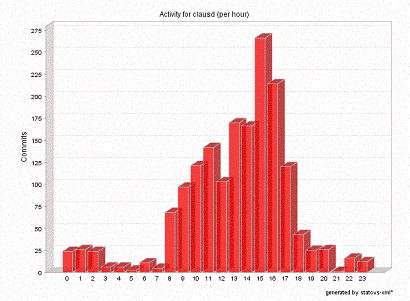
(this shows my source code commit stats - the only hour I have not registered commits (i.e. work) in is 20-21)
- I use keyboard shortcuts religiously (I have custom apps to add more shortcut actions)
- I also use the keyboard shortcut that switches between work and weblogging
- I procrastinate with the best of them (is October 24. a few days after August 4 I ask you?)
- I make lists (obviously)
I'm not even sure I want to call this manifesto tongue in cheek. I think it's spot on - but spoken by a true slacker, proud of what he is. Obviously, you've got to keep up your end of the slacker bargain. If you can't say that you're doing stuff that interests you, then you can't do that. And you shouldn't stay.
Fascinating talk by Malcom Gladwell from this years Pop!Tech on the difficulty people have in explaining their preferences, and in forming opinions of new things. Gladwell points his message in a slightly diffferent direction, but to me the communications angle is the key thing.
New stuff is always mainly about imagination. Even when you have it in front of you, before you begin to get an informal feel for what it does through using it, you rely on your imagination, and this might just be something I think - but i do think that our imagination is tied up in language. And it is not a natural ability to be able to express "new stuff", it takes skill and training.
Even with my limited experience in designing new stuff for direct use, the inability people have in verbalizing what they do, and consequently in imagining how it could be different, is the most basic thing you have to adjust to.
When you live in a country with proportional representation elections you find the representational system a bit quaint, considering the Gore/Bush election probably unjust, but not least entertaining. And in fact the entertainment value, one thinks, ends up being one of the attractions of the system (another it the immediacy, and the direct consequence of local votes which should help foster personal responsibility).
Take this post on the Daily Kos. It is a careful pro-Kerry listing of what the election looks like in terms of electoral votes. It has as many numbers as the baseball stats. It is interesting in how many ways the american media turns the election campaign into numbers and 'plays'. The Electoral vote counting. The incessant polling. The focus on the fund drives. The notion of 'plays', football style, comes up in this treatment on the campaigns:
President George W. Bush rolled out a new stump speech this morning featuring tough criticism of Sen. John Kerry's leadership, as the stopwatch ticks down in the presidential race
Such was the amazing award-winning title of a paper presented at the 2003 convention of the Modern Language Association. Like the award comittee I have no idea what title really means, but this is a very funky accumulation of names and concepts.
It reminds me of my own lifetime paper-title favourite: "Rudolf Rocker - A german anarchist missionary to the emigrant jews of London"
Is absurd accumulation of paper "plot points" simply required in the humanities?
You only need to have a casual acquaintance with baseball mythology to realize exactly how historic an event it was that the Red Sox beat the Yankees 4-3, up from 0-3, this week.
If you like American culture, in particular American writing, you simply need to know a little bit about baseball, which is quite a chore. It's one thing to understand the enormous amounts of baseball derived idiom - but then you start reading Philip Roth and get to The Great American Novel and have to dig deeper.
The problem with that is that baseball is, as is well known by most every European, one of the most boring sports ever to get wildly popular. Games take forever and nothing really happens during the games. When I studied for half a year in Canada, I had to go to Toronto to see the Blue Jays play. This was back when they were champions in the early 90's, but as far as I recall they were reigning champions going into the great strike, and this was after the strike a good while since the last World Series, so their finest hour was a while back, and in fact in the game I went to in Toronto they sucked and lost big.
It's just a hope, I'm not sure it's right but gapingvoid is moving along with his wholesale cluetrain adoption and now says that branding is dead. I hope so. There are some specific people in the danish media landscape thriving on glib branding ideas, who I'd really like to see the shit kicked out of. I think, that if it's true it's because merit can be bought, and passion can't. Do not mistake a purchased "brand" identity and your true grown, organic personality. The advertising agencies don't have a take on the organic, internalized bit and it's all that really matters.
Even a company as good at surfaces and marketing as Apple is first and foremost good at building products. The iPod is not just the best looking player, its also the best player. OS X is true innovation.
Personally I don't really care a lot about advertising at all (I hate most of it), but this idea that there's a difference between looking good and being good is important all over the place.
The political material in the movie of Che Guevara's motercycle diaries feels grafted on - a clumsy afterthought, mostly. But that doesn't detract from a charming road movie with brilliant scenery from Argentina all the way up to Peru. For the first hour or so the film is a comedy, mostly, about two adventurous young men, but then somewhere in the atacama desert they run into the poverty of the indian population and the preaching begins. Fortunately, the sermonizing does not last long and the films final sequence at a peruvian leper colonoy works quite well.
An interesting aspect of the film is that Che Guevara's companion, Alberto Granada, is still alive and took part in the making of the movie.
Unanswered question: Granada is played by Rodrigo de la Serna. Che Guevara's real name is Ernesto Rafael Guevara de la Serna. Are these two men related, or is 'de la Serna' an Argentinian equivalent of 'Smith'?
You might remember the science fiction magazine Strange Horizons' guidelines on cliche ideas that are not interesting to submit as new stories. As a follow up, here's another compendium of overused science fiction cliches.
This list is particularly nice. It gives us some facts on each cliche answering questions like "Did it also appear in Star Trek?", "Is it overtly racist?". It rates cliches on one of five levels of acceptability (e.g. still usable when done right, not so bad the first time around but now...). In addition to plotpoints it also lists classics in bad visual storytelling - one of the more memorable cliches is "Only bad guys have goatees". And yes, that too did happen in Star Trek.
(via Just's linkpool)
Gapingvoid's How to be creative has been turned into a PDF. That's a good idea. What's not so good is that it is a PDF that maximises that formats ability to suck. It's not a book-like version (something we would like to have by the way) but rather a full-screen-by-default thing with page transitions. In other words, it's slick. In my opinion, that's just what gapingvoid's drawings doesn't need and just what the message of How to Be Creative doesn't need. Isn't "Slick ain't so important" almost part of the message?
The Danish translation I'm working on is just about to be ready by the way. Stay tuned.
[UPDATE: In email Mr Gapingvoid himself makes the reasonable comment that the PDF is just abiding by the ChangeThis house style. I guess that's a fair reason for the style even if I still think my comments are valid, and still dislike formats that take control of my desktop instead of leaving the control to me.]
Brilliant idea, The Computer Can Heal, a piece by Ivan Pope, involves a pulled apart but still functioning computer observing itself and broadcasting images of its own interior to the web.
An exciting story on plants, plant installation, people, beverage remains, coffie (sic), and insurance policy watering unfolded here at the office today. In the lingo of corporate broadcast email PLEASE READ THIS CAREFULLY!!!!:
From: ReceptionTo: Staff
Subject: watering the plants
Hi everyone
I have received a request from the nice lady who comes here once in a while and check up on our office plants:Please do not water the plants. Not in any way. Leftovers, even small amounts, from beverages and coffie etc. that someone might water the plants with before refilling a cup or something like that, is enough to damage the plant. The plants do only require small amounts of water or they will drown.
It should therefore be the be the nice lady alone who water the plants (with water) so she can control the watering.
A recently installed plant is actually in a bad condition due to overwatering. The insurance/serviceagreement does not cover if we water them ourselves, and we will have to pay for a new ones if we kill them.
Best regards,John Doe
Receptionist
(a Just/Classy cross post haste project)
I haven't read through it yet, but this looks like an interesting read on being Jewish here in the dark ages. Reminds me that I only bought, but didn't yet read Nothing Sacred, Douglas Rushkoff's attempt at presenting judaism to us non-jews instead of sacrificing the interpretation to fundamentalists.
(via Doc Searls)

Brilliant collection of hand drawn maps of places, real and imaginary. The maps reflect inner as well as outer worlds.
(deep link complaints to dee (at) classy.dk)
(via Angermann2)
Did I link to gapingvoid's fantastic How to be creative series already? If so, no harm done - it's great. It is something as rare and self contradictory as a compassionate reality check for creative people.
I'm definitely buying the book even if it won't have the lively dialogue of the blog comments.
Here's something for would be Edward Tufte-alikes: An archive of diagrams of all kinds of things.
I found the site via a link to the punctuation diagram.
The site is organized as a webzine - but it seems it is also published as a regular magazine. Issues published bimonthly since 2000 I think.
Bookmarked.
Without blogging would I have known about Stavros The Wonderchicken, one of the most consistent (if infrequent) quality bloggers out there.
We hurry up to reference the George Lakoff video in which he explains some basic facts of how the republican political rhetoric (or any other rhetoric for that matter) works. It's a little slow going if you know your way around words, but it's interesting.
Via David Weinberger.
This was the oblique strategy I picked today. Not to sound too mysterious, but I really, really like the timing of this particular advice.
Executive summary: The story of a famous quote by Blaise Pascal
One of the world's favourite quotations is the one that goes something like
I apologize that this letter is so long. I did not have the time to make it shortI had erroneously remembered the source as Marcel Proust, possibly because of his well known tendency to write rather long texts. Today an acquaintance wrote to me, citing this reference, where the quote is given to Mark Twain, and altered somewhat. I immediately fired back with my opinion on the matter, and only then thought to check that fact on Google.
Google didn't help.
Google did however puzzle and amuse. It turns out that various forms of this line has been attributed to quite a number of people. A good discussion quickly turned up on Ward Cunningham's ur-wiki. The discussion there attributed the quote in a number of forms claimed to be "the original" to H.D. Thoreau, Voltaire, Augustin, Mark Twain and most prominently to Blaise Pascal. Elsewhere it is also attributed to Albert Einstein, Oscar Wilde and Thomas Jefferson among others.
The best reference was to this delightful thread, First Excuse For A Long Letter, which adds Lord Chesterfield and Mme de Stael as sources for the quotation.
The first post is the best one though. In it, a librarian tracks the quote back to classical times. He first establishes the basic facts, and recognizes Blaise Pascal as the direct source:
"Je N'ai fait celle-ci plus longue que parceque je n'ai pas eu le loisir de la faire plus courte.
--I have only made this letter rather long because I have not had time to make it shorter."
Pascal. Lettres provinciales, 16, Dec.14,1656. Cassell's Book of Quotations, London,1912. P.718.
It turns out the joke is much older, dating back maybe even to Cicero. The oldest quote of interest uncovered is a slight moderation by Augustin:
"In regard to the questions which you have asked me, I would like to have known what your own answers would have been; for thus I might have made my reply in fewer words, and might most easily confirm or correct your opinions, by approving or amending the answers which you had given. This I would have greatly preferred. But desiring to answer you at once, I think it better to write a long letter than incur loss of time....."
About the executive summary: This post is found about once a day on Google by people looking for the source of the quote, just as I was back when I wrote it. Recently I came across a guy who had bookmarked this very blog post on del.icio.us tagged "quotations mark-twain". I just couldn't stand the fact that people were still getting this fact wrong because I chose to indulge myself, tell a story and bury the facts, so I added a short statement of the facts at the top. - Claus 20061114
It seems for every band there's a subgenre all their own. Everybody wants to break new ground and the thing music is really made of, tradition, is in ill repute.
As a mathematician I was delighted to learn that there's actually something somebody calls Math Rock. [Note to readers: Although there's a nice pun on the danish word "klamphuggeri" (meaning shoddy, poor quality work) I am not C-Clamp]. Delighted, and slightly apprehensive, since frankly speaking my math department didn't exactly epitomize rock'n roll.
Turns out it's just slightly angular, brainy, American alt-rock with occasional noise elements.
The site epitonic makes it a joy to explore the music by the way. Audio genre guides and streams of genre samples. Bookmarked.
Thanks for the tip Just
This local news report, on the tabloid super scoop of a young blonde female teacher having sex with a teenage student, looks exactly like it would in Springfield - home of the Simpson family.
Sensationalist of course, it manages to mix into that an amazing montage of a Smoothie King outlet, street signs of State Road 200, Iinterstate 75 as well a local Best Buy outlet.

English is the international language and all over the world companies like to add a little English to product names to enhance the international flavour and freshness of their brand. Here we have a few German examples:
A snack bar

Yes. It really is quite... corny. The image is slightly out of focus, but there's a blurb on the bar that says (in german) "NEW! With genuine USA peanuts!"
Toilet paper

Germany is one of those countries where every one is on a first name basis with each part of their entire digestive system (I just flew back from Germany and the yoghurt they served proudly claimed "Keeps both your stomach and your intestines in excellent condition! Enhances your intestinal function!") so I guess it is only natural that they consider toilets cosy.
[UPDATE 20040715: The blog feedback was fierce. AMG already fixed it so there's no longer a stupid warning and the site works in Mozilla now. Thanks god for that. It's still slow as molasses though, and less good than the old site.]
The web's best resource on music - allmusic.com - just took a major step back through a major "upgrade". It's one thing that allmusic decided to start registering users to access some of the content, but the new site only works in IE 5.5. or higher. It seems like a strange time to do IE only websites, now that IE's browser market share is actually dropping. They must not care about the growing base of Mozilla users or Safari users.
Furthermore the quality of the HTML is extremely low (The w3c validator reports over 200 errors on the front page) and the site is slower and dumbed down. Much less information is immediately available and you need to click more now to get the information you want.
This is simply a disaster of a remake, and it's sad because there is no comparable source of information.
Only good thing: Enhanced music previews.
(Another spin off of my obsession with Area Man)
While I'm waiting to go to Roskilde I can prepare myself by enjoying this muddy remake

of Cartier Bresson's classic photo

Remake from rockphoto. HCB from photology.
If you can hit it this well just one time:
then you're OK by me. Bookmarked.
Deep linking complaints by (c) holder in blog comments, thank you.
Issued by a japanese group of artists:
These method arts, on the one hand, return to the tradition which
each form depends on, and on the other hand, sing in chorus a single
principle in the same age. We, methodicists, doubt liberty and equality
which have produced license and indolence in arts and sciences, and re-
instate logics as ethics.
Right before the game winning penalty kick in the England-France match last sunday Zinedine Zidane vomited twice while on the pitch. He then stood up and scored the goal required and expected of him.
Here's the video (with Swedish commentary).
Physical exhaustion and dehydration possibly play a role as well but one would guess that the main reason for this incident is quite simply the enormous pressure on a player in that situation. That pressure was certainly augmented when England's star Beckham failed the same test of cool a little earlier in the second half.
Sofar the Euro 2004 football championships (yes, that's soccer) is a lowscoring, high penalty - but oddly entertaining series of events.
There's way too many incidents of professional misbehaviour - in particular high elbows seem to be in fashion this year. Sofar it's mainly been Croatia and Latvia exercising this nasty habit but the other teams aren't far behind.
Low scoring - the average is at 2.13 - compared to the amazing Euro 2000 championships that's positively disappointing.
But it has to be sad in spite of all that that we've seen at least one exciting game per day, and even 2 on monday if you're a dane.
If you come by London anytime soon I can recommend the Helen Chadwick retrospective - both the main event and the Blood-hyphen appendix at the Woodbridge Chapel. Chadwick's pieces are modern art - but not quite of the Young British Art vogue. She has a more oldfashioned approach, specifically her art feels difficult in another way than the young british art. You just have this idea that it was more of a struggle being modern a few years earlier than in the glorious booming 90s.
But the works are great - and occasionally surprisingly so. Who would have thought that a 2m diameter circular pool of bubbling hot, melted chocolate would be so captivating.
Howard Hawk's "To Have and Have Not" is on television, and there's nothing to say but that Lauren Bacall is still the toughest talking 20 year old to ever appear in film:
Slim: You know Steve, you're not very hard to figure.There is no amount of modern day explicit tough talk that would outcool Bacall in that role.
Only at times.
Sometimes I know exactly what you're going to say.
Most of the time.
The other times ... the other times you're just a stinker.
(She kisses him)
Harry: What'd you do that for?
Slim: Been wondering if I'd like it.
Harry: What's your decision?
Slim: I don't know yet. (She kisses him again)
Slim: It's even better when you help.
Uhh... sure you won't change your mind about this?
This belongs to me, and so do my lips, I don't see any difference ...
OK You know you don't have act with me, Steve. You don't have to say anything, and you don't have to do anything.
Not with me.
Ohh, maybe just whistle.
(Turns to leave, then turns back)
You know how to whistle don't you? Just put your lips together...and blow.
[monologue lifted (with fixes) from here]
My first thought, when I heard of The Viennese Vegetable Orchestra was that it sounded very much like an idea cooked up for The Muppet Show - but no. It's real: It's common kitchen vegetables turned into instruments and used to play "classic's lite", very recognizable pieces from the classical repertoire. After the concert the instruments are cooked and served to the audience.
The music needs to be very recognizable since this orchestra looks,


and probably tastes, better than it sounds.
[UPDATE: I take that back, they sound a lot better playing modern music - you can buy their album on Amazon]
Via for_sv
There's so much more to comment on from London of a week ago. While I misinterpreted the Mylo promotion as street art, it's not like Mylo wasn't tagging on to a general trend. Some south bank examples:

The leftmost one I found on my visit, and the rightmost one was submitted to me post trip by the guy I was visiting.
So I'm talking to Justeren about speech acts and come upon the Glossary of Lingustic Terms. Useful. Bookmarked. Obviously Wikipedia is also a good start.
A couple of weeks ago I shared with a few friends a childhood memory of watching with horror and amazement the scene in The Ipcress File where Michael Caine is subjected to mind imprinting psychological torture that he only endures by inflicting pain on himself through making a wound in the palm of his hand with a nail. The scene was so powerful that I had remembered it for years along with only a few other scenes of similar power, without remembering anything about who was in it or what film it was from. All I remembered was the image of the tied up tortured man hurting himself - an image which was hard to comprehend for a child. As it turns out one the guys I told about it had the exact same experience with that scene for the same reasons. [UPDATE: In fact I recall going to see The Manchurian Candidate halway expecting the scene to be there]
One other such moment is the final sequence from Alfred Hitchcock's Saboteur - where the antagonist is chased to the top of the Statue of Liberty, halfway falls from the torch, but is saved as the hero of the story grabs his jacket sleeve. The seam of the jacket however starts to open ontil the sleeve comes off the jacket and the antagonist falls to the ground and dies. Again it is the strong image of the bad guy hanging over the edge as his jacket begins to rip apart that I memorized. Only years later - as I read Hitchcock/Truffaut - did I realize that it was this film I remembered.
The reason for bringing this up is that I have recently revisited both scenes. As it turns out neither the Ipcress File scene nor the Saboteur scene are able to generate the emotional jolt they gave me as a child - both films seem dated - but it was fun to connect the experience with the film nonetheless. I saw the Michael Caine vehicle on TV, but the Hitchcock film I was only able to see because I just purchased a 7 disc DVD Hitchcock Collection with a good selection of Hitchcock's films: Saboteur, Shadow of a Doubt, Rope, Rear Window, The trouble with Harry, The Man who Knew to Much (the '56 version), and Psycho. Considiring that it costs £129.99 on amazon.co.uk, the 400 DKK (approx £36) I paid was a very reasonable price indeed, and Shadow of a Doubt, Rear Window and Psycho would have been worth it alone. The other four films are nice extras. It's great to see these movies - many of which I have only seen in old worn film museum copies - in crisp DVD quality, and it will be great to see The Trouble with Harry for the very first time. I am a huge Htichcock fan, but I have holes in my list of films I actually know.
Actually, seeing these films on strange film museum copies brought about one of my most memorable movie going experiences ever. I went to see Shadow of a Doubt some years ago (and btw. the train strangulation scene from that film is another one of those childhood moments). The copy screened was, I think, Czech - certainly some eastern european version, with subtitles in a strange looking language. The subtitles were very thorough, often taking up three and even four full lines of text obscuring much of the image. You endure things like that for the ability to see the film at all, but the real masterpiece of the Czech versioning came in a pivotal scene where Joseph Cottens' niece goes to the library and finds a New York newspaper where she learns that Cotten is really a murderer. This scene was completely lost on us that day at the film museum because just as the girl looks down and we see her terrified look and Hitchcock cuts to a view of the headline it turned out that in the Czech version the image of the newspaper itself had been replaced with one of a Czech newspaper! This would have been funny had it been German, but in Czech it was devastating in that nobody was able to understand what it was she had discovered exactly. The entire audience burst into laughter and we didn't really regain the suspense atmosphere of the film for the thrilling conclusion after that.
One of the fine things about London is the fact that it's made of real, attractive materials and not just concrete, glass and steel. A fine example is the leather covers on the moving parts of the traditional london phone booth door
Note that this particular strip of leather is brand new, which means they are actively maintaining these phone booths and replacing the leather covers.
Just visited London where I found the street art below in several different neighbourhoods

[UPDATE: Damnation! It's not street art, just street savvy advertising for this album]
I'm beside myself. One more band worth the entire price of admission has been added to the Roskilde Festival playlist:
Iggy and The Stooges
YYYYYEYYYYYEYAYYAYAYAYAHAHHAHHHHHHHHHHHHHAH!
(You're supposed to imagine the famous scream that opens the recording of TV Eye)
I just now remembered the glorious title of a talk on Rudolf Rocker:
Rudolf Rocker - A german anarchist missionary to the emigrant jews of London
How cool is that: The name! The person! The task at hand!
(When I say cool I'm talking about the capsule storytelling, not anarchism per se btw)
Classical music can be tough. Audiences are fickle, wanting only Mozart, Beethoven and Bach. Apart from the violin playing teenage girls they're not much to look at. Too many men. Too old. Bad fashion sense. Even the violin girls have limited sex appeal. On top of all that, the money is no good. And you have to practice all the time if you want to stay at the top of your game. All hard work, no fun, no sex, no money - it's easy to see why you would want out of this world if you're young.
But that is no excuse for The Safri Duo
A few years back one of the most popular ensembles in classical music in Denmark got off the train and started making pop music instead. The result - this superficial, dance-oriented, synthesizers + drumming extravaganza makes me ashamed that I'm Danish. It is much much worse than the horrors of Aqua and Michael Learns to Rock combined.
Why is it worse? Because it thinks it is better. The Safri guys think they really have this cool new thing going on fusing their amazing ability to hit really big things in a rhytmic fashion with modern drum machines and synth riffs, but the reality is that it is trash, trash, trash, trash, trash. In the end their percussion skills, the point of the band one would have hoped, simply don't matter at all. The dance-pop genre simply doesn't allow for any kind of deviation from a strict programmable 4/4 beat anyway, so you could easily do with just sampled beats instead of the Safri Brothers drumming away. The drumming is pure spectacle with no musical consequence. And because of the spectacle, they completely forgot to add anything else of interest to the sound. Songwriting is absent from all their material, being displaced by cheesy synth riffs hardly worthy of the name 'riff'. Their lyrics in general makes Aqua sound like Shakespeare.
Rarely has so much ability been wasted by so few people with such devastating results.
Just like "layoffs" and "we fired 500 people yesterday" have been redefined more times than one cares to mention, so that it doesn't sound quite as brutal as the original, it seems that even the recently redundant employees (i.e. the fired ones) appreciate the new softer approach. At least I saw a couple of days ago a guy talking about an "unplanned sabbatical". Sounds very much like unemployment to me.
Meet Leslie Hall, jewel loving, gold spandex wearing, sweater maker extraordinaire

When you're done admiring the sweater fashions, you may just be ready for the quicktime promo video, that adds a little country music to the mix.
When you're done watching that, have a look around, and it will dawn on you that the whole thing is most likely an art project experimenting with the trash aesthetic.
Thanks for the link, Jens!
On K5, a nice collection of famously unproduced screenplays, complete with download links of the full text. Among them police drama by the author of Se7en, and sci-fi by James Cameron.
All of the David Bowie studio albums from this one to Scary Monsters could go on the essentials list, but I have to start somewhere and this is as good a place as any.
Bowie's amazing voice is young and intense, the sound has that glam inspired 70s glitter, and with a few ridiculous emberassments as entertaining interludes, the songs really are fantastic
Bowie was on the essential soundtrack to my childhood, because one of my brothers was a huge fan and always played the albums, with this one, Heroes and Scary Monsters probably being the favourites. While I own only a few of these albums I know them all by heart second for second in a way you can only know music you heard all the time at a certain age.
The new Beastie Boys single is out, and as pre announced it as a return to a harder hip-hop "roots" sound. I can't wait to get that album.
I'm definitely going to see
Karl Bartos
Basement Jaxx
Bergman Rock
Blackalicious
Blue Foundation
David Bowie
Graham Coxon
Fatboy Slim
Franz Ferdinand
The Hives
Kira & The Kindred Spirits
Komponent
DJ Krush
LFO
Danger Mouse
Morrissey
Louie Vega
Michael Franti
Money Your Love
N*E*R*D
The Pixies
Sly & Robbie
Under Byen
Luke Vibert
Bugge Wesseltoft
Zero 7
.. and there are tons of bands I shouldn't have left off the list...
[UPDATE: Classy's list of essential Stones titles in proper buying order]
The Stones are really much too old a band to be important for me, but I grew up listening mainly to The Rolling Stones and danish band Gasolin'. First because the music was being played by two of my older brothers, and later because my third brother bought all the Stones albums released on Decca/London in a boxed set which we played all the time in the following years. Among all the Stones albums (several of which will be covered on the Essentials list) Beggars Banquet is the best one.
It has one of the best side-A-track-1's in the history of LPs and after that, within the confines of the stones sound it helped define, an amazing breadth of variation that practically no one tries for any more. Any one of "Sympathy for the Devil", "No Expectations" and "Street Fighting Man" would be reason enough to include the album, but there's so much more.
The Stones have done their music a disservice through the last 15 years of stadium rocking. The stadium venues and the moniker "Worlds Largest Rock'n Roll Band" have turned them in to a parody rather than the brilliant blues band they used to be. Music quite simply does not belong in stadiums. I have a lot of friends without any feeling for what the Stones sound used to be, because they can think only of 50000 people cheering Keith Richards on as he starts up the riff of Satisfaction. They either dislike The Stones because they are not Metallica or because they think they probably sound like Metallica for old people.
This album in contrast is to a large extent quiet, emotional, and acoustic and sounds nothing like The Stadium Stones.
Classy's Essential Stones Album List in Buying Order
- Beggars Banquet
- Let it Bleed
- Singles Collection: The London Years - (this imo is all you really need to appreciate the pre-banquet Stones. They were a singles band, and these are all the singles)
- Get Yer Ya-Ya's Out
- Sticky Fingers
- Some Girls
- Exile on Main Street
- Tattoo You
...helps paranormal spoon benders patent sick ideas for TV-shows.
I'd like to raise my estimate of Prince's latest album. It's the best since The Black Album. If Lovesexy had been an EP of mainly Alphabet St that might be competition but it wasn't. It shares the worst Prince song from the decent albums - When 2 R In Love - with The Black Album but the rest of the material is weaker.
Diamonds & Pearls + The Love Symbol album both have too many flaws to compete. Released with about half the material they would have been a lot better.
The Rolling Stone feature on The 50 greatest artists ever is good stuff. 50 Personal memories by other artists of their idols. Some artists feature in an "idol food chain" - Elvis Presley is covered by Bono and U2 are themselves on the list.
Of note related to the previous post on the return of Prince is Ahmir ?uestlove's recollection of going without lunch for a month to be able to buy three Paisley Park albums. Good stuff.
And also he almost makes a point. If Prince is Prince again, we don't really need N*E*R*D to be Prince as well, do we? Or should they do a double-Prince super whammy of delicious light footed cross over funk. There's a show I would gladly starve a month to go to.
Prince is the 4th funkiest person to ever walk on the face of the earth, the three funkier men being James Brown, Sly Stone and George Clinton.
On his latest album, Prince is called Prince again and his sound is back in his best effort since The Love Symbol Album. And the new album doesn't have the "symphonic rock soap opera" traits of that album. A definite plus. It is easily the most focused effort since the 80s.
What isn't quite back is the relaxed (wrong word - maybe 'natural' og 'obvious') sound of all the really good albums from the 80s. From 1980 to 1987 all of Prince's albums sounded exactly how they should, so to speak. They weren't trying so hard, but (Iguess that is exactly wrong) they still managed to bring all kinds of new stuff every time.
Prince's ballads sound decidedly old school and his funk it sparse and a little bit forced - but the album showcases his songwriting skills and has a clean sound that is absent from too many new releases and as one danish reviewer remarked it's great to buy a new album that is "Produced, Arranged, Composed and Performed by Prince". He's still a remarkable singer, and he still does the best one man background chorus for self in the world. And he still blends brilliant songs with terribly cheesy ones in cheesier arrangements. It's all good.
Finally I would like to add a deep felt personal thanks for the complete absence of rappers. It was always a little embarrasing watching Prince trying to keep up with the new breed.
[UPDATE - on second listening]
More observation and a stronger thumbs up. This is good Prince.
It says a lot about the quality of news source if they find it important to do not-quite-funny word play when people die. A recent example comes with the death of cosmetics empire builder Estee Lauder. On news.com.au that becomes (switching to headline font)
Estee lauded for her common scents
That headline would suck on any news story about Lauder - but on her obituary... That's just a little too fresh, upbeat news for me.
It's late and I'm listing to Tthe Beatles and just got to the great The girl with colitis goes by line of Lucy in the Sky with Diamonds. That made me want to but this book.
A good collection of bad singing/hearing may be found on Malapropisms.
The Onion misses its step and prints an actual truth without any hint of amusing irony in this edition of "The Onion In History". Found it? If not, read on below. I'll give you a hint: It's a story so hideous you would wish it weren't true.
The story "Nazi accountants struggling to find more cost effective ways to eliminate jews" is actually true. The efficiency and economics of the holocaust was a problem and it was being addressed. I remember hearing about discussions about the high cost of shooting people (it was also deemed bad for the morale of the executioners). As far as I know, the use of Zyklon B, the poison gas used in the death camps, was also an issue of efficiency. Then there are the gas vans - mobile gas chambers mounted on the back of a truck. The gas used as simply the car exhaust, used in place of pure carbon-monoxide which was too difficult to transport. Several facilities to dispense quickly of "the cargo" - the killed people - were discussed, among them a tipping mechanism so that the nazi executioners could load the chamber, kill the people in it, and then drop them off quickly.
The program for Ars Electronica 2004 has finally been published.
It's going to be a nostalgia event on 25 years of digital art - it is now conveniently planned around a weekend, and they have added the beautiful Lentos museum as one of the venues.
Gothamist interviews Clay Shirky about New York and if for no other reason read Shirky's strange but true worst time in NYC involving ex-wives, menacing subway threats, unbearable heat, penny pinching, Yves St Laurent, a budweiser and an Iranian bodega owner.
I just saw the mockumentary Nothing So Strange which purports to be a film about an activist group trying to uncover the truth behind the killing of Bill Gates on Dec. 2nd 1999. The documentary feel of the film is extremely well done and the diverse group of characters on the conspiracy theory fringe are all extremely believable, in fact this is one of the finer points of the film.
Much media hype has been made of the fact the film is cleverly backed by mock websites of the various factions depicted in the film, but I think it is interesting that this kind of clever media strategy is fast becoming so common that it no longer has any real effect - I would be disappointed if there was not some immersive web experience allowing you to elaborate on your own on the narrative of the flm.
In the final analysis the film runs at least 15 mins too long. The first 40 minutes spent setting up the conspiracy is just much too long and slow of pace.
[UPDATE: Best fun is this short accompanying the film on how the director (that's his weblog by the way) 'reality hacked' The Democratic National Convention and used the protesters and police turned out for that to stage a fake protest at practically no cost. They actually just did the fake protest as a real protest which allowed them the use of a designated protest area at the DNC - furthermore they made sure that the fake official t-shirts and banners looked like t-shirts and banners from a real protest group so they could mix in images from the real protest as well]
Check out this awesome application of Google News - A visual display of the headlines from Google News - with the visual space being assigned based on the number of news sources reporting a particular story. And visually beautiful to boot. Note how the sports band is as big as the news band whereas tech, health and entertainmaint trail badly. I am not much of a flash lover - but this is well made. (Thanks for the tip Just)

Found a nice summary of some of the facts of life in 1904 - among them the easy availability of marijuana, heroin, morphine and cocaine (conveniently contained in your Coke).
- Coca Cola contained cocaine.
- Marijuana, heroin and morphine were all available over the counter at corner drugstores. According to one pharmacist, "Heroin clears the complexion, gives buoyancy to the mind, regulates the stomach and the bowels, and is, in fact, a perfect guardian of health."
This reminds me of a project I once read about but cannot find a reference for: Some school somewhere collects and publishes lists like this to remind teachers that the children in school don't have the same frame of reference they do. To most of the kids the cold war is as distant as WW2, for younger kids, the Internet has always been as available as electricity and so on.
The storyline and images from Ghost Town sounds and looks eerily like the post-meltdown chaos of William Gibson's art imitatiing life novel "Pattern Recognition" or maybe the Ardeur comic books of the Varenne brothers. The story: A russian girl like to take high speed motorcycle rides through the all but abandoned dead zone around the Chernobyl nuclear disaster site, radiation counter in hand. She's taken an eerie series of photos of the abandoned landscape and it looks exactly like some post-apocalyptic nightmare, in fact, it is a post-apocalyptic nightmare. Military checkpoints. Entire cities of completely abandoned decrepit houses. Enormous car parks of abandoned contaminated clean up trucks and abandonede contaminated helicopters - and in the middle of that a stubborn old man riding a horse-driven carriage carrying about his business, doing a little farming - just enough to get by on his own.
Nr 2 in a series of lives imitating art
via Joi Ito
...David E. Malloy of the Herald Dispatch for this, Ironton, impressive Ironton area display - Ironton - of local news. Would you all please say "Ironton" one more time:
Man reports shotgun fired at his Ironton mobile home
IRONTON -- The following information was obtained from Lawrence County Sheriff?s Department reports:
A 38-year-old Ironton area man reported Friday a 30-year-old Ironton area man fired a shotgun into his trailer.
Sheriff?s deputies arrested Ronnie L. Faulkner, 30, of 29 Township Road 229, Ironton, on a felony charge of discharging a firearm at or into a dwelling and a misdemeanor charge of using weapons while intoxicated.
Just saw the fascinating Stone Reader - a documentary by Mark Moskowitz about the search for a long forgotten writer and the story of his only book, "The Stones of Summer".
The film looks and sounds like a reenactment of one of Paul Auster's plots, more specifically the plot of "The Locked Room" from The New York Trilogy: Like in Auster's book(s) it unfolds as an obsessed search for something, an elusive bit of Americana, a search for the creator of some obscure but significant cultural artifact. Like Auster's books it is told in the first person by the obsessed searcher himself (of course he is a man) and varies between reflections on writing, interviews with people found on the trail of the lost creator, and beatiful images from all over USA as our protagonist travels all over the place to follow even the most obscure clues in search of his long lost dream. Even the title of the quasimythical book, "The Stones of Summer", and the name of its author, Dow Mossman, have an Auster ring to them.
Apart from the captivating story of a brilliant writer who simply stopped writing (Auster again!), Moskowitz himself has one of the finest moments when he walks around his living room talking to the camera while he is putting away rolls of film. He comments on the footage he is storing and says "This is the interview with so-and-so. I haven't even seen it yet although you probably have - because in the film we will have shown that by now". The mixing of different times; that of creation with that of watching is another Auster touch.
As some of the commentary I found points out, the film does however have the little problem that we feel cheated a bit by Moskowitz self-conscious search:
Moskowitz’s quest is, fundamentally, a bit dishonest. He claims to exhaust all his resources — he even visits the guy who designed the jacket for Mossman’s book — but he avoids the best sources like they were bill collectors. In Iowa City he finally connects with William Cotter Murray, who was Mossman’s advisor at the University of Iowa and one of several people to whom The Stones of Summer was dedicated. Murray tells him casually that Mossman lives up the road in Cedar Rapids. You might think that Murray should have been one of the first people the filmmaker contacted, and you’d be right.
But as the commentary continues, this is easily forgiven, if for no other reason then because the story is so enjoyable.
Incidentally, that last quote was found on Culture Snob - which looks to be a very nice website on the kinds of culture us snobs tend to like - they even have a piece on The Locked Room.
...was the nice comeback marquee of the Epworth United Methodist Church after Mel Gibsons slash'n'pray epic.
Justeren found this little gem: A CBC TV news report on this brand new thing the "word processor".
A related gem is Rob Pike's humongous (43 MB) Blit demo. Blit was an early generation windowing system with all the features we expect: Windows, menus and a mouse.
Well, sort of. You all remember of course the magical game Relate-a-zon, where you had to navigate Amazon's related items space to get from A DeWalt drill to American Psycho. Adventurers in Relate-aspace soon learned some of the features of the landscape as summarized in the FAQ. Among the observations making the game easier is the existence of hyper jumps - special products that create a relation between otherwise unrelated neighbourhoods in relate-a-space. In the space of books these special gateway links are the subject of an article in New York Times. I found the link via Jon Udell.
The Roskilde Festival is going to be insanely great: I have only seen David Bowie once and that was on a less than great greatest hits tour circa 1990. The Pixies have reformed and will be there. N*E*R*D - the funkiest outfit since back when Prince was still great in the '80s - will be there. The Hives I've been meaning to check out for a while. And we get to pay our illicit respects to DJ Danger Mouse. As a bonus I get to acquaint myself with Danish acts Blue Foundation (link currently broken) and Under Byen.
p.s. What's up with Basement Jaxx? Aren't they at Roskilde every year?
I recently bought the 1999 album The Soft Bulletin by The Flaming Lips and find it absolutely brilliant. Brilliant melodies and a brilliant sound and both with a level of variation that is entirely uncommon.
I don't know why I missed out on The Flaming Lips back when they made this great album. I seem to recall from reviews that they were constantly reviewed in the shadow of their own camp classic "She Don't Use Jelly".
The series of "Just..." jokes usually made about my friend and coworker Morten Just has been stolen by the only half-Just Justin Hall. Presumably he did this for the first quite a while a go.
Peter Jacksons pitch for the filming of Lord of The Rings as imagined by David Weinberger:
I'd like to film one of the most beloved and jealously protected literary properties in history.As far as I know he actually didn't have the audacity to suggest more than 5-6 hours - the studio upped the ante from 2 to 3 films. Also, we've all now seen the elaborate visualisations of various scenes made to prove to the studio that Jackson could pull it off. Whether the films actually came in on budget I don't know. Presumably one could tell pretty early on in the shooting that Jackson was on to something.I'd like to turn it into a sword-and-dwarves epic that will run somewhere between 9 and 11 hours.
I plan on shooting the largest, most complex battle scenes in history. And you can trust me based on my work in Heavenly Creatures.
We'll have to invent the most convincing CGI effects ever. In fact, the pivotal character will be made entirely of pixels. And you can trust me to bring true humanity to the art of digital acting based on my breakthrough work in Meet the Feebles.
A work of this scale will require marshalling 25,000 people over the course of several years. And I think I proved my ability to do so with Valley of the Stereos.
Could Safri Duo possibly suck more than this.
The cheesy music is topped by the cheesy videos and the videos are again topped by the unbelivably bad song lyrics. I can't really recall anything that is significantly lamer than rhyming "world" with "girl" and repeating this ad nauseam.
Yesterday Swedish Television aired Live Forever a documentary about the brit-pop scene of the 90s and by extension of the much hyped "Cool Britannia" the colourful, vibrant and world dominating cultural scene of the UK in general and London in particular in the mid-90s. The center of it all were some interviews with the Gallagher brothers (of Oasis), Jarvis Cocker (of Pulp), Damon Albarn (of Blur) and many others I am currently forgetting. The images capture the attitude and style of the mid 90s brilliantly. It is a bit odd to see a nostalgic rockumentary about something that happened only 6-7 years ago but that's what hypernostalgia is all about I suppose. The interviewees come off as variably bored (Damon Albarn and maybe Jarvis Cocker), annoyed (Damon Albarn), interested (Noel Gallagher) and plain simply stupid (Liam Gallagher). Liam Gallagher's most interesting commentary comes when he's asked to comment on Jon Savage's opinion that he at times looked rather androgynous. First of all the interviewer has to explain the term - which of course threatens to to throw Liam into a fit "Is he saying I looked like a girl?". The interviwer hastily retreats until Liam at the end comments something of the order of "I pay attention to the way my hair looks. You've got to have great hair when you're the lead singer in a band".
For me personally it was great at these years were happy years in an equally amazing university environment in downtown Copenhagen, and British style and British music really was the look and feel of that time even in Copenhagen.
What an on over the top great question! Read Charles Wright's answer to the question in The Charles Wright Interview. Charles Wright will be known to the funkateers among you as the singer on the amazing "Express Yourself" (with the Watts 103rd Street Rhythm Band).
Among the other amazing questions asked of Wright you will find:
"Do you think there was a conspiracy to destroy Black music in the 70's ..and was the government involved ? "
Charles Wright: "There was/is definetely a conspiracy. I think it is more racial than political. BUT there actually both quite the same aren't they ?"
It seems there is a conspiracy theory on the poisoning of black music.
On a non-political vibe a little later in the interview:
"Who do you see in today's r&b market as being the keepers of the flame in the true r&b spirit ?"
Charles Wright: "Unfortunately, when they gave us the electric drum, everybody went for the okay-doak. I personally feel that I am fighting a loosing battle but I've invested my money strictly for that cause."
That's so sad and very true.
Tatiana Lyng - for her personal website. Nice ASCII aesthetic. While the columsn have obvious meaning, I still haven't figured out the secret code of the data rows.
Only drawback: URL's on the site SUCK. Everything has the name it was given by the wysiwyg sitebuilder used.
[UPDATE] The award winning site is no longer at the end of that link unfortunately.
You will not be able to stay home, dear Netizen. You will not be able to plug in, log on and opt out. You will not be able to lose yourself in Final Fantasy, Or hold your Kazaa download queues, Because revolution is not an AOL Keyword. ...So goes the opening lines of an Internet update of Gil Scott-Heron's 70s counter culture classic The Revolution Will Not Be Televised. Elegantly done.
På menneskeret.dk spørges om "unge etniske minoriteter under 24 år skal have lov at gifte sig". Lad mig se: Tyrkerne kom som gæstearbejdere vistnok fra 69 til 72 så den minoritet er over 24. Jeg tror den eneste etniske minoritet der er på vippen lige omkring de 24 er "Folk der går rundt i København med mohawks".
[Update: N? nej - jeg glemmer helt at Iran/Irak krigen starter omkring 1979-1980 s? "iranske og irakiske flygtninge" er ogs? en minoritet p? 24]
I spent 6 unfruitful hours at Copenhagen Airport today due to the late arrival of an airplane that later developed a malfunction so a flight was canceled after a 5 hour delay.
At the airport - where people develop a sudden urge for draught beer at 8 o'clock in the morning, and where all food is double the price and half the quality the security check metal detectors have had their sensitivity cranked up to max. Belt buckles, even the metal components of shoes trigger an extra check.
The airport transit hall has "Internet connection points" for the wirelessly challenged. Only problem is that the credit card processor on the connection poiunt machinery does not accept the only credit card in widespread use in Denmark - namely a debit card/Visa or debit card/Mastercard combo (the debit card in question is a national standard in Denmark). They must have disappointing sales since probably more than half of their possible customer base have been cut out by bad implementation.
Third observation: The business book rack at the airport bookstore is no longer about making deals and making millions in the .com boom. The largest single group of books are about simply getting a job at all: "CV's for dummies", "How to get a job", "Winning the interview", or titles to that effect, take up entire shelves.
You can get yourself a little flash of the past here on UbuWeb as you listen to Frank Zappa reading a fragment of William Burroughs' Naked Lunch, namely the story of the talking asshole.
As 5 minutes of recorded past go you get quite a bit of history. You can almost hear from the audience reactions that this was recorded in the 70s. Frank Zappa's voice is totally Zappaesque as is his choice of material to read.
You absolutely must not miss the amazing video for "Soccer Practice" from Gay Pimp, the music is some subgenre of electro - apparently the buzz is electroclash, I've given up on subsubgenres - and the video is humorous gay locker room dance action. Selected song lyric quote to give you an idea if you really want to watch: "Soccer Practice. Suck Suck, Suck Suck, Soccer Practice".
DO yourself a favor and download the short but sweet Howard Dean mashup right away. More streetcred than he can take probably, but reason enough to vote.
[UPDATE] Oh, there's even a website exclusively for Dean Howl remixes. Sites like this are living proof of the bonanza we would be missing out on if we had the repressive copyright laws requested by the RIAA and MPAA and their european counterparts.
This is rich. As reported by Dan Gillmor, audience members had to sign an agreement to only say good things about the film before attending a preview of Mel Gibson's film on the passion of Christ.
That's not saying much about Gibson's confidence in his own message. Generally when people have something to say, but have to attach clauses on how you are allowed to understand it you're supposed to expect the worst.
Med Kashmir, Swan Lee, The Raveonettes og andre som hhv protektor og guvernante er Prins Joachim og Brian Mikkelsen. Det er ligesom hvis Sex Pistols i sin tid havde fået en varm anbefaling af Margaret Thatcher.
When I go off my self imposed bread moratorium (it's one of those post new years weight loss things) I think I'm going to try out this bagel recipe. It looks to be one of those things where the enormeous effort required makes up half the taste of the finished product.
Textism claims to improve on the recipe.
Obviously they have no interest in dramatically increasing killer cell activity. I'm assuming "killer cell" is the new buzzword used by the RIAA and MPAA for the pockets of resistance in the copyright wars.
Tim Bray suggests two laws of explanation:
When you’re explaining something to somebody and they don’t get it, that’s not their problem, it’s your problem; When someone’s explaining something to you and you’re not getting it, it’s not your problem, it’s their problem
Neither law is true in mathematics. In fact the opposite is true: The obligation of the mathematician is entirely one to understand never one to explain. Mathematics is eternally true, remember? And obviously you never need to explain eternal truth. In fact, vigorous attempts at persuasion are frowned upon, since they imply that the original statement somehow fails to withstand scrutiiny. Why would you be trying to beat down the scrutiny otherwise?
The folklore of mathematics is rife with stories of brilliant people making bold mysterious claims and leaving no further explanation than the apparent brilliance or marvel of their claim. The most famous case would be Fermat's last theorem.
David Weinberger has installed GPS navigation in his car and gives us a demonstration of one of the key points of Steve Mann's concept of humanistic computing:
we might ask the question ``since we have intelligent highways, smart floors, smart furniture, smart lightbulbs, smart toilets, smart elevators, ... why not have ``smart people'' --- people equipped with information processing hardware. This ``smart people/dumb environment'' paradigm suggests an alternative to ``smart rooms'' and other environmental intelligence gathering infrastructure. Moreover, the ``smart people/dumb environments'' framework solves the privacy issues, as well as the customization and user-preference issues, by allowing each individual to ``own'' his or her own ``bits'', as well as to set forth and customize the protocol for interacting with the world.
The GPS navigator makes the car more intelligent, but at the same time and (by his own admission) Weinberger dumber: He now has even less sense of place than he used to have.
There are a number of borderline cases of interest: Wearing a cell phone means you always have your personal phone directory with you, so you stop trying to remember phone numbers. So you're a bit dumber, but maybe in a good way: You really didn't want to know the phone number in the first place, you just wanted a connection established with someone. I don't think knowledge of physical space is a good candidate for this kind of reduction.
Salon does an interview (by the interviewee) with the father of the currently overhyped term "metrosexual".
We also learn that in Greek the term means "motherfucker".
Nice double interview, i.e. a conversation but with an interviewer present, with Lars von Trier and Paul Thomas Anderson on actors, America and film.
Listen approx 40 mins and 22 seconds into this brilliant rock'n roll radio program - Little Steven's Underground Garage:
Welcome to the AXE deodorant body spray automated ordering system. To choose the right scent of AXE select the woman you wish to attract: For real women press 1 for blow up dolls press 2 if you are attracted to lunch meats or are calling from a rotary phone please stay on the line...
[We're still waiting for Jon Udell's new standard for link adressable audio visual stream segments. In the meantime the minutes and seconds will have to do]
Having just found the marvelous Pork4Kids site - a fatty meats promotion site for kids - via Salon's technology predictions for 2004 I browsed through some of the old predictions and found they were pretty damn accurate:
Take this prediction
8. Slashdot sells outThe popular discussion site for fans of open source software will disclose that it's perilously close to bankruptcy and needs to make all Slash code proprietary in order to survive. Slashdot regulars will rebel, and some will attempt to set up alternative discussion sites -- but Slashdot's founder, Rob Malda, will sue under the Digital Millennium Copyright Act to prevent any copycat sites. When readers accuse the site of "monopolizing" all the vital discussions of the various ways of cooling your computer with liquid nitrogen, Justice Department officials will threaten prosecution of Sherman antitrust violations. But Slashdot will prevail, after hiring David Boies, litigator to the stars.
Substitute SCO for Slashdot and you have reality!
But wait! There's more: In January of 1999 Salon did an even more stunning prediction:
Son of iMacIn 1998, Apple's iMac made a big splash by putting the familiar Macintosh into a sleek new avant-garde package -- and removing the floppy drive. The strategy was so successful that in 1999 Apple plans to expand -- and reduce -- the iMac line as follows: In March, the iMac II will feature a fancier case but will leave out the keyboard. "The mouse is a superior input device -- keyboards are a tired old 19th century technology," Apple interim CEO Steve Jobs will explain.
In June, the iMac Deluxe will leave out the monitor. "Video displays have outworn their welcome -- we want to lead the way toward the future of direct machine-mind interfaces," Jobs will declare. Finally, for the all-important fall shopping season, Apple will unveil the Ultimate iMac, with no keyboard or monitor -- and no CPU, either. "In the future all real computing will be done over the network, anyway," Jobs will tell the press. The Ultimate iMac may not do much -- but it will look great in its limited-edition, artist's-signature case that, Apple promises, will be suitable for museum display.
Can you say iPod/iTunes combo? A solid 2-4 year prediction - spanning across the bubble burst! That's impressive stuff.
I just bought a recent DVD featuring the amazing music videos of Michel Gondry and containing a strikingly complete sample of the watchable videos from the last 10 years or so. The videos share a common theme: Saturated strong colors, elaborate sets with elaborate casts, technical brilliance and a particular liking for seemingly continuous flow of action without cuts of any kind.
The technical brilliance is always very visible but the interesting thing is that it is not one technique but whatever was appropriate although the many "one take" videos dominate. The playfulness and the sleight of hand makes many of the videos look like magic trick, and according to the included documentary this is no accident.
While I was at the store, I also picked up "D.A.F.T". A collection of the amazing videos from Daft Punk's first album "Homework". Gondry and Daft Punk meet at the combined peak of their powers in the amazing "Around The World" video - featured on both discs - but Daft Punk also have a great Spike Jonze video and another favorite of mine, the beautiful americana of "Burning" (by french director Seb Janiak)
Check out the awful track listing from "The Ultimate Party Survival Kit". I would kill to get out of that party.
I bought "Pop Art" the Pet Shop Boys 3-disc greatest hits collection just before christmas. A lot of people (among them Just) stare back at you incredulously when you tell them you think Pet Shop Boys are great and there are many cheesy hits among their songs, but also some of the greatest moments in pop, and they just seem to get better with each album. The latest album "Release" was one of the best albums of 2002. Pop was never purer.
The "Pop Art" collection is much more than just a greatest hits collection. All the old songs have been remastered, and it is amazing to listen to brilliant tracks like " What Have I Done to Deserve This?" in glorious remastered punchyness. Pop needs to sound fresh and the remastering makes sure that it does.
It's the last day of the year, so it is time to take stock of 2003. I'll spare you the diary entries and instead post a little note about what taking stock of 2003 is supposed to mean.
People are always talking about new years resolutions. You're supposed to be an optimistic forward looking, self improving, progress loving, spirited individual and for that reason you're supposed to be thinking about the opportunities for the future and not about the past. Personally I will gladly admit to caring a great deal about the past. So much in fact that I often approach the future with the direct intention of making it past as soon as possible. If I want to give it a positive spin I say that I'm goal oriented but often it feels more like the negative spin is closer to home: I dislike uncertainty which is why I'm anxious to see the future turned into past to dissolve the uncertainty.
So I actually like taking stock a good deal - which adds another pleasure to the end of the year (apart from the parties, the fireworks, the drinking and the 15 hour database upgrades).
I've spent some time thinking about the perfect stock taking question. Just asking "How was 2003 for you?" doesn't seem to cut it. The problem to be solved is striking the right balance betweeen savoring the good times of the past (sentimental memory) and counting up accomplishments and disappointments to arrive at a final score (uncertainty hating score keeping). I have landed at the following simple question: "Did 2003 end in a better way than it started?". The question serves a few purposes: It balances the sentimental and the rational looks at the past, although I'll grant that the score keeping is perhaps too emphasized. It manages to add a not of outlook on the future since it asks you to think about change. And most importantly, it is not that common a question so people have to actually stop and think about what its supposed to mean - which gets you a much more careful and much more interesting response in general.
In the city of Århus (second largest city in Denmark) the local museum of art is about to reopen in a new building. The building is new, but the interior was actually designed many years ago and built in New York.

Take a look at the pictures and you will see a bad case of Guggenheim envy - of the Frank Lloyd Wright kind - in the interior spiral. Whether this is a nice postmodern joke or a tragic inabilty to actually foster new ideas is unclear to me. I live in a city with several historical pastiche buildings and they add a lot of character to the city, so it's not like i think it's a bad idea in general to imitate, but I think one needs to take a walk through the building to see whether it feels like amusing inspiration or cheap knockoff.
A recent Slashdot thread tells the story of a famous sound effect, a particularly ghastly scream known as "The Wilhelm". In an amusing two year old radio segment plenty of samples of the use of the scream is given, and it's origin as a sound effect titled "Man being eaten by alligator". The scream has been the last sound emitted by numerous film villains, and then there are some high camp samples of sound editors working the scream into a film, like the appearance in a silent moment of a Judy Garland song in "A Star is Born". Apparantly the sound has become sort of a sound editors gag - a sound that editors try to work into projects like some kind of auditive graffiti.
At least Apple can make people queue as if they were at the Lenin Mausoleum. Watch this amazing movie (Quicktime) of Japanese Mac fans queuing for the first Apple store in the Ginza district. A very, very long line. Everybody waiting with perfect patience. The line is broken at numerous stree crossings, something that would never work here in Copenhagen.
Not for the faint at heart, but this "whiff of the crazy" a preview of "Return of The King" must set some kind of record for outrageousness. It sounds like one of the characters from South Park grew real and grew up. Adding to the fun is the ton of trash culture references used to properly understand the greatness of "Hobbit-Man: The King Returns" as the film is called. Among them some kind of running gag of confusing Golem (as in Karel Capek) with Gollum (as in J.R.R. Tolkien) which works very well in a great, if completely off topic, review.
I had forgotten to renew my Salon membership, but finally did today, only to find that I had not been reading Salon enough. Whenever I finally do, I am always overwhelmed by the enormous amounts of material available. If you're a bleeding heart liberal like me and like to read (but don't all bleeding heart liberals?) you really should subscribe. Right now I am reading a great two-part piece by John Sundman on DNA and genetic technology. Sundman is quite a treasure, being the author of other great stories also.
There's a Salon newsfeed also - I don't know if they have good department channel feeds.
How cool is this: A searchable directory of breakbeats. As an example, here's a solid list of Herbie Hancock samples. I found it trying to locate The 900 Number by Mark The 45 King, with the amazing sax break from "Unwind Yourself". I've heard the sax but never the track that made it famous. That bugs me. Anyone know of a decent compilation that is available e.g. on Amazon and contains that number?
Parents succumbing to excessive christmas present shopping: Don't feel bad, you're just letting nature take its course.
I just saw the extended edition of The Two Towers - the second part of The Lord of the Rings. It really works. It doesn't seem long and adds some useful additional storytelling. It does not however correct the poor treatment given to the subject of the Ents.
One of the sad things about a film of a book with as much potential for self-imagining as The Lord of the Rings is that one's own visual memories of the story are being supplanted by the now canonical imagery of the film. In this film that particularly affects the Ents. The treatment of the Ents was the only major disappointment when LOTR-TTT (no that's too geeky) The Two Towers came out. They were too smal and looked too much like people in the film. According to my imagination, they were not supposed to have legs, they just mysteriously moved about. The film does justice to the descriptions in the book, but not - in this particular case - to my imagination.
One of the problems with making a film of The Lord of The Rings is that a lot of the action is only described after the fact in rather distant third person narrative. An example of that is the capture of Isengard. In the book only the results are described. The Ents come off not so much as big tree-like men who can fight, but as some kind of sentient natural force that, once awakened, is irresistible. In the film it is just a fight between some very big guys and some slightly smaller guys, which takes away a lot of the Entish mystery. Finally, the Ents are not tricked by the hobbits into taking on Saruman, but decide so on their own. Again the film version reduces the impact of the Ents. Instead of being a race of powerful secretive beings, they are somewhat ridiculous tree-herders who can be tricked.
I just saw a Swedish documentary on Brazilian crime TV show Cidade Alerta and it was truly an eye opening experience.
The show is the realization of every classic nightmare about invasive, meaningless, live TV turning reality into entertainment while millions watch. The show features live crime TV, but really, really up close in a way that is just not possible in Europe:
This is the realization of classic media nightmares, from 1984 to Arnold Schwarzenegger's "Running Man". I guess it was to be expected that this lowest of all lowest common denominators would come from South America, where poverty is extreme and desires correspondingly elementary
Not only is Emanuel Goldstein the famous 'enemy of the people' from 1984 - there's an an actual Emanuel Goldstein. And I'm not talking about the editor of 2600 - named after the Orwell character. No, the real Emanual Goldstein was a writer in Copenhagen. I'm sure though that if I looked a little harder I would find others. I wonder if your luck if worse when you're Emanuel Goldstein than when you're David Nelson.
You may remember the doped out Finnish digimon characters. Now the Finn's are doing the same thing to disco (Windows Media). Beatiful instructions for the not so young on how to disco properly.
I couldn't agree more with David Weinberger - these notes on what it is we want from the semantic web are great. There's a human thought mode that just clicks with The Web's organization (unsurprising, since The Web was made for it) - one is tempted to paraphrase the Apple slogan to characterize the way it works : "Scan. Jump. Learn".
Burningbirds objection to the Semantic Web Vision is related to the Personalized vs Customized distinction. The usual Semantic Web dream is one of "smart environments" - and that's just not what we want. We want to be smarter ourselves. We want to preserve the notion that we are the ones acting on our environment. We do not want the environment to act on our behalf.
 (Download 1.2 MB jpg version of image)
It turns out that the Japanese robotic band, Maywa Denki's Tsukuba series of instruments that I saw in concert this summer at Ars Electronica is not alone on the robotic music front. There is also Captured! By Robots - and they have videos.

I can only recommend the Babelfished version of Pravda. For starters, the link to the 'current news' page is titled in slacker fashion "Main thing". As if that wasn't cool enough, check out this weather report
Tomorrow, on 7 November, during the day of agreement and reconciliation weather will enhance by the fact, who will decide to conduct day in fresh air. According to the forecasts of synoptic meteorologists this day can become the warmest day in the year. On Friday in the daytime of synoptics they promise to 11 degrees of heat, in the Moscow area - plus 6-11, predominantly without the sediments.
The comic potential of the various Babelfish translations varies a great deal, with some of them just being very confusing and otheres like the above story on "synoptic meteorology" being automated works of art.
Dave Weinberger goes looking for presidential moments of post-Iraq glory. Many photos are called but few are chosen.
This is - bar none - the worst beverage I have had in the last year or two. Milk that has gone stale is less disgusting.
The 'Neptunes sound' is reaching a point of saturation. The recently released Britney Spears (with Madonna) single "Me against the music" sounds exactly like a Neptunes track, with the relatively light fast beat and prominent rhythm guitar throughout - and it's not produced by The Neptunes. Probably the beginning of the end of that sound's massive popularity.
..."The things you do ain't ever really pleasin'". From the Nina Simone song "Funkier than a mosquito's tweeter", as heard on WeFunk show 262.
I am listening to Outkast's new outstanding album Speakerboxxx/The Love Below. Both in packaging and in content it is really rather a 2-disc album collection rather than a double album. I'm not really up to date on the inner workings of Outkast, but it appears the Outkasters just produced one album each in their own style, instead of trying to make two rather different styles meet. The end result is one contemporary sounding (more electronic) hip-hop album with solid funk roots, and another album which is more easily described simply as modern funk.
This is an actual news headline - too good to pass up as proven by the tons of newsmedia that picked the story up (the headline was from an Associated Press telegram).
What's even better is how I arrived at the story: I started out reading this off-topic post to the tech-industry community site AlwaysOn. According to the post, a group of french chefs are actively trying to have gluttony removed from the list of cardinal sins. That sounded too good to be true, så I googled for confirmation, and lo and behold, found exactly one story in the news (actually google news) about the pope and cardinal sin. But that was just a reference to the tongue in cheek AP news story that can be found in a ton of places, one of them here.
What did the pope accept? The resignation of Phillipino church leader, Cardinal Jaime Sin. To think he has had an entire career in the church with that name is awe inspiring in itself.
I found no further evidence about the French chefs, so that is probably not a credible story.
It's way to late to be hacking. Thank God I have the good company of WeFunk - a funk and hip-hop radio broadcasting out of Montreal - and also on shoutcast. The shows I'm listening to now are taped recordings of old shows. Sofar they have a great attitude on funk. P-funk features heavily, and there's no boring west coast funk.
The name of the show, and the title of this post are both P-Funk references if you were wondering. The guy writing this blog wasn't.
You can still make it to the World Beard and Moustache Championships
One of the Corante bloggers lists William Gibson's cease from blogging as some kind of defeat. "It broke his train of thought". As previously reported it is more an observation about 'several modes of writing', blogging being a casual one. The good quote is that blogging is easy and risk free, but for serious writing you need serious risk.
A serious train breaker on the other hand was 911 as Gibson reflects in this Salon interview. We can all see it at work in Gibsons latest novel. In my opinion it is not really that succesful as a novel, being slightly superficial in some of its 'contemporanisms' (breaking the previous record for the use of the word Google in a novel), and storywise too much to formula. As everybody else I am grateful for having met the brand allergic cool hunter Cayce though.
(mental note: I like 'contemporanism' - I think I just coined that word. Must register the domain name NOW)
Blogging is a type of publishing that allows, at the same time and equalized by the blogging format itself, both a) nice summations on how we read, with some clever notes of common metaphors for interpretation and b) this blog (in Danish, but just looking at the layout and coloring gives you an idea on the content) with personal stuff, an almost diary. There's a nice (and selfconscious/selfmocking) subtitle on the second blog: "Information or Narcissism?".
That's quite a span of information. I can't think of another medium that succesfully covers that much ground. The interesting thing is that this still works as a medium, and still stays one medium. Both sites are clearly weblogs, and both sites work as expression.
You can read a piece about Software Art on kopenhagen.dk aka k?benhavn.nu.
You really prefer your airplane safety instruction card to be simple and impossible to misread. I.e. nothing like these Norwegian safety instructions:

'Please steal life jacket from seat in front of you' or 'Throw suitcase over shoulder while folding table', or ...
Via Good Experience
In an interview Cory Doctorow has made some remarks about the fragility of paper, and how that makes knowledge on paper ephemeral:
I mean, books are printed on substrate that is so fragile that it burns when it comes into contact with oxygen. We actually use that substrate to wipe our asses with. This is not robust, archival material. This is the very definition of ephemeral, that literature is a book written on toilet paper.
Burn when in contact with oxygen? Doctorow should really know that given sufficient encouragement most things will burn when in contact with oxygen...
I just saw Richard Schickel's documentary "A Life in Film" - an interview with Woody Allen about his films. There is little that is truly newsworthy if you know Allen's films beforehand, but Allen is as engaging when talking about his films as they are themselves. The best example I think was a quote about Crimes and Misdemeanors. About the Martin Landau storyline he says:
I just wanted to illustrate, in an entertaining way, that there is no God and that we're alone in the Universe, and there is nobody out there to punish you. That your morality is strictly up to you. If you're willing to murder and you can get away with it and you can live with it, that's fine.
Hardly surprising if you know the film, because Allen is a very overt film maker. But nicely put, and reflective of the dry, witty 'almost cynicism' of the later Allen films.
And there's one more thing: Woody Allen is, I think, the only person I ever heard use the original complete form, perquisite of the term 'perk' in its meaning of 'just one of the perks of being a celebrity'
And now you can celebrate his coming union with Miss Mary Donaldson by playing The Royal Marriage Mission a journey from Tasmania (Mary's home) to Denmark in relate-a-space.
Stealth Disco is when you sneak up behind people and secretly get your groove on, while being filmed by an accomplice.
If you're not doing it yet, the Stealth Disco site will convert you immediately to start stealth discoing at home and at the work place.
Utterly great link - via Boing Boing.
David Weinberger proposes a distinction between loud rhetoric and propaganda: Propaganda is wrong and not based on facts whereas loud rhetoric is ready to fall back to not so loud rhetoric. I see the point, but my feeling is that the 'not so loud rhetoric' that one can fall back on has about the same effect as the fine print below the beautiful images of happy children and the amazing speed reading after the product praise that happens at the end of pharmaceutical ads: Nobody reads it or listens to it. It's just there, so that when somebody complains you can fall back to that text and say 'I told you so'.
I admire the freshness and aggresiveness of loud expression too, (e.g. someone like Barbara Kruger), but I think it has a certain poisoning effect also that is particularly dangerous in the current political climate.
Oh, and as to Martin Luther King: I think 'I have a dream' is about as far from 'slick' as you can get. Powerful rhetoric, sure - but clearly not at all in the same vein as the kind of attack rhetoric I'm criticizing.
Just-blog has done the reasonable thing and moved his blog to the root of www.genstart.dk (although not genstart.dk - that's a problem with speednames name management they should fix). His latest rant on color makes a good point: Instead of desperately jogging the colow wheel of your drawing software, harvest your colors from a beautiful landscape.
UPDATE
Ooops. That was actually the message from here. There was a link on just-blog, but I failed to see the invisible (or were they white?) citation boundaries around the direct quotes.
Boxes and Arrows (are they a couple of private detectives?) seems like a nice site overall, by the way. Bookmarked.
They also recommend the use of Sitemaps. So I hurried up and added one to classy.dk, here.
Classy's "Getting in touch with the past and the future" expedition to Austria has been completed - an (almost) total success.
After the Ars was completed as far as I am concerned with a brilliant concert evening, I went back to Vienna to catch a few missing museums, and now I'm back in Copenhagen. I took a lot of pictures, and wrote a lot of notes about the Ars, and that will be trickling onto the log over the next couple of days. The festival was (even for the sake of only a short visit) definitely worth it. The staff was friendly and mostly bi-lingual, which helps even though I mananged to survive my previous visit to Vienna entirely without the use of English - using instead my crufty, dated primary school German (lessons took place from 82-85, and I didn't even like it as a subject back then). Surprising what you can remember when you have to.
This script will write itself. A spammer obsessed with time travel - not with the usual greed, leading to the endless porn and penis-enlargement mail onslaught - has sent out over 100 million email messages in earnest search for time travel machinery, as reported by wired news. Some people took the bait and started sending mock time travel devices to him, but he is not looking for mock time travel devices but for real ones.
The facts of the spammers life would make excellent movie material. And a fascinating read.
It is fitting of course - now that wired is tired and everyone wants to be untethered instead - that Wired news has also dropped completely behind as a news source. To wit; the feature today on newsreaders and other aggregators. This story is at least 2 years old. But then I guess wired probably did it before as well. There seems to be a pattern of recycling the tech news at wired news, making sure everybody gets it.
A funny (if morbid) quiz :malevole - Programming Language Inventor or Serial Killer? tests your ability to separate a group of photos into hackers (programming language inventors) or slayers (serial killers). I think my quiz title is more ingenious than that used by the inventors.
Here's a movement we're happy to support at classy.dk: The Thin Book Movement:
At 213 pages, this isn't the longest technology book you'll buy this year. I'm a big fan of thin books; I'd rather get five thin books' worth of quality information on five separate subjects than spend all that time on one subject, slogging through a massive, 1000-page tome. I purchase dozens of computer books a year for myself and my team, and I've found that fewer and fewer of them are phone-book fat.
The books he doesn't like seem to be Wrox books. I couldn't agree more. And by the way, it's not really their bulk it's their flabbyness. They are in the words of Philip Roth: '10% whale and 90% blubber' (he was talking about 'Moby Dick' if you're confused by the reference).
These books that we don't like aren't just big, they're fat and lack exercise and nutrition.
I think the campaign needs one of those button gif's - like the one we have for the Warnock campaign - so I made one using the button generator. Grab it now!

Less than 2 months after turning 100, Bob Hope has died of pneumonia.
Oddly, ESPN covers the war in Iraq amid other sports coverage. The sports twist:
Uday Hussein, the murderous and erratic oldest son of Saddam Hussein and the former head of the country's Olympic committee, was killed along with his brother Qusai on Tuesday in Iraq. [...]Much of Uday's notoriety abroad stemmed from his position as head of the National Iraqi Olympic Committee, which was accused of torturing and jailing athletes.
If you have another issue than Warnock's Dilemma you feel strongly about, you'll need some buttons. Hence, the button auto-generator.
Mena Trott took it for quite a spin.
Of course all the cool kids just render the buttons from text using CSS. Check out how searchable, and scalable those cool 'I'm more standards compliant than you are' links to the right (on Visscher's blog that is) buttons are!
You've all heard the stories about movie-business veterans who can tell the total box office gross a movie will make just by looking at the amount of people queued on the opening night. For fast, colorful, summer action movies we can all play as is evident from the "Summer 2003 Movie Comparison":
From the nicely done graph it is evident that predicting final gross is a matter of simple ballistics, and final gross can be reliably guessed from first weekend gross.
Exceptions to this rule will also be genre exceptions, bringing a different audience with different behaviour to the movie theaters.
Noticed the 'Right now on relate-a-zon' link to the right (main index only)?
It's just one more case of Just-Blog and Classy's Kitchen following modern webtrends closely. First we integrated our way to the amazing Relate-azon game itself through snazzy graphing and image hosting webservices maintained on classy.dk. Then we did the AdSense shuffle, and stole the 'CGI on the client via JavaScript' idea from Google's ad inclusion scheme.
You're welcome to view source, but if you won't, the link on right is maintained simply by adding
<div id="relateadiv" class="myowncssclass"></div>

<script src="http://www.relate-a-zon.com/razo/rightnowjs.asp"></script>
to your page. Go ahead. Do it today!
The nice thing about it is that the CSS class is all your own, so the content is styled by you not relate-a-zon. Of course the exact CSS intersection can be worked on by enhancing the spec of the embedded material, but it is pretty straghtforward as is.
Don't miss RageBoy's fantastic attack on the self-help genre:
The "valorization of narcissism" (a phrase used by Philip Cushman in his excellent book, Constructing the Self, Constructing America: A Cultural History of Psychotherapy) proceeds apace with this latest (and not-so-excellent) entry in the mushrooming genre.
relate-a-zon.com is now a reality. And Krag at least gets the game. Sufficently so that he redid a tour to get the highscore both for cheapest and shortest route from Ginger to Ginger.
The father of such amazing tracks as 'Memphis underground' and 'Comin home baby',
Versatile flutist Herbie Mann dies. He had a rather uneven repertoire, but his best work is great - and he was part of the first wave of latin-jazz pioneers, before the whole jazz samba thing took off with the famous Stan Getz albums.
The godfather of deeeeeeeeeep soouuulll is no more.
Barry White has died - of kidney failure at age 58.
After some intense alpha testing and a beautiful collaborative development effort, Just's wonderful game Relate-a-zon has finally gone beta. Gone are all the miscounting bugs, and the feature set and gameplay is easily good enough for some serious fun to be had.
Give it a try. It is extremely addictive once you conquer the initial confusion. The object of the game is to navigate between two products via Amazon product recommendation relationships. This is quite entertaining and a good test of your intuition on how people think. It is extremely hard to have a strategy for play, you just have to go with the flow of the relationships.

Just has also graciously provided classy.dk with an opportunity to enter the 21st century: The route maps are generated and served by the classy.dk kitchen server and used by Just (pun intended) as a web service when generating the hiscore pages.
Ref: A truly spectacular sample of a pioneering route
My colleagues (in the gun-estranged society of Denmark where no one owns weapons) were in disbelief when I told them about deadly 4th of july accidents caused by firing guns into the air.
In America of course they have to actually legislate about it:
In crowded cities, however, the probability rises dramatically, and people get killed quite often by stray bullets. Most major cities have laws in place to try to keep people from shooting guns into the air in celebration
Watching Trekkies about Star Trek fans. We encounter the Bourguignon familiy.
- Dad presents the family
- First the son
- Then the wife
- Then the daughter
Good old family values.
As Denise Crosby is introduced to Mr Bourguignon's trek-themed dental practice ("Welcome to Starbase Dental" is the std greeting. Staff wear federation uniforms) we see her ambivalent confronted with fandom for the first time in the film.
I have noticed a rather interesting sign of the times: On old portable macs (powerbooks) the Apple logo on the cover faced so that it was right side up, when you had your mac in front of you - ready to go to work,but with screen still not lifted. In short the Apple logo was there to communicate with you: This is a Mac you're about to use.
On newer iBooks the apple has been reversed so that it is right side up when the screen is open. The iBook user of course cannot see the apple when the sceen is in that position, so the logo is now clearly there to communicate to onlookers. In short the communication is now a combination of user vanity (part of owning a stylish white keyboard iBook is having everybody know you have it) and then very importantly: The Mac owner as Mac advertiser. The latter should not be underestimated. The commercial pressure on you - even from products you have bought and paid for - is mounting daily. Buying Windows today is like buying a Microsoft ad-serving platform. Other products are no better as illustrated by the Apple logo.
It is becoming more and more common for corporations to assume full commercial ownership of your relation with them. If they want to market to you, they assume they can. They assume your address is now owned by them for marketing use. And certainly any information you exchange with them is commercially available to them. More and more products come with bundled advertising. In the least obnoxious cases this is presented as 'product information' from the vendor you have a relation with. In worse cases, it is direct advertising from a third party.
Related to this is annoying 'upsale' on every contact with e.g. your phone company or your bank. The notion that every employer is a sales person, is probably considered good aggresive management, but good personal service it is not. As every Amazon.com user will know there's a fine line between good customer service ('related' links) and obnoxious advertising (off category sales pitches and 'page you made' suggestions for top selling products remotely related to your search. Nobody likes to feel like a cash cow.
Classical shoutcast radio from Hartford, Connecticut.
I find I generally work better with either classical music, or 'downbeat', that is modern, jazz-housy mellow beats. In any case - instrumental.
Of course music is required to drown out the annoying sound from the PC.
Richard Chamberlain comes out of the closet. Who didn't know he was gay?
Previously I praised what is still my reading experience of the century - Lars Qvortrup's The Hyper Complex Society. This is the perfect description of networked society both deep in insight and philosophical background and broad in observation and reflection on the many fields Qvortrup covers.
And still there's more to say about his vision of the hypercomplex society as a society rooted in itself - not the people it is made up of.
We can recap the main point: Qvortrup segments the history of ideas into three broad phases (as usual 'history of ideas' means 'Western European History of Ideas' - rooted in greek philosophy and christianity): A deocentric period - where God is the focal point of society - and by extension a centered society where power shines from the center. An antropocentric period - where man puts himslef, i.e. the individual, at the center. The subjective is invented and this society is the society of peers that originated with the Italian city states of the late 1400s. And finally the society we're transitioning into know - the networkcentric, or quite simply decentered, society of the future. The networked centered society can be difficult to explain without resorting to philosophical background, but the easiest way to describe it is by looking at the notion of a 'society of peers'. The traditional notion of a society of peers originated with craftmanship. Being a craftsman meant being in posession of internal qualities that in turn granted you the respect of your peers - the fellow craftsmen. Thus, the professional societies were simply getherings of equals. The craftsman is no more or less a craftsman by joining the society. It is his individual skills, his personal qualities that is the determining factor deciding his identity.
The decentered networked society is full of professional societies and networks, but the key difference is that the notion of peerage is grounded entirely in the network. It is by access to the network and interaction with the network of peers that the identity is created. This also means that an individual's identity is not a fixed quantity, since the networked individual connects to many networks that may or may not share their notion of identity. The individuals identity is only bound to the network defining it and we all have many of these identities. In fact so many they are more aptly called roles.
This is all covered in great detail with interesting insights on fields as diverse as philosophy, painting, massmedia, information technology and organizational theory. What I find interesting is that there are even more examples of this decentering of ideas.
The anonymous artist. The notion of an unsigned work of art relies on the idea that there is an artist afterall, and the notion that he will shine through in the sublime qualities of the work itself. So decentered art is never unsigned. It is by the act of signing that the work adopts a point of view, or a meaning.
My brother has written (in Danish) about this phenomenon, but his analysis - modernism (i.e. the decentered art) is 'the end of art' - is wrong, which he probably knows very well. There is an art world and in the words of my good friend Michael Thouber an artist is someone with the guts to present a piece of work - naming it art. In short by succesfully entering his work and himself into the network.
The interesting thing then is of course that the art is not dead at all, it just travels very badly, and is very difficult to massmarket or distribute. Conversely - the audience for this kind of art can only take it in by participating in the network as well; which is why this kind of art is almost exclusively found in museums and not in private homes. Museums are old-world portals into the network - your home isn't.
But none of these facts are in any way saying that the act of communication that is production of a piece and the later comprehension of it are not taking place.
The science of the mind. I was recently in conversation with a retired psychiatrist. He was lamenting the evolution of his field. The way he explained it, the field of psychiatry - while technically struggling to understand it's subject matter - was solidly grounded in the notion of the individual when he entered into the field. And this grounding in the notion of the individual was for him the fascination of the field. Auxiliary to this central position of the individual we're then fields such as psychiatric medicines, neuroscience and from the other end of the spectrum, social sciences. What he has then seen happening with accelerating pace is the the disappearance of the middle.
From the hard science end of the spectrum, drugs affecting the central nervous system are getting more and more precise - matching a more and more precise study of the basic chemical function of the brain. The astounding thing about this is how the neurological and chemical basis has very precise high level consequences. Emotion is a very basic quality of the brain and not - as previously suspected - the crowning achievement of the human mind.
At the other end of the spectrum, a certain defeatism has set in. An acceptance of the biological basis of human ability makes the notion of just helping everybody as unique individuals absurd. We are products of our biological ability and social heritage, and may psychiatric problems are tied into that social heritage. So from the 'soft' end of the spectrum, some psychiatric treatment is seen as a social service of a particular type of client of the social system.
The 'science of mind' attack on antropocentrism is thus twofold: From a biological perspective we're not individuals but rather aggregates of certain general components. From the social science point of view we are simply more or less fortunate nodes in the network.
Partying nowhere. As mentioned below Copenhagen Distortion is an annual celebration of the Copenhagen clubscene. This is a sample of networked life on so many levels. First off: Some of the events on the program as well of the roster of artitst is pure network. Select audiences at secret locations being entertained by underground heroes. Secondly, while there is a notion of place (Copenhagen) this has been diluted to contain also moveable feasts: Mobile parties traveling as far as Malm? and back.
The final party is sufficiently out of place that special all night boat rides are arranged to take the participants to the party. In short, this a party taking place nowhere. Either in locations that will dissolve (bus or boat rides) or in locations that exist sufficiently out of place that the party can only be pulled off by actively picking up the guests elsewhere.
The arrangers are completely with the program: One of the promotors of CPH Distortion was sufficiently hip to make a whisper party out of his own wedding. If you knew the right people at the time and read the right newspaper notices (or were given the right flyers) you were quite simply invited to crash his wedding party. It says a lot about the nature of these selfcontained, selfconsistent, selfdefining networks that only 15 people crashed the party (presumably his usual crowd were all invited properly) and of courswe that he was cool with the total strangers who did.
It's time for the annual four-day party Copenhagen Distortion. Just one thing: "Yo" as the party slogan? That's just so 1989. I'm thinking Tone L?c - not placeless 2003 networked hipness.
kuro5hin.org || Matrix Reloaded Reviewed
Soundbite: In fact, that's my biggest gripe about this movie: the Wachowski Brothers have turned into George Lucas.
The reviewer sounds like he really wanted to hate the film. The quote is certainly well-deserved - there's a little too much You MUST fulfillll Your Desss-Te-Neeeeeeee about the whole ting - but the look and feel remains cool and the storyline while cliche-ridden is livable. Most importantly, the direction and acting is not as dead as it is in the Star Wars prequels.
UPDATE
OK, I saw the movie at a movie theater now - and I have to agree a little more with K5's reviewer. The Jesus angle is massively overplayed - and overplayed with a rich serving of pseudoreligious and pseudophilosophical nonsense (The Architect is a particularly egregious example of this (to adopt some lingo)). It's just dialogue to pass the time. And boy does it pass. Sitting in a dark, hot theater the movie comes out at least half an hour too long.
On closer inspection, the movie actually has nothing but the name (and sometimes look) of the main characters in common with the first Matrix. It's a Star Wars movie instead, and worse for it. No tight, short dialogue. No cool realism. No mystery. No real surprise. The only great action shot as far as I am concerned is one of the simplest. Namely the Agent jumping with complete disregard for the fall out a window in pursuit of Trinity). That has the simplicity of the first movie's action scenes. Car chases and Neo as superman is just not as compelling. And I didn't even mention the worst thing. THEY ADDED A SIDEKICK! God, how that sucks. I am referring of course to comic relief Link, who plays no role whatsoever (in contrast to Dozer and Tank in the first film).
Please don't ask how I found this - but this page is a hate page for Agapio - a company doing crummy dubbing of cartoons for Finnish television. How bad is it? Very bad!.
Don't miss these doped out Digimon characters or some of the many additional hilarious samples
I think this has cult potential. Spread the word....
Among the diverse weblogs maintained by employees of Ascio and subsidiaries you'll find founder Nikolaj Nyholm (tech log), codeveloper Jasper (family log danish), designer Just (Design and other stuff), Beetle driver Benjamin (various) and then a new entry Mikael Bechsgaard (sofar time-preference and tango). More exist i'm sure. Not bad out of <100 coworkers.
Har netop set Filmland med omtale af Reconstruction. Og interview med instrukt?ren Christoffer Boe. Og så er man n?dt til at sp?rge: Er Nicholas Winding Refn d?d og genopstået? Det korte hår. De solide briller. Med den let akavede, men også arrogante fremtoning - og den svagt overlegne og let sn?vlende hovedstadsdiktion er det som at se Refns tvilling dukke op.

An overweight, star wars loving teenager has swept the internet with a non too acrobatic Light Saber Dance complete with a broomstick for a light saber and selfmade swoosh noises for the light saber. Or maybe the kid is really a very cool media juggler posing as an insecure kid. At least his performance mimics the hilarious artwork of Peter Land a danish artist doing roughly the same thing, sacrificing the privacy of his own nonacrobatic body in a series of deliberately embarrasing scenes where Land, either clumsy, drunk or both performs for the camera - sometimes naked, sometimes not.
UPDATE
Link to video
In an uncharacteristically nice and gentle turn of events, some of the people laughing at this new internet craze decided to try and raise some money to compensate the poor kid for being laughed at. They have sofar come up with >2000$. Nice going.
http://www.waxy.org/archive/2003/05/13/finding_.shtml
Noel Redding - the bass guitarist from the best rock trio that ever existed has died at age 57. Jimi Hendrix of course was the genious of the band, but Redding and Mitch Mitchell were up to the task of completing the band with the impossibly rich trio sound that they had.
It's official. We have reentered an age of primadonnas like you thought they didn't exist anymore. Only a few weeks ago Liz Hurley threw a genuine primadonna fit while boarding an airplane. A couple of days ago it was Jack Nicholsons turn to give some unsuspecting referees the star treatment.
The easy acceptance of these events mark the return of a grand age of primadonnas - a time where it pays to shout, scream and be well known. These kinds of temper tantrums are really completely unrelated to the stars and completely related to environment they appear in. Stars are only effective as primadonnas because of the public acceptance that they can and will do anything - which will then later be pardoned by some heroic primadonna performance no one but them could have given us. I think the time is just right for this kind of thing. Insecurity breeds reliance on power and primadonnas are power as mush as the current economic, political and cultural climate is insecure.
That reasoning was supposed to bring you by association to the greatest primadonna of the day: The Bush Administration.
Think about it a second. The reasoning proposed to Europe to back the war on Iraq sadly did not go far beyond a resounding 'DO YOU KNOW WHO I AM ??!??!!' uttered with the greatest conviction by Donald Rumsfeld, but backed by the entire administration. While few tears are lost on Saddam, it will become increasingly clear that Saddam was past being an aggresive military threat. A supplier of mony to terrorists, possibly - but the reasoning for the war still appears shallow. It worked, because power works, and because the rest of the world (or some of it at least) recognizes the pardoning brilliant performance of America as economic engine and by and large preserver of western world order. The bounty offered to those who said yes - was basically a signed photograph of Bush Jr. (the Danish PM collected his personally last week). And of course some bit parts in the next feature.
The NYTimes.com piece "Bullet Time Again: The Wachowskis Reload" expresses the same sentiments about The Matrix I did (only lengthier and with interviews) - and has the same concerns about the realness of the action. They are appeased by John Gaeta in an interview - but I still think what I thought after trailer review. The pure CGI effects just aren't there yet.
It is interesting how very good we are at spotting flaws like this in an image. Reaction time studies have revealed that we spend more processing time on analyzing artifacts - i.e. things we have created - than we do on living things. There are a number of plausible reasons for this (living things have relatively few but well known 'basic shapes' for instance - and artifacts are also analyzed for 'usability'), but at least the extra processing time is used for some kind of better analysis. As is the case with faces, we might just have a particularly good ability to analyze images of particularly 'human' objects, i.e. objects that we experience a lot, and where minute differences between similar objects make a difference.
In contrast, alien objects are given a more superficial analysis and accepted more easily as real as a consequence. So the phaser pistols in a Star Wars setting are easier to come to terms with than an unrealistically draped piece of clothing on Neo's back in a fight scene.
Alternatively, the mental mode of watching Star Wars could be completely different than the mental mode of watching actual photography. Watching Star Wars we are not really suspended into a reality, but clearly watching a 'picture' of that reality. Watching actual photography we are more able to suspend our knowledge of representation and accept what we see as actual reality.
It sounds like a headline from The Onion: Eminem Says If Tupac Were Alive, 'He Would Never Ride With Ja' - but it isn't. It is in fact MTV News reporting on competing rappers dissing each other as if it was a serious news event. And they've been tracking this particular bragging match for some time reporting in earnest on this schoolyard battle about who started it, who has the upper hand, and whether unfair names were called. It is quite simply ridiculous. Could we please have either the good clean fun of 'Rapper's Delight' or the political seriousness of Public Enemy back.
The only interesting thing about it is the emergence of Tupac Shakur as a Gangsta Messiah, with all the rappers involved jockeying for position as the true keepers of Tupac's faith - and dissing the others for not keepin it real when namedropping Tupac.
At my local neighbourhood ethnic minority disco (catering to a largely black (which in Copenhagen means mainly African not American) crowd Tupac is regularly featured as a poster icon advertising the club (alternating with J-Lo). It's not necessarily his music that is being played. He's just in a league of his own as an icon - dying for the cause, as it were.
The effects director for The Matrix and it's upcoming sequels - John Gaeta - has written a refreshing 10 best films list for the Matrix coverage in the most recent edition of Wired (at the very end of the article). The refreshing aspect is that the films are not new nor are they all Hollywood productions. A visualist like Gaeta would be expected to draw inspiration from strong visuals, and many of the films were chosen on visuals, but with all his selections you get a sense that it is both the immediate quality and the film function of the imagery that concerns and interests Gaeta. Truly admirable.
I just bought and am now listening to Elephant with The White Stripes. It seems that every quarter brings another band to the scene, playing indie rock (with punk roots) and billed as 'the next big thing' in music. The bands are rarely English (in contrast to the situation in the 90s), and their music does not sound British either (previous examples would be The Vines and the The Strokes). It is interesting in itself that straightforward pure-genre Rock is so fashionable. The last British invasion was marked by bands with 'unique' sounds, genre-breaking single acts.
These new bands have a more generic sound - not that the music is lacking in personality - it is just unashamedly based on an indie rock/punk rock tradition.
In writing that down it becomes clear that we are now in a situation where the same thing is happening to the hard rock and punk rock of the 70s and early 80s as happened during the 80s to blacks 60s soul: It is no longer, by any stretch, contemporary. The original performers of this music have almost left the music scene. It is simple one more of the great traditional styles of music that you can draw inspiration from.
With that general comment over, 'Elephant' is a great album. Complete with Burt Bacharach covers, and Jack White posing as Robert Plant and Jimmy Page in one on the Led Zep parody 'Ball and Biscuit'. Real rock'n roll!
Just attended a good performance of Sjostakovitj's 4th symphony with the Danish Radio Symphony Orchestra. A tough but rewarding hour of uncompromising modern music. Leaving the concert hall, one can't help but admire how uncompromising this music is and the enormous scale of Sjostakovitj's ambition in writing it. Of course the world still sees huge new achievements and several schools of composition has formed and faltered between the 30's when this was written and today, but that kind of intensity in a composer and his work is rare and may just be impossible now.
The story about Reggae on Ice - the Siberian, motor-racing adventures of Jamaican reggae-star Lenky Roy reads like a William Gibson novel. In fact is sounds very much like a side plot removed from Gibsons latest novel, Pattern Recognition, and the whole reggae thing is of course to be found in Neuromancer.
How odd that Lenky Roy's marketing people should try to emulate Gibson's sense of story, environment and characters, at the very same time that Gibson is trying to transcend the boundaries of fiction by emulating reality with greater and greater precision.
I first have to say very clearly that I was not looking for this title, but you too should check out Amazon's page for David Hasselhoff Best-of CD. A fan cult has sprung up in praise of this masterpiece of trash. The album has over 500 reviews at amazon and they universally give it a 5-star rating (Did I miss the email campaign to vote?). And to top it off the most ingenious of the reviewers even added hilarious recommendations for books to get instead of La Hasselhoff:
German for Singers: A Textbook of Diction and Phonetics , and
Sodomy and the Pirate Tradition: English Sea Rovers in the Seventeenth-Century Caribbean
Who said amazon book reviews are unusable...
UPDATE 20030303:
The compaign is ongoing - The CD is set to break 600 reviews (since the first edition of this post approx 60 reviews have been added)

The description given sounds not too far off from things that would appear in a Myers Briggs Type Indicator test. The whole concept of the test reminds me of the famous In the Beginning was the Command Line essay by Neal Stephenson.
Gibson claims that apophenia is what I'm suffering from when I insist on the Cayce-Case comparison (If it's not by explicit design I would suspect some unconscious reuse on Gibsons part before that though): The spontaneous perception of connections and meaningfulness between unrelated phenomena.
This sounds like a diagnosis ready to replace current common but physically hard to quantify diagnoses such as fibromyalgia, constant fatigue syndrome, and whiplash. Certainly there's a tendency to connect too many non-related phenomena, a natural reaction to an increasingly complex world, and the fact that this is now a diagnosis and not just a description of a particular culture creating agency of the brain is an interesting indication of the disconnect between the modern rationality embodied in the information society and the pre-modern religious brain that keeps manifesting itself in new ways all the time.
In this salon interview, William Gibson claims no connection between the Case of Neuromancer and the Cayce of Pattern Recognition as I previously discussed there might be.
I can only repeat that the characters share more than their name. Both are gifted, i.e. supernaturally in sync with the futuristic environment the action takes place in, both are fragile and protected by a strong guardian, and as previously remarked the flow of the action and the parts played by secondary characters are remarkably analogous, so Gibsons claim is not quite believeable, or if it's true Gibson has been finding the very same story that he found in a distant future in Neuromancer once again.
I'll just repeat and rephrase the story analogues:In both stories the action is spun around a prodigy, a protector and a contractor.
The contractor is almost omnipotent - but lacks of course the powers of the prodigy.
In both stories the contractor is - in the end - met by an opposing equally potent power, and the action is moved physically to the territory of this contrary power.
Whether these analogies are merely broad storytelling conventions (the idea of physically contracting the space the action takes place in to heighten the suspense is used in many places like e.g. every James Bond movie in existence, and the prodigy at work between duelling omnipotent forces we of course recognise in the story of Jesus), or very specifically made identical is anyones guess, but the spin given to the character of the prodigy is remarkable identical.
While gifted, the prodigy ends up as some kind of side character in the final resolution of the action (in which the omnipotent powers step onto the scene on their own instead of just through other side characters). The combination of fragility with a mental gift.
If this guy doesn't deserve a little free advertising, nobody does.
For the tiny sum of 20$ you can - if you're stupid enough - buy a short time only drawing of a slogan of your choice on a no to manly looking chest. Available as a 640x400 JPEG image.
Mr Nyholm - the same guy who had the nerve to suggest I have too much spare time on my hands since I post so much - has donated this story to classy.dk.
Calling this 'culture' is maybe a bit much, but it seems there's a turkish remake of classic trek out there.
Characters have been not so much renamed as respelled so their names make sense in Turkey and one would assume some of the storylines have been suitably turkified. Infinite respect goes to the first commenter to suggest a store location where one can obtain this marvel of kitsch.
Incidentally, the turkish Captain Kirk looks a lot like swedish gay icon Magnus Carlsson, which of course makes for killer Star Trek slash fiction!
Having just seen a brilliant documentary about The Band on swedish national television, I went to the record store to catch up with this music and bought Rock of Ages - a two-cd live recording from new years eve in New York in 1971. It is absolutely brilliant.
The sheer musicianship - which was what was so impressive even in the TV documentary where that usually doesn't come very well across - is amazing, and the music which for lack of a better word I'll call well-rooted (in american traditional genres that is) is really soulful.
I'm now in NYC, and the Guggenheim has two amazing exhibits open. A Bill Viola exhibit (one new installation) and Moving Pictures, a collection of the art of the photograph and the moving picture through the last 30 years.
Both are stunning. Bill Viola is technically perfect and engaging and many other fine things as well, and the Moving Pictures exhibit is almost too much. The entire Rotunda filled with photographic and video art. Everything is great and nothing is missing.
Just bought Beck's new album (Sea Change), Terence Trent D'Arby's most recent album (some D'Arbyesque obscure title), Saint Etienne's new compilation album (Smash The System), and Neil Young's rather old compilation album (Decade).
The shortest description I can give of of Beck's new album is that it is his personal version of Lou Reed's Berlin. A sad album about loss, produced with an Empty Concert Hall echo allover the place and Beck singing in a faded, sad vocal style throughout. This man is no Midnite Vulture. It is a good album.
Saint Etienne must be the most versatile pop-band of the 90's spanning samples and breakbeats as well as extremely poppy synth-beats and Cardigans style acoustic pop (and that's pre-cardigans by the way to answer a question I was once asked). But it is charming throughout and brilliant most of the time.
Neil Young's Decade was released in 1977 and is a good introduction to the Neil that was when one is mostly in the know about the present Neil, i.e. the Farmer John, Rocking in the Free World, Harvest Moon Neil Young of the 1990's and beyond. The songs are of course classics and in particular it is nice finally to have one of my personal favourite songs regardless of artist or genre, Helpless, on disc.
An interesting coincidence is the fact that Saint Etiennes very first hit single featured a Neil Young song: "Only Love Can Break Your Heart".
TTD sounds like he does - less rockish than recently, and I don't think this will be one of my favourite TTD albums.
Every hacker watching The Matrix would know this: While the greenish glyphs streaming down the screen in the hacker submarine look really cool they do not represent in any significant way the use of visual information when hacking.
The reason: Our perception of visual information is geared for an enormous ability to orchestrate information spatially and this is done at the cost of a very poor visual resolution for temporal information.
We all know from the cinema what the approximate maximal resolution of visual information is : Approx 24 Hz, the rate of display for standard film. If it were better, movies would not look to us like fluent motion.
Our shape recognition ability on the other hand is almost unlimited and the brain even has some amazing computing related tricks where we have very high spatial resolution in the focus area of vision, which comes at the expense of general sensitivity (amateurs guess : Sincy you need a certain number of photons for a difference over space to be present you need a higher level of lighting to realize good spatial resolution). Our peripheral vision on the other hand is extremely sensitive, but has less resolution.
So a better way to construct a new age visual hacking device would be to keep the complicated glyphs - which we can easily learn to recognize - for focal vision and add peripheral information that is important but only as background information that may require us to shift our attention.
An idea for debugging could by glyphs representing various levels of function from the highest to the lowest - all visible at the same time - and then use the peripheral information for auxiliary windows. In the case of a debugger you could have variable watches etc. in the peripheral view and they would only flicker if some unexpected value was met.
I think complex glyphs would be a workable model for representing aspect oriented programming. In linguistic terms we would be moving from the standard indo-european model of language form to some of the standard cases of completely different grammers (insert technical term here) where meanings that are entire sentences in indo-european languages are represented as complex words through a complicated system of prefixing, postfixing and inflection. Matrix-like complex glyphs would be good carriers for this model of language.
Aspect oriented programming is reminiscent of this way of thinking of meaning, in that you add other aspects of meaning and interpretation of programming as modifiers to the standard imperative flow of programming languages. Design By Contract is another case in point. Every direct complex statement has a prefix and a postfix of contract material.
What would still be missing from the debugging process would be some sense of purpose of the code. And that's where the temporal aspects of hacking that the glyph flows in The Matrix represent come into play. A group of scientists have experimented with turning code into music. The ear, in contrast to the eye, has excellent temporal resolution in particular for temporal patterns, i.e. music. That's a nice concept. You want your code to have a certain flow. You want nested parentheses for instance and that could easily be represented as notes on a scale. While you need to adopt coding conventions to absorb this visually, failure to return to the base of the scale would be very clear to a human listener.
In fact, while our visual senses can consume a lot more information than our aural senses, the aural senses are much more emotional and through that emotion - known to us everyday in e.g. musical tension, the aural senses can be much more goal oriented than the visual. This would be a beautiful vision for sound as a programming resource.
They should make some changes in The Matrix Reloaded. The perfect futurist hackers workbench would consist of a largish number of screens. The center screens would present relatively static, slowly changing, beautiful complex images representing the state of the computing system at present. The periphery would have images more resembling static noise, with specific color flares representing notable changes in state away from the immediate focus. I.e. changes that require us to shift our attention.
While working, this code-immersed hacker would listen to delicate code-induced electronica and the development and tension in the code/music would of course be the tension in the film as well, and this then would tie the emotions of the hacker as observer of The Matrix - i.e. the software world within the world of the film - neatly to the emotions of the moviegoer.
Just changed the song-lyric motto of the weblog in honour of Neil Youngs latest album, "Are you passionate" - also the title track.
The band on the album is Booker T. and the MG's and I don't know if he's using them because of the songs that happen to be there or if the songs sound like they do because of the band, but the songwriting does have a new feel to them compared to a lot of the old albums. Calling them soulful would be a clich? and the departure from standard style is not that radical, but the album is sort of mellow, without being an album of typical Neil Young ballads. It's just not very Rock'n'Roll.
There's little of the 'Ragged Glory' Neil Young on the album.
Overall I think the album is fair but not groundbreaking compared to some of the remarkable classics in the Neil Young repertoire, but I am certainly quite happy with the album.